500 Jewish Children • Ilaniah • 20250819

Sign in both Hebrew and Dutch at the entrance to Children’s Village Ilaniah in Apeldoorn, ca 1948. Miracles•Media • 20250819_3

Summary — After World War II, many Jewish children in Eastern Europe were left without parents and living in displaced persons (DP) camps. In 1947, the Dutch government, together with Jewish organizations, decided to temporarily take in 500 Jewish children from Romania.
They were housed in a special Children’s Village called Ilaniah near Apeldoorn, the Netherlands. There, from September 1947, the children (aged 6–14) received schooling in Hebrew, history, and general subjects, as well as training in manual skills like woodworking and sewing, in preparation for life in Palestine. They lived in groups linked to different Zionist youth movements.
Ilaniah also had cultural activities, including a choir that performed in Amsterdam in May 1948 during celebrations of the creation of the State of Israel.
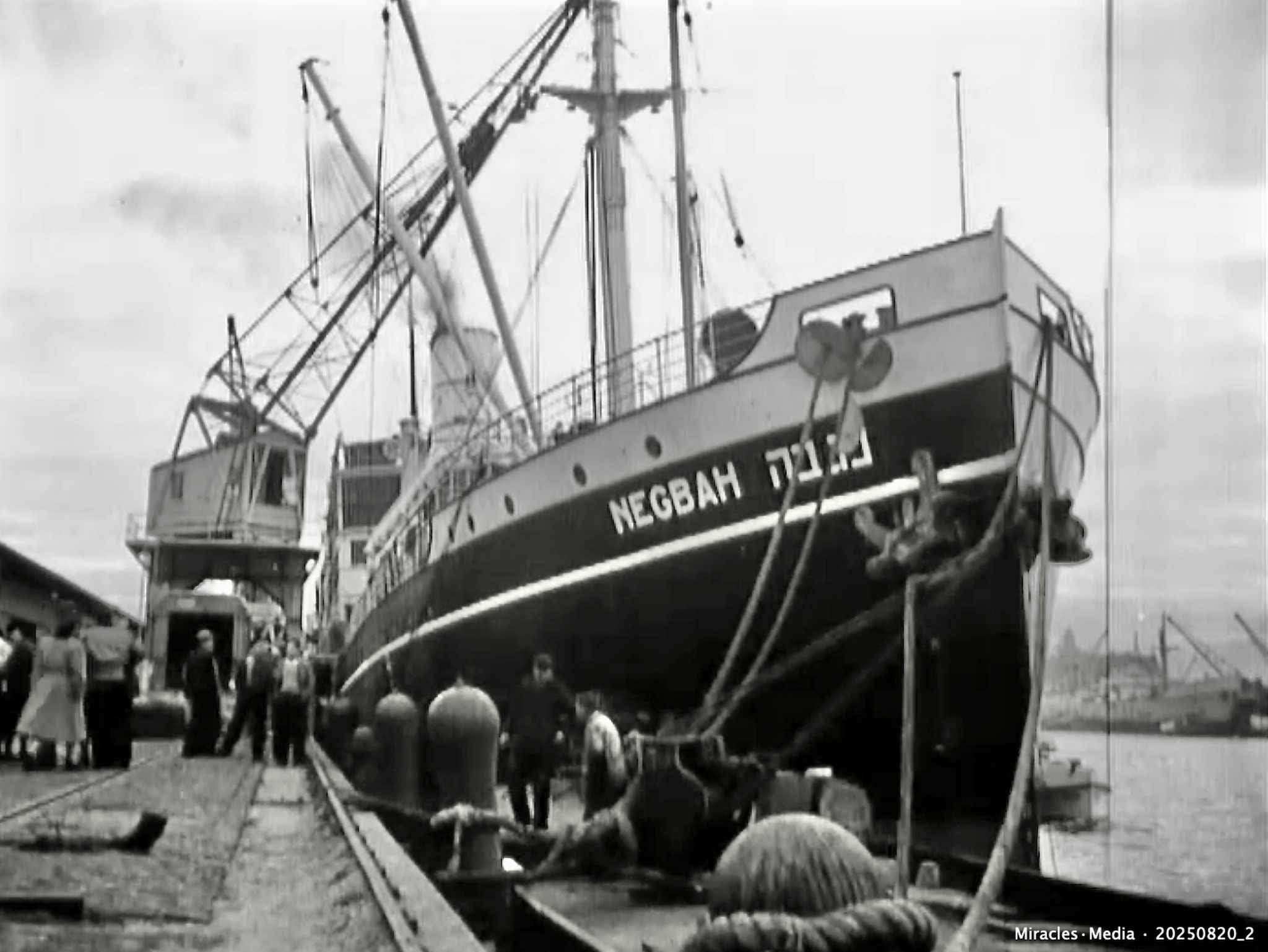
In October 1948, Ilaniah was closed, and most of the children departed on the ship Negbah to Haifa, Israel. The youngest children who couldn’t travel were cared for elsewhere in the Netherlands.

Displaced Persons (DP)

Two years after the end of World War II in Europe, still around a million people lived in displaced person (DP) camps across Europe, primarily refugees from Eastern Europe and former inmates of the Nazi German concentration camps.

Resettlement 500 Jewish Children

For the resettlement of DPs, the Dutch government had decided in 1947 to accept as many DPs as could find a place in the labor market.

In addition, on January 7, 1947, the Dutch government granted a request — a request from Dutch Jewish authorities , officially submitted on December 31, 1946) — to also accommodate 500 children from the camps in the Netherlands, for a period of up to 3 years (Note 1).

Foundation “Five Hundred Jewish Children”

In the first months of 1947, staff was recruited and trained, and the “Five Hundred Jewish Children” Foundation (dutch: Stichting “Vijfhonderd Joodse kinderen”) was established to organize a stay of five hundred Jewish children from Eastern Europe for 1 to 2 years, with an education focused on Palestine (Note 2).

Romania

When it became clear that only a few of the Jewish orphans in German DP camps wanted to come to the Netherlands, it was decided in consultation between the Jewish organizations and the Dutch government that 500 children from Romania would be allowed to come to the Netherlands temporarily. Displaced children from Eastern Europe, many of whom lost their parents in the Nazi camps.

Initially, in July 1947, temporary shelter was arranged in Barneveld (labour camp “De Biezen”) for a small group of 40 displaced children from Eastern Europe.
For the eventual reception — also for a new transport of 450 children — work was still being done on the Children’s Village ‘ILANIAH’, specially set up for them, in the building complex “Het Apeldoornse bos” near Apeldoorn, the Netherlands.

Through collaboration with the International Refugee Organization (IRO) and the Joint American Distribution Committee, the 500 children were selected in Romania from members of the eight Zionist youth organizations in Romania, from far-right to far-left: Aguda, B’nei Akiba, Gordonja, Dror Igoed, Dror Haboniem, Hanoar Hatzioni, Hashomer Hatzair, and Betar. For orphans who lost both parents, the political preference of the deceased parents was investigated. The children were first concentrated in Prague.

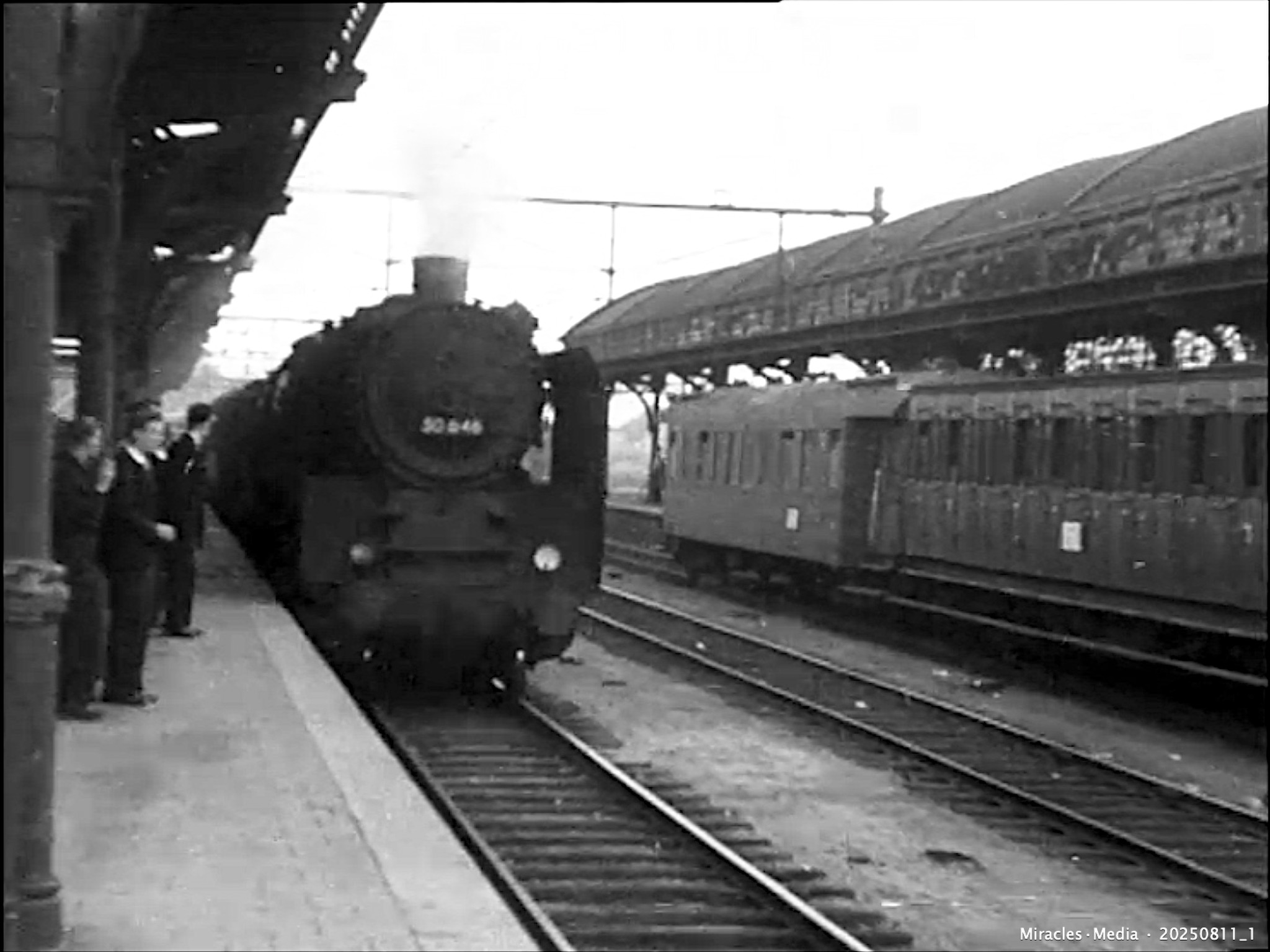
On Saturday evening, September 20, 1947, they finally left Prague (Prague-Bubny station) by steam train to the Netherlands.

Children’s Village ‘Ilaniah’

On Monday evening, September 22, 1947, the group of approximately 500 Jewish children arrived in Apeldoorn by steam train from Prague. Their destination was the Children’s Village “ILANIAH” (Hebrew for “My Tree/Wood”), where they would stay for one to two years, to be trained for a mission in Palestine. The children were then between six and fourteen years old.

Earlier that day, the Dutch cinema news made a report of their arrival in the Netherlands at a stopover at Nijmegen station just before Apeldoorn (4).

Play, Work and Learn in Ilaniah

Ilaniah is headed by a pedagogical leader, Benjamin Sussmann, who came over from Palestine. There is a dedicated school with teachers from Romania and the Holy Land, as well as a dedicated pediatrician and nurses.


Children play in Children’s Village Ilaniah in Apeldoorn, ca 1948. Miracles•Media • 20250819_5

Hebrew, math, geography, physics, and both general and Jewish history are taught. The children are staying there in eight groups with their own leaders: Aguda, B’nei Akiba, Gordonja, Dror Igoed, Dror Haboniem, Hanoar Hatzioni, Hashomer Hatzair, and Betar, reflecting the future country’s political parties (Note 5).


Carpentry Room of Ilaniah Children’s Village: A boy shows the teacher his work, 1948. Miracles•Media • 20250819_6

Soon, manual labor training was started under the supervision of the Dutch branch of the O.R.T. Union (Organisation for Rehabilitation through Training) — the Jewish global education network.


Sewing room of Ilaniah Children’s Village, 1948 (Clip). Miracles•Media • 20250819_7

The ORT organization reported that as early as November 1947, the Dutch ORT was training approximately 400 of the 500 Jewish youth in the children’s village in new workshops for woodwork, cardboard work, bookbinding, and cutting and sewing (Note 9).

Children’s choir Ilaniah performs at the proclamation of the Jewish state

There are also music and singing lessons, and a choir has been formed.

On the occasion of the proclamation of the State of Israel on May 14, 1948, the Dutch Zionist League organized a national meeting on May 16, 1948 in the Amsterdam Concertgebouw, with a performance by the choir of the Children’s Village “Ilaniah”.


Performance choir Ilaniah Children’s Village during National Meeting Dutch Zionist League – Proclamation of the Jewish State , Concertgebouw Amsterdam, Sunday 16 May 1948 . Miracles•Media • 20250819_8

Closing Ilaniah and Departure to Israel

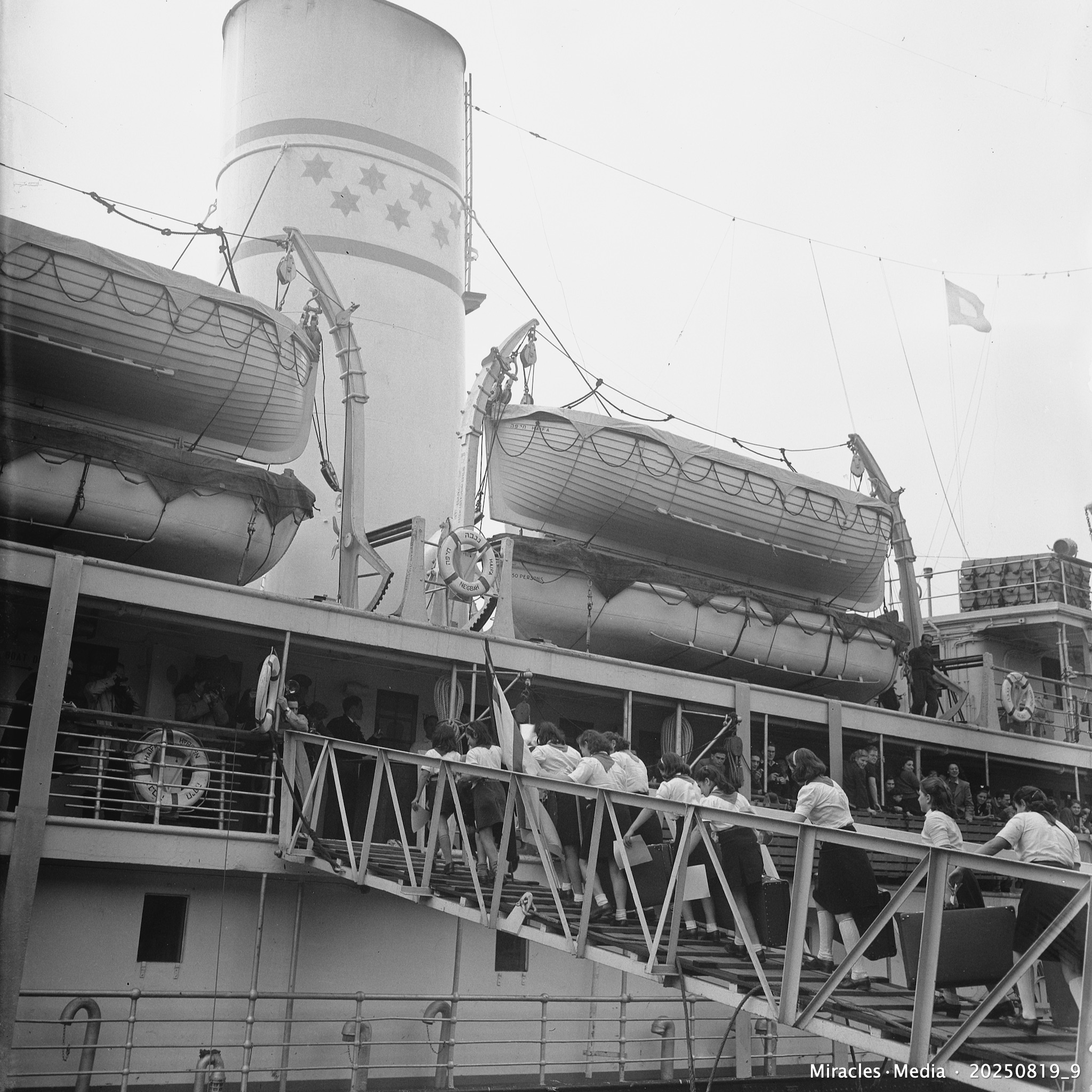
A year after the opening of the Children’s Village Ilaniah, Ilaniah was closed again, when on October 6, 1948 the children embarked on the first Jewish ship – the Negbah – in Amsterdam for the journey to Haifa, Israel.


Children embark for the journey to Haifa, Israel, on the first Jewish ship – the Negbah – at the quay in Amsterdam, 6 Oktober 1948. Miracles•Media • 20250819_9

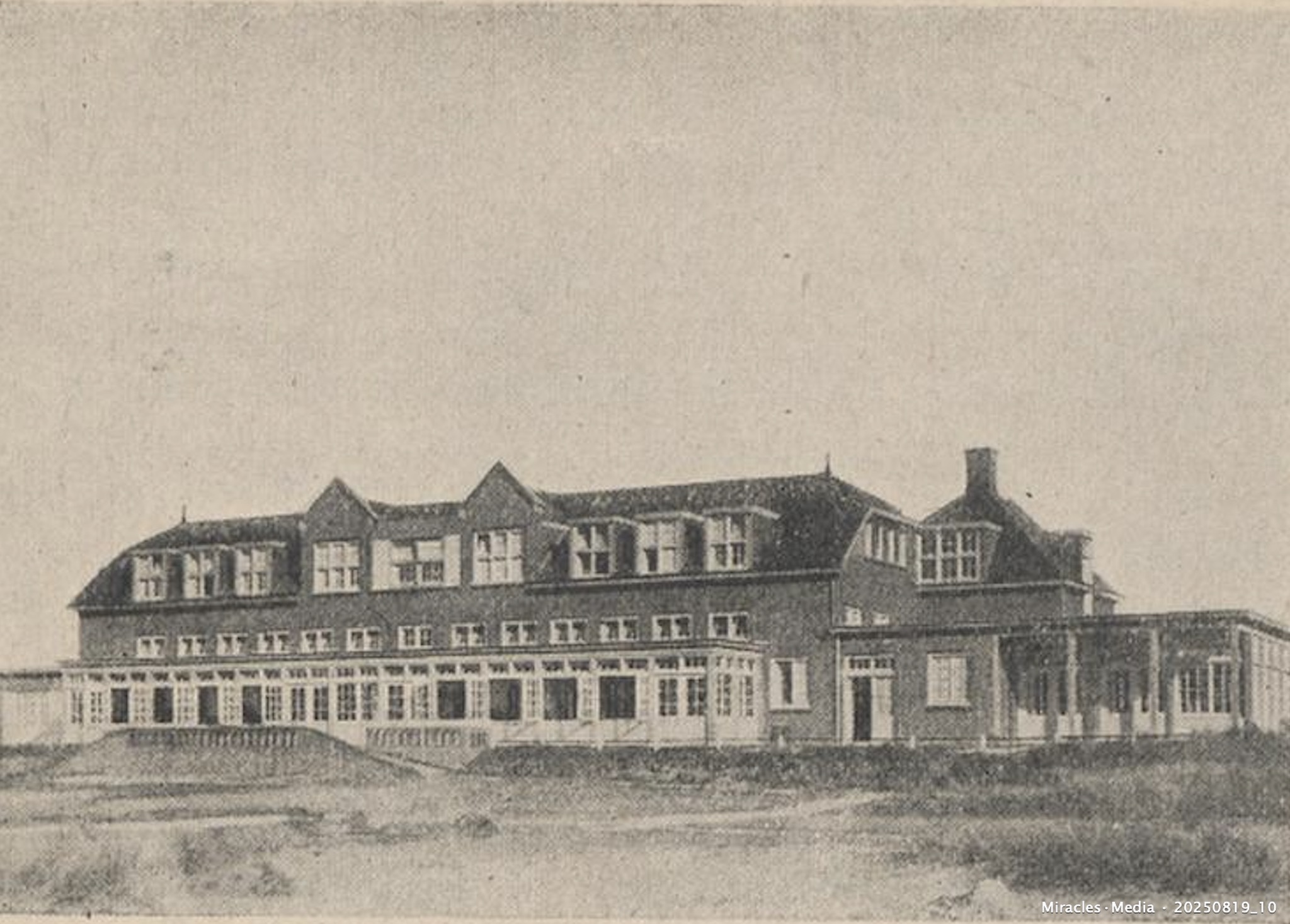
The youngest children who could not travel were accommodated in Zandvoort in the Clara Foundation building on the North Sea coast.


Clara-Stichting, Zandvoort, c. 1921. Miracles•Media • 20250819_10

Notes


500 Jewish children from camps to the Netherlands. Letter (dutch) Jan 7, 1947 Dutch Government to Dutch Jewish Organizations. Miracles•Media • 20250819_1

1. 500 Jewish children from camps to the Netherlands. Letter (dutch) Jan 7, 1947 Dutch Government to Dutch Jewish Organizations. Miracles•Media • 20250819_1 | Source : Nieuw Israelietisch Weekblad, Jan 17, 1947 / Delpher URL https://resolver.kb.nl/resolve?urn=ddd:010873395:mpeg21:a0005


Stichting “Vijfhonderd Joodse kinderen” (Clip). Miracles•Media • 20250819_2

2. Stichting “Vijfhonderd Joodse kinderen” (Clip). Miracles•Media • 20250819_2 | Source : Nieuw Israelietisch Weekblad, April 11, 1947 / Delpher URL https://resolver.kb.nl/resolve?urn=ddd:010873407:mpeg21:a0020

3. Sign in both Hebrew and Dutch at the entrance to Children’s Village Ilaniah in Apeldoorn, ca 1948. Miracles•Media • 20250819_3 | Source : United States Holocaust Memorial Museum, courtesy of Elinor Rosenstein Gabriel

4. Dutch cinema news reports the arrival of 500 Jewish children in Holland, Sep 22, 1947. Miracles•Media • 20250819_4. Source: 500 Jewish Children • Arrival in Holland • 20250811 | Michel van der Burg | Miracles•Media | Settela•Com | ISSN 2949-9313 | TakeNode 5c6e966b-5b45-47ef-ba01-17650007ae20 | URL https://settela.com/2025/08/11/

5. ILANIAH. Source : Nieuw Israelietisch Weekblad, Sep 17, 1948 / Delpher URL https://resolver.kb.nl/resolve?urn=ddd:010872060:mpeg21:p007

6. Children play in Children’s Village Ilaniah in Apeldoorn, ca 1948. Miracles•Media • 20250819_5 | Source : United States Holocaust Memorial Museum, courtesy of Elinor Rosenstein Gabriel

7. Carpentry Room of Ilaniah Children’s Village: A boy shows the teacher his work, 1948. Miracles•Media • 20250819_6 | Photo probably by Boris Kowadlo . Source : ORT and the Displaced Person Camps URL https://dpcamps.ort.org/photos/netherlands/

8. Sewing room of Ilaniah Children’s Village, 1948 (Clip). Miracles•Media • 20250819_7 | Source : Nieuw Israelietisch Weekblad, Sep 17, 1948 / Delpher URL https://resolver.kb.nl/resolve?urn=ddd:010872060:mpeg21:p007

9. Report on ORT Activities in the Netherlands, July-November 1947 . The attached report was submitted to the meeting to the executive of the World ORT Union in Zurich in November 1947. (ort netherlands report.pdf) URL https://dpcamps.ort.org/fileadmin/image_archive/reports/ort%20netherlands%20report.pdf

10. Performance koor Ilaniah Children’s Village during National Meeting Dutch Zionist League – Proclamation of the Jewish State , Concertgebouw Amsterdam, Sunday 16 May 1948 . Miracles•Media • 20250819_8 . Source : Collection Jewish Historical Museum, Amsterdam, JHM 02368-02 | https://joodsecanon.nl/n4z/1948-Viering-Israel-in-Concertgebouw/

11. Children embark for the journey to Haifa, Israel, on the first Jewish ship – the Negbah – at the quay in Amsterdam, 6 Oktober 1948. Miracles•Media • 20250819_9 . Source : Dutch National Archive (Photo by Ben Merk | Anefo). URL http://hdl.handle.net/10648/a8be2e80-d0b4-102d-bcf8-003048976d84

12. Clara-Stichting, Zandvoort, c. 1921. Miracles•Media • 20250819_10 . Source : De geïllustreerde joodsche post. 3 maart 1921. Delpher URL https://resolver.kb.nl/resolve?urn=MMUBA16:021070011:00016

Tags #Resettlement #Ilaniah #village #children #Jewish #displaced #DP #orphan #Palestine #Aliyah #Holland #Netherlands #Romania #Apeldoorn #school #zionism #training #education #emigration #holocaust #news #history #ww2 #ORT #state #Negbah

Citation info : 500 Jewish Children • Ilaniah • 20250819 | Michel van der Burg | Miracles•Media | Settela•Com | ISSN 2949-9313 | URL https://settela.com/2025/08/19/500-jewish-children-ilaniah-20250819/

500 Jewish Children • Arrival in Holland • 20250811


Summary — September 1947 Dutch cinema news on circa 500 Jewish children , displaced children from East Europe, who many of them lost parents in the Nazi camps, arriving from Prague by train in the Netherlands, where they will stay for up to 3 years, and trained for their future task in Palestine.
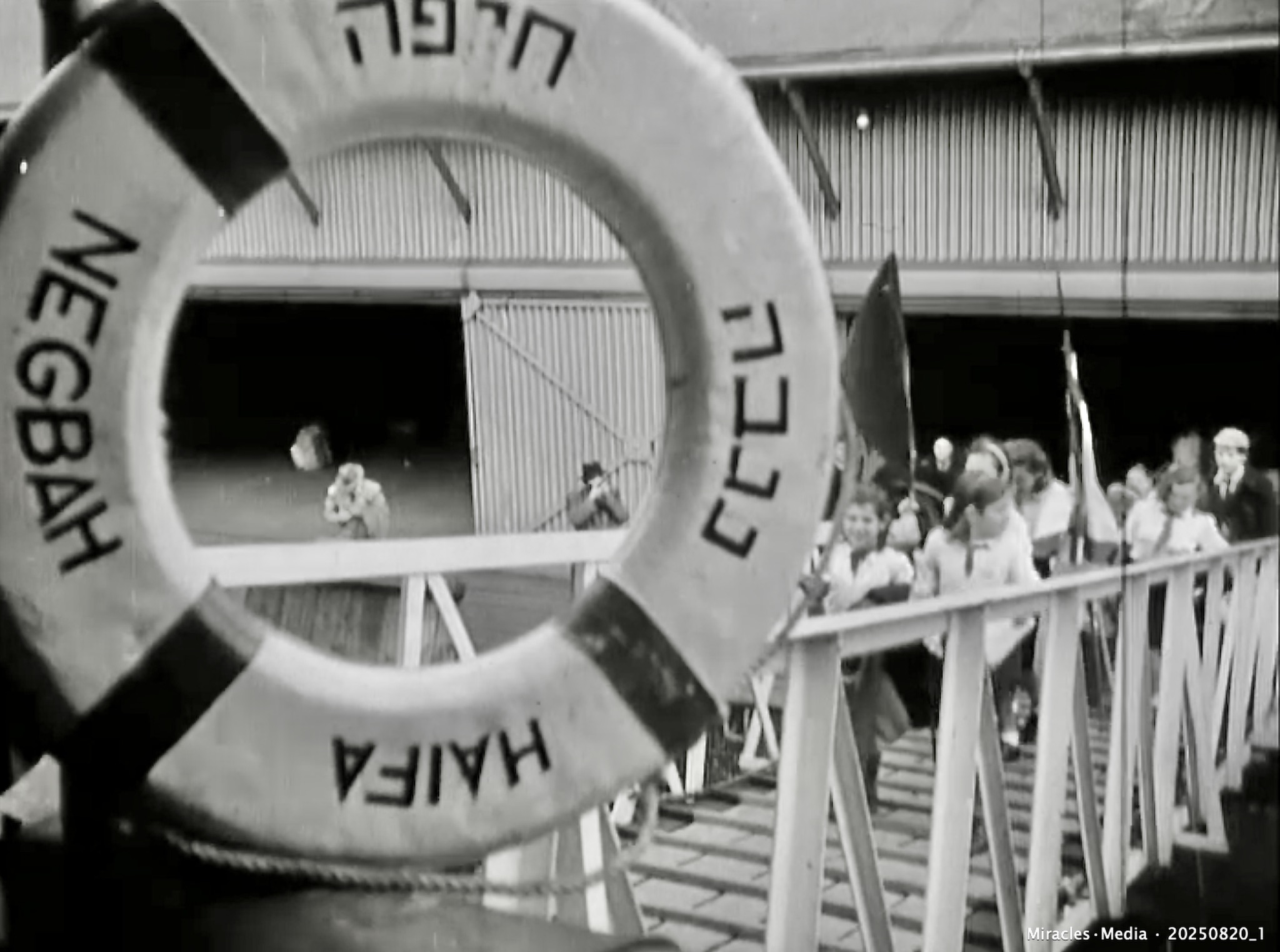
Dutch cinema news reports the arrival of a steam train carrying approximately 500 Jewish children in Holland, Monday, September 22, 1947 — filmed here during a stopover at Nijmegen station.
Displaced children from Eastern Europe, many of whom lost their parents in the Nazi camps. Through collaboration with the International Refugee Organization (IRO) and the Joint American Distribution Committee, they were selected in Romania from members of the eight Zionist youth organizations in Romania: Aguda, B’nei Akiba, Gordonja, Dror Igoed, Dror Haboniem, Hanoar Hatzioni, Hashomer Hatzair, and Betar. For orphans who lost both parents, the political preference of the deceased parents was estimated.
The children were first concentrated in Prague.


On Saturday evening, September 20, 1947, they began their train journey from Prague (Prague-Bubny), bound for the children’s village “Ilaniah” specially established for them in the “Het Apeldoornse Bos” building complex near Apeldoorn, the Netherlands. They arrived there on Monday evening, September 22, 1947.

Notes


1) Sign on train :
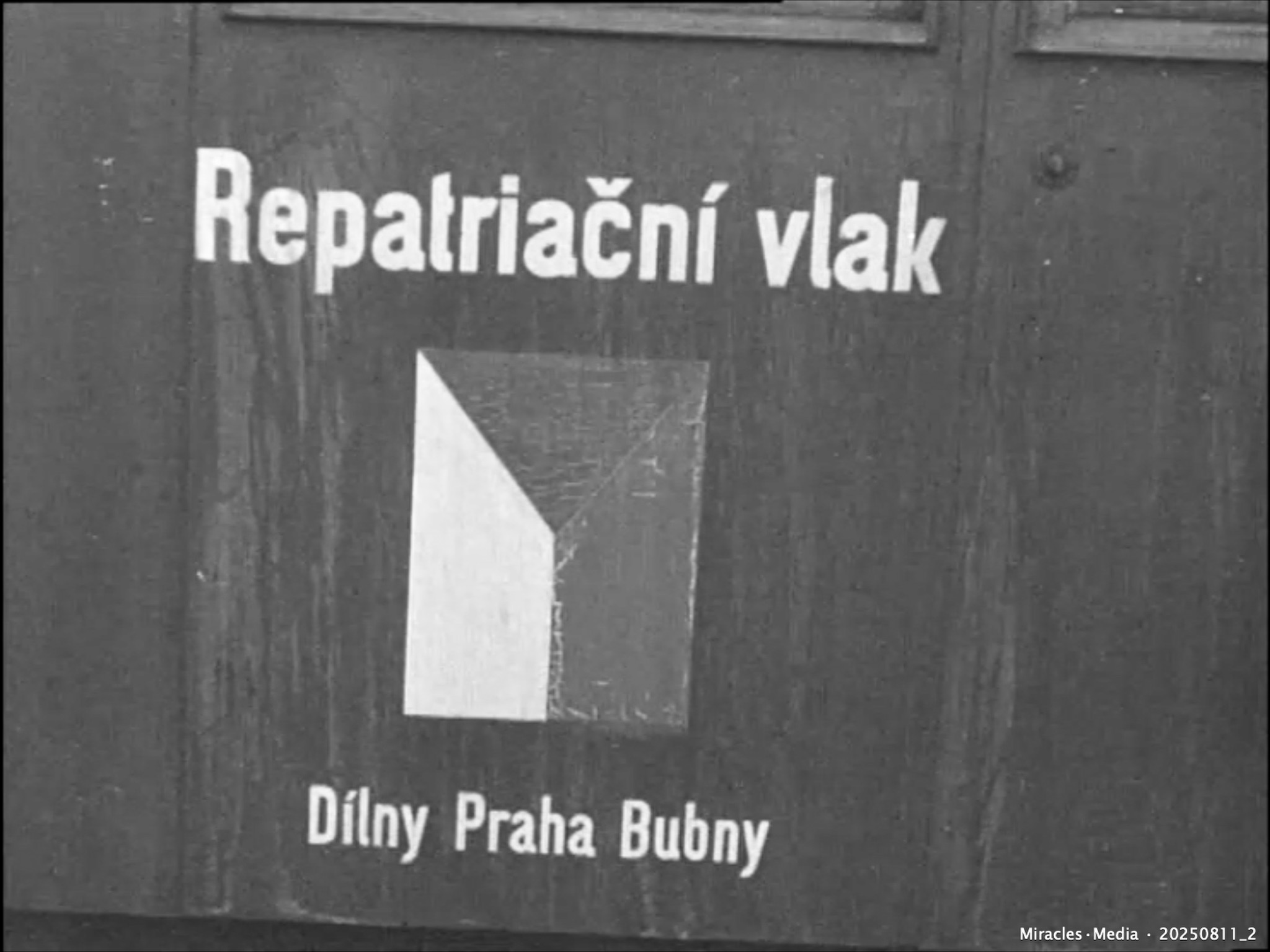
Repatriation train • Prague Bubny Station (Repatriačni vlak • (Dílny Praha Bubny)

2) Transcript (translated from dutch)

This train arriving in Nijmegen [Netherlands], brings 450 Jewish children from Eastern Europe to our country, most of whose parents died in the gas chambers of the German concentration camps.

They also lived in camps after the war, together with thousands of others, and most of them show that.

Our government has allowed these children, all between the ages of 6 and 14, to stay in the Netherlands for 3 years, in Apeldoorn, where they will be trained for their future task in Palestine.

Jewish organizations ensure that the children get something to eat and drink after the tiring journey.

And that turns out to be well received.

3) NL – Transcript (dutch , original)

Deze trein die in Nijmegen arriveert, brengt naar ons land 450 Joodse kinderen uit Oost-Europa wier ouders voor het merendeel de dood vonden in de gaskamers der Duitse concentratiekampen.

Ze hebben ook na de oorlog tesamen met nog duizenden anderen in kampen geleefd, en de meesten van hen is dat wel aan te zien.

Onze regering heeft toegestaan dat deze kinderen, allen tussen 6 en 14 jaar, gedurende 3 jaar in Nederland verblijven, in Apeldoorn, waar ze opgeleid zullen worden voor hun toekomstige taak in Palestina.

Joodse organisaties zorgen ervoor, dat de kinderen na de vermoeiende reis wat te eten en te drinken krijgen.

En dat blijkt goed in de smaak te vallen.

Tags #children #train #Jewish #displaced #DP #orphan #Palestine #Aliyah #Holland #Ilaniah #Romania #Apeldoorn #Nijmegen #school #zionism #training #education #emigration #holocaust #news #history #ww2

Updates

20250818 Minor text edit , with addition : For orphans who lost both parents, the political preference of the deceased parents was estimated.

20250820 correction description text source date (45>47)

Credits

Source: Dutch cinema news Polygoon-Profilti (Producer | 22 September 1947) courtesy of Netherlands Institute for Sound and Vision (Open Images).

Citation info : 500 Jewish Children • Arrival in Holland • 20250811 | Michel van der Burg | Miracles•Media | Settela•Com | ISSN 2949-9313 | TakeNode 5c6e966b-5b45-47ef-ba01-17650007ae20 | URL https://settela.com/2025/08/11/

Nazi Street Propaganda • 20250622

Propaganda on the windows of the shop ‘Goedkoope Winkel’ (Cheap Shop) at Lange Elisabethstraat 2 in Utrecht, Holland, photographed by Wim Bruschwiler , ca 1943.

Nazi anti-semitic slogan ‘JOOD’ (Jew) on one window.

On the other window, the “V” symbol — standing for the English (Anti-Nazi) “Victory” slogan or the later Nazi edition “Victorie”.

On top of that window on the left a small pamphlet showing O…Z…O – W… – V…V – … … … … .

OZO originally was the anti-Nazi slogan ‘Oranje Zal Overwinnen’ (transl. : Holland Will Win). Here probably the Nazi version of OZO was posted (compare image in Notes 1) :

Orde Zal Overwinnen – Want – V=Victorie – Duitschland Wint Voor Europa! .

Translation :
Order Will Win – Because – V=Victory – Germany Wins For Europe!

Notes

1. OZO pamphlet URL https://beeldbankwo2.nl/nl/beelden/detail/27353290-025a-11e7-904b-d89d6717b464/media/e80bf3cc-68cb-1afc-ef42-c8702ea54fa4

2. This shop window was also filmed August 1941 by Ben Postema (1941, Filmpost) as show in the video : Slogan JOOD • Miracles•Media • 20250621 URL https://michelvanderburg.com/2025/06/21/slogan-jood-20250621/

Credits

Source: Photo by W.H.J. (“Wim”) Bruschwiler, courtesy Het Utrechts Archief.

Citation info : Nazi Street Propaganda • Miracles•Media • 20250622 • TakeNode 39a02697-6f86-41bd-84e6-cc2ce3df1c77

Slogan JOOD • 20250621


Clandestine camera shot during World War 2 occupation of Holland from amateur film ‘Bezet Gebied’ (transl. ‘Occupied Territory’ by Ben Postema (Filmpost) of the shop ‘Goedkoope Winkel’ (Cheap Shop) at Lange Elisabethstraat 2 in Utrecht, Holland, the window of which is defaced with the anti-Semitic slogan ‘JOOD’ (Jew) , Aug 14, 1941.

Credits

Source: Bezet Gebied by Ben Postema (1941, Filmpost) courtesy of Netherlands Institute for Sound and Vision (Open Images).

Citation info : Slogan JOOD • Miracles•Media • 20250621 • License : Creative Commons CC BY SA • TakeNode 9e898c3a-04d9-4949-9b22-b6ab6f4f89db

Jewish Brigade 1945 • Dutch Seamanship Training • 20250615


Dutch cinema news reel from November 1945 reporting on Palestine soldiers of the Jewish Brigade, stationed in the Dutch port city of IJmuiden, and taking a course at the municipal fishing school there, where they learned to navigate and fish, practicing at the Dutch IJsselmeer lake, in order to settle in Palestine as fishermen after completing their service.

Notes

After the German surrender in 1945, soldiers of the Jewish Brigade, the “Jewish Fighting Unit”, a unit of around 5,000 Jewish volunteers from Mandatory Palestine serving in the British Army, were stationed in northwestern Europe, including the Netherlands.

Members of the Jewish Brigade in the Dutch port town IJmuiden (port to Amsterdam) and its surroundings were involved in: guarding German POWs , displaced persons support, and facilitating Jewish refugees’ clandestine departure to Palestine. Seafaring skills were directly relevant to both commercial livelihoods and the clandestine immigration (Aliyah Bet) efforts by sea. The British disbanded the brigade in July 1946.

Credits

Source: Dutch cinema news Polygoon-Profilti (Producer | Nov 1945) courtesy of Netherlands Institute for Sound and Vision (Open Images).

Citation info : Jewish Brigade 1945 • Dutch Seamanship Training | 20250615 | Michel van der Burg | Miracles•Media | Settela•Com | ISSN 2949-9313 | TakeNode a24a6599-dd79-47e3-a106-51289a480995 | URL https://settela.com/2025/06/15/

Simon’s Credo • Miracles Moment #4 • 20250521

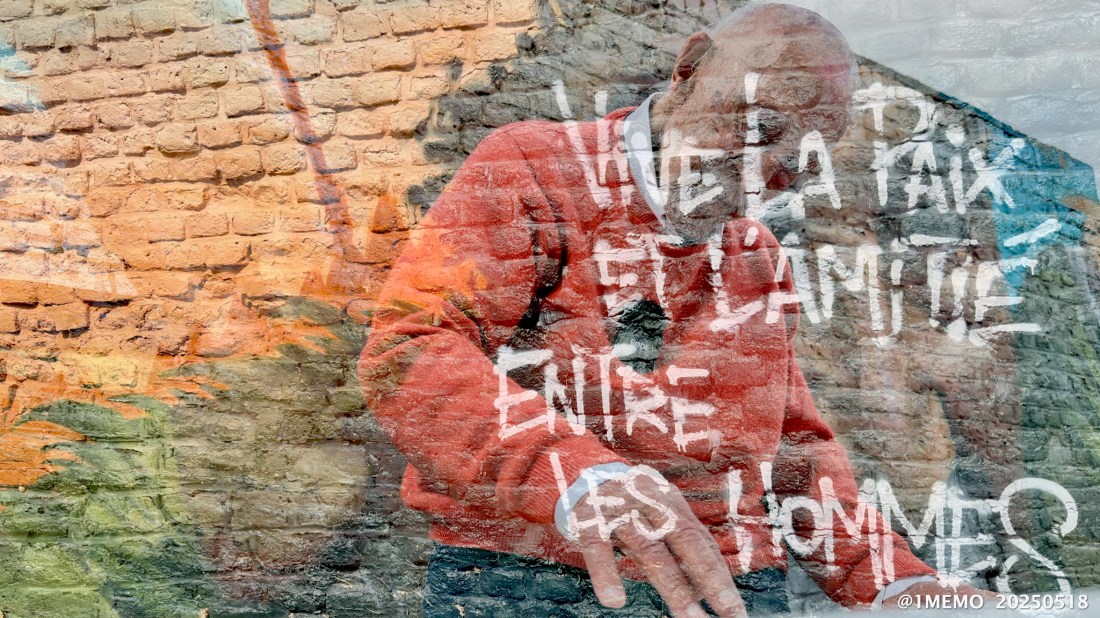
Unveiling of the mural created by HYER , depicting the story and credo of Simon Gronowski in the Garden of Remembrance of the S2J School Center (Centre Scolaire S2J) in Liège, Belgium, on Saturday, May 17, 2025.

Music video

Music video created with a tracking shot, and Simon Gronowski’s musical improvisation during the ceremony, by Michel van der Burg (Miracles•Media) in cooperation with Philippe Renette , co-producer , teacher at S2J School Center.

Credo

Moi, Je garde ma foi en l’avenir, car je crois moi profondement en la bonté humaine…
Vive La Paix Et L’Amitié Entre Les Hommes !

I keep my faith in the future, because I deeply believe in human kindness…
Long Live Peace And Friendship Among Men !

Simon’s Credo • Michel van der Burg • Miracles•Media • @1MEMO 20250518 • TakeNode f8a73334-ee85-4f13-810a-381863407115

Notes

Citation info : Simon’s Credo | Miracles Moment #4 | Miracles•Media | 20250521 | ISAN 0000-0007-36B4-0004-6-0000-0000-J | TakeNode 2c2513ca-9580-4098-993a-78573db1d6be

Wall of Honor • Sally & Nelly Story #4 • 20250501

Nelly Quintart – spelled as Quintard – engraved on the Wall of Honor , Belgium 1999 section, in the Garden of Righteous at Yad Vashem .

Yad Vashem recognized Nelly as Righteous Among the Nations on December 30, 1998, and honored her posthumously in 1999 with the Righteous title and medal.

Background

Belgian Resistance fighter Nelly Quintart has been hiding the Jewish Frankenthal family — Esther, Adolphe, and daughter Sally Frankenthal — at her place, 13 Rue Marie-Thérèse in Brussels, from September 1942 until the liberation in 1944.
Sally Frankenthal recommended to Yad Vashem in the late 1990s the ‘Righteous Among the Nations’ medal for ‘Nelly Quintard’, which Nelly received posthumously in 1999. The surname ‘Quintart’ was misspelled as ‘Quintard’ in Sally’s correspondence with Yad Vashem.

Quintard Nelly. Righteous collection Yad Vashem – The World Holocaust Remembrance Center. URL https://collections.yadvashem.org/en/righteous/4017080

Story of Righteous Nelly • Quintart aka Quintard | 20230526 | Renée Cassin & Michel van der Burg | Settela•Com | ISSN 2949-9313 | URL https://settela.com/2023/05/26/story-of-righteous-nelly-quintart-aka-quintard/

Irena Steinfeldt, “Commemorating the Righteous Among the Nations at Yad Vashem. The History of a Unique Program”, Diasporas [Online], 21 | 2013, Online since 01 March 2013, connection on 30 April 2025. URL: http://journals.openedition.org/diasporas/261; DOI: https://doi.org/10.4000/diasporas.261

“Names of Righteous by Country,” Yad Vashem. The World Holocaust Remembrance Center, last modified January 1 2023, https://www.yadvashem.org/righteous/statistics.html
Citation info : Wall of Honor • Sally & Nelly Story #4 • Miracles•Media • 20250501