Sailing to Gaza
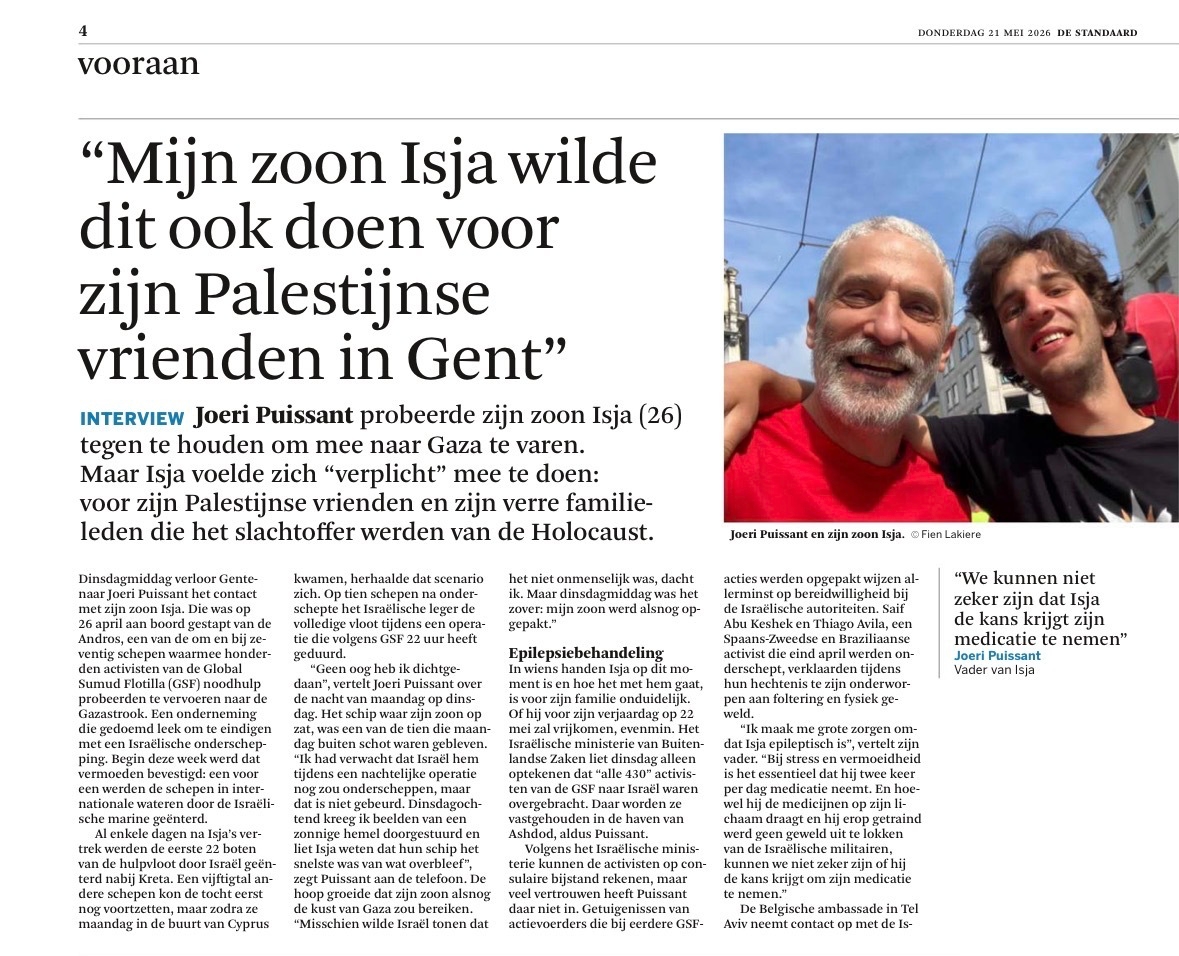
Joeri Puissant tried to stop his son Isja (26) from sailing to Gaza. But Isja felt “obliged” to join — for his Palestinian friends and his distant relatives who were victims of the Holocaust. Source – Annebeau Hofkens | Belgian newspaper De Standaard , May 21, 2026
NL – Joeri Puissant probeerde zijn zoon Isja (26)
tegen te houden om mee naar Gaza te varen.
Maar Isja voelde zich “verplicht” mee te doen:
voor zijn Palestijnse vrienden en zijn verre familieleden die het slachtoffer werden van de Holocaust.
Relatives Resistance
Okselkinderen (Marie Meeusen) dutch poem dedicated to Willy Souritz (Transport VI) and Pauline Souritz Transport XX) — great-uncle and great-aunt murdered in Auschwitz
NL – Okselkinderen (Marie Meeusen) gedicht opgedragen aan Willy Souritz (Transport VI) en Pauline Souritz (Transport XX) — oudoom en oudtante , vermoord in Auschwitz.
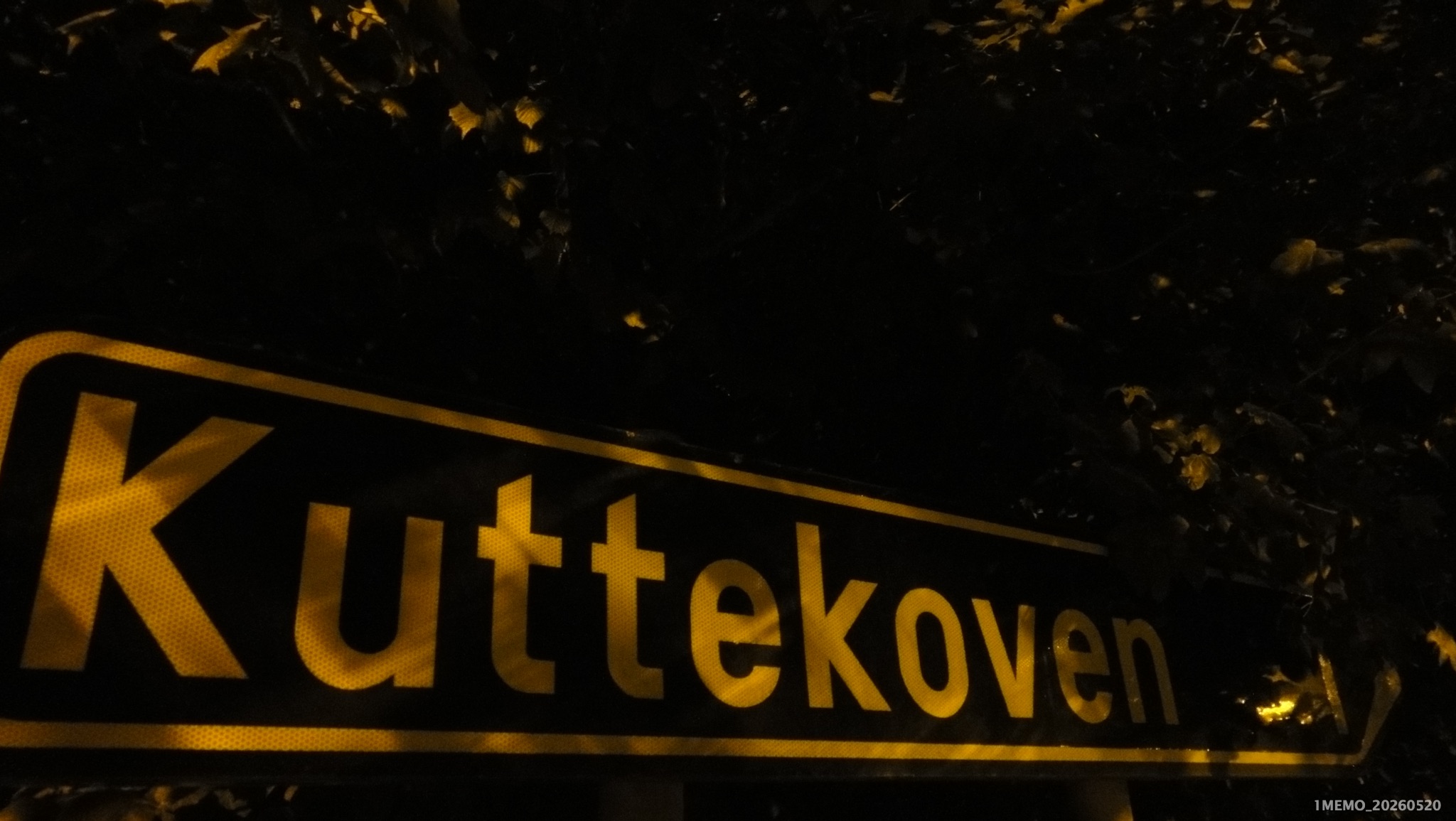
Midnight, May 20, 2011 in Kuttekoven, Belgium. Behind the scenes. Making of documentary film “Transport XX to Auschwitz” . Reconstruction of the scene where Simon Gronowski escapes from the 20th Convoy in the early morning (around 2-3 a.m.) of April 20, 1943 . https://michelvanderburg.com/2013/04/19/transport-xx-to-auschwitz/
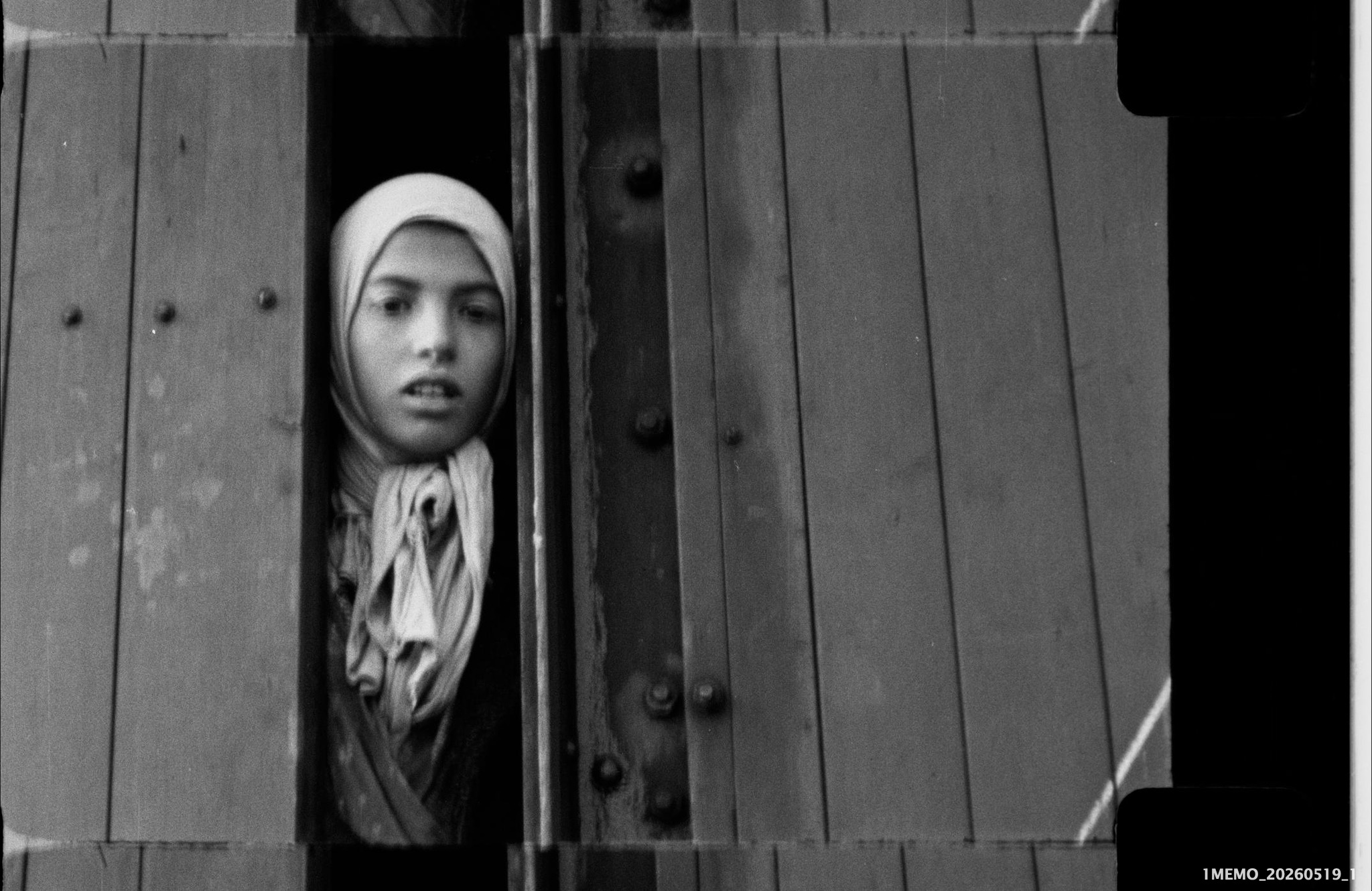
Settela Steinbach — The Girl with the Headscarf • 1MEMO_20260519_1 • Settela•Com • Frame from camera original film reel of the Westerborkfilm (1).
On May 19, 1944, at the Westerbork transit camp, a glimpse of Sinti girl Settela Steinbach wearing a headscarf appears between the sliding doors of a cattle car awaiting deportation to Auschwitz (1,2,3). In May 1945, her father, Moeselman Steinbach, wrote to “Repatriation” in the Netherlands: “…I very politely request you to inform me whether my wife and 10 children have arrived, or only children (Gypsy children) from the Auschwitz concentration camp in Poland.” (4).
The 9-year-old dutch Sinti-girl Anna Maria ‘Settela’ Steinbach peeks outside , at the last moment just before the sliding door is closed , standing inside a cattle car with 74 people on May 19 , 1944 in the Westerbork transit camp in Holland , when this deportation train leaves for Auschwitz-Birkenau – where Settela is murdered a few months later in one of the gas chambers (5).
While Settela peeks outside , her mother cries behind her in that cattle car : “Get out of there, or soon your head gets in between!”
She is wearing a headscarf made from a torn sheet because the Nazis shaved her head upon arrival at Westerbork transit camp on May 16, 1944, following the “Gypsy raid” carried out that same day at the Zwaaikom caravan site in Eindhoven, the Netherlands (6).
Settela Film • 20220630
Settela was filmed only a few seconds by the Jewish prisoner filmmaker Rudolf Breslauer as part of a documentary film being made in 1944 on the Westerbork camp .
Those seconds , also in slow-motion are shown in the 2022 Settela Film • 20220630 (7)
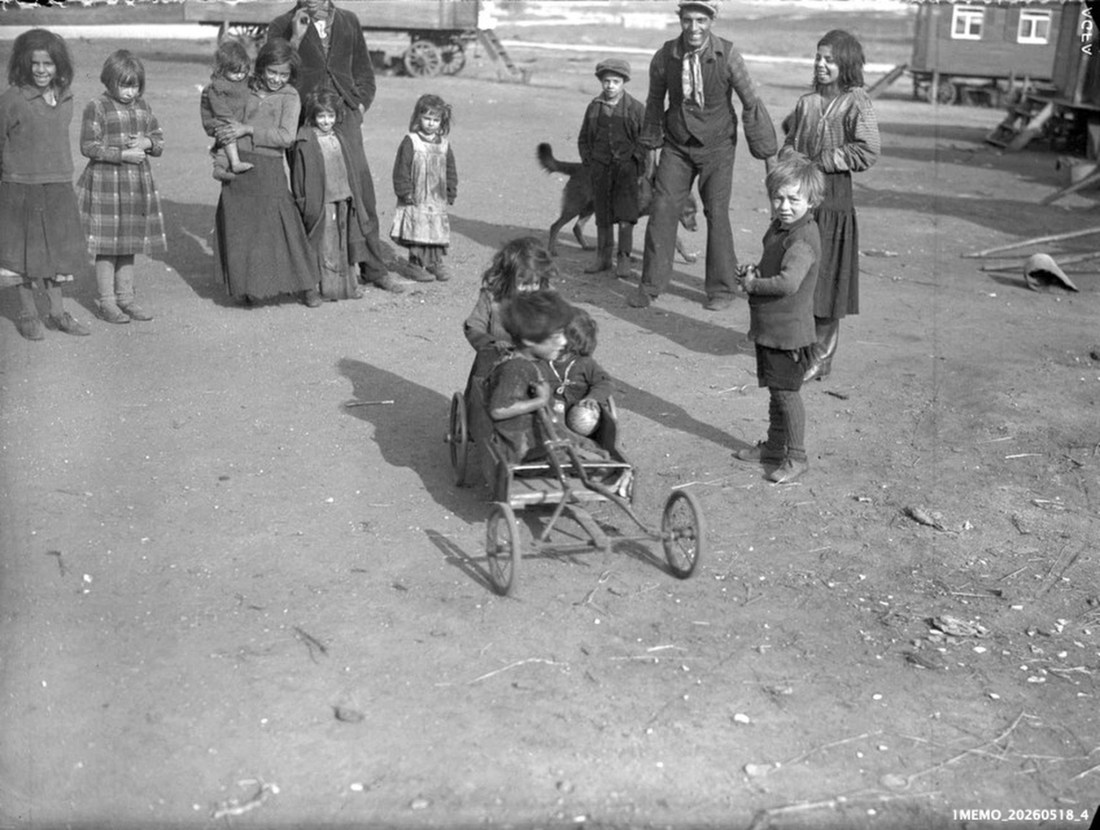
The toddler Settela in the arms of her older sister Elisabeth Steinbach at the Heksenberg Sinti caravan site in 1935 • Photo Jan de Jong • 1MEMO_20260518_4
Anna Maria (‘Settela’) Steinbach was born 23 December 1934 in Buchten, Netherlands, and photographed at age ~1 , in the arms of her older sister Elisabeth Steinbach, with others of the Steinbach family, and other families, at the nearby Sinti caravan site ‘Heksenberg’, October 1935, by photographer Jan de Jong (8) • 1MEMO_20260518_4
Settela was deported together with her brothers and sisters (Willy “Celestinus”, Willem, Elisabeth, Johanna, Philibert, Florentina, Willem, Anna), and mother Toetela (Emilia) Steinbach (born 23 March 1902 in Antwerp, Belgium), with other Steinbach and other nomad families – all together ca 245 Sinti and Roma and ca 450 Jews – on May 19th 1944 from the dutch Camp Westerbork to the Auschwitz and Bergen-Belsen camps (5,6).
Toetela’s eldest child Moekela (Magdalena; born 14 Sep 1922) had gone to Belgium and had been deported earlier – 15 Jan 1944 – with her 6 months old baby Jeanette – Toetela’s granddaughter – on the Z-Transport from transit camp Kazerne Dossin in Mechelen to Auschwitz, were they were murdered on arrival.
Settela’s father Heinrich (‘Moeselman’) Steinbach (born Nov 11, 1901 in Gründorf in Germany) died alone of grief June 6, 1946 in Maastricht in the Netherlands – his wife and 10 children had not survived the camps.
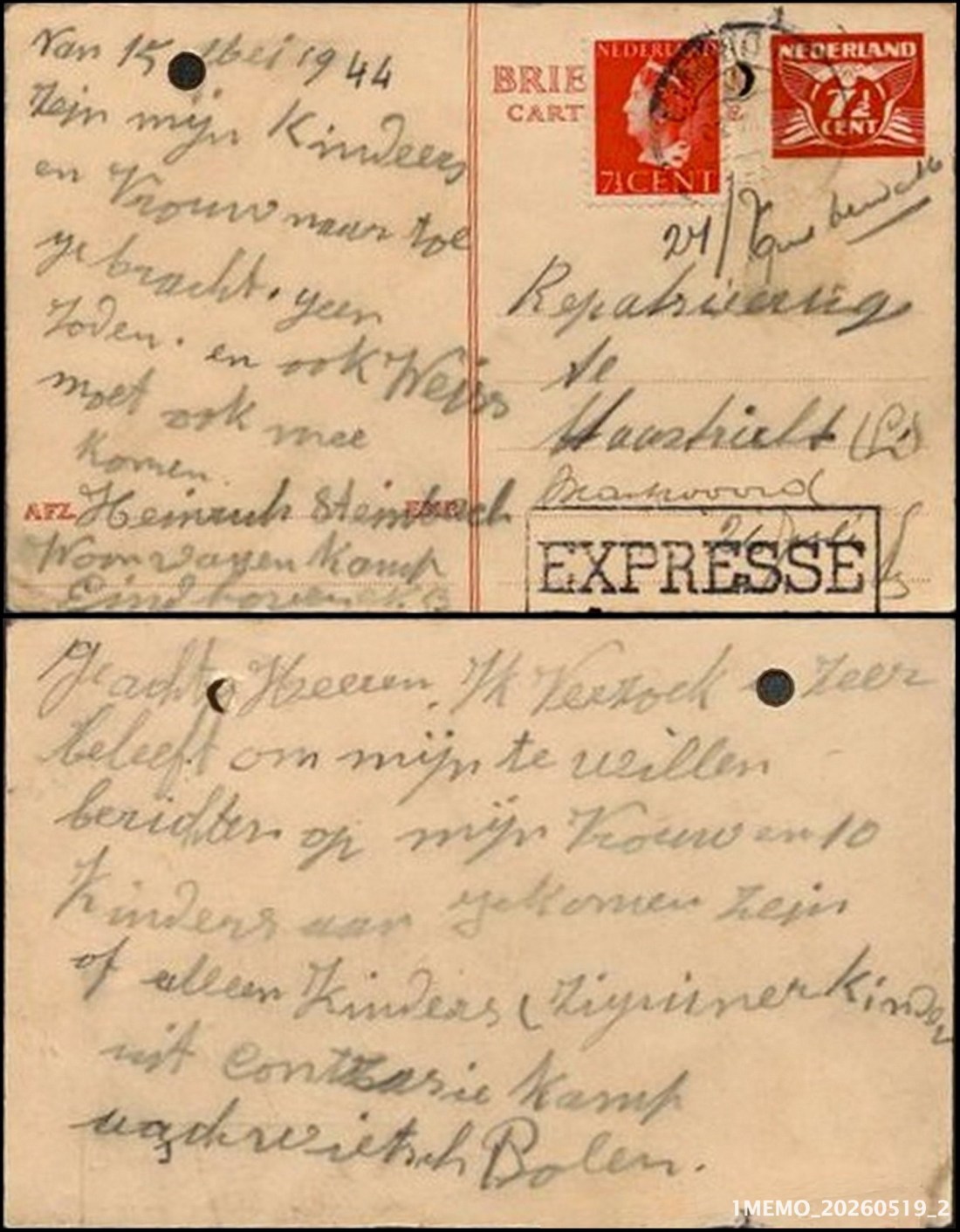
To : “Repatriation” in Maastricht (Netherlands) — “Dear Sirs, I very politely request you to inform me whether my wife and 10 children have arrived, or only children (Gypsy children) from the Auschwitz concentration camp in Poland. From May 15, 1944, my children and wife were taken there; no Jews. And Weiss had to come along too. — Heinrich Steinbach. Caravan site Eindhoven , North Brabant” • 1MEMO_20260519_2 • Settela•Com
One year earlier , May 22, 1945, two weeks after the liberation of Holland, Heinrich Steinbach — living at the caravan site in Eindhoven (North Brabant, Netherlands) — inquires about the fate of his wife and ten children on a postcard written to the “Repatriation” in Maastricht (Netherlands). The text on the postcard reads — translated from dutch (4) :
“Dear Sirs, I very politely request you to inform me whether my wife and 10 children have arrived, or only children (Gypsy children) from the Auschwitz concentration camp in Poland.
From May 15, 1944, my children and wife were taken there; no Jews. And Weiss had to come along too.
Heinrich Steinbach. Caravan site Eindhoven, North Brabant”
4 – May 1945 Postcard Heinrich Steinbach • 1MEMO_20260519_2 • Settela•Com | ISSN 2949-9313 | Source : Collectie HCL, archief Militair Gezag, Maastricht.
‘Moeselman’ Heinrich Steinbach — living at the caravan site in Eindhoven (North Brabant, Netherlands) — inquires about the fate of his wife and ten children on a postcard written to the “Repatriation” in Maastricht (Netherlands). The dutch text on the postcard reads :
“Geachte Heeren, Ik verzoek u zeer beleeft om mijn te willen berichten op mijn vrouw en 10 kinders aan gekomen zein of alleen kinders (zigeunerkinders) uit contrasie kamp uaschwietsch Polen.
Van 15 mei 1944 zein mijn kindeers en vrouw naar toe gebracht, geen joden. En ook Weiss moet ook mee komen. Heinrich Steinbach. Woonwagenkamp Eindhoven N.B.”
Still from the short doc Street Art Simon, scheduled tomorrow. Simon Gronowski and Philippe Renette in the ‘Jardin du Souvenir’ , the Garden of Remembrance , the Espace Simon Gronowski, of the S2J School Center in Liège, Belgium, May 17, 2025.
Citation info : Souvenir • Michel van der Burg • Miracles•Media • @1MEMO 20251011 • TakeNode 01d35aa7-d4f3-46a7-9c59-1ef00362e902
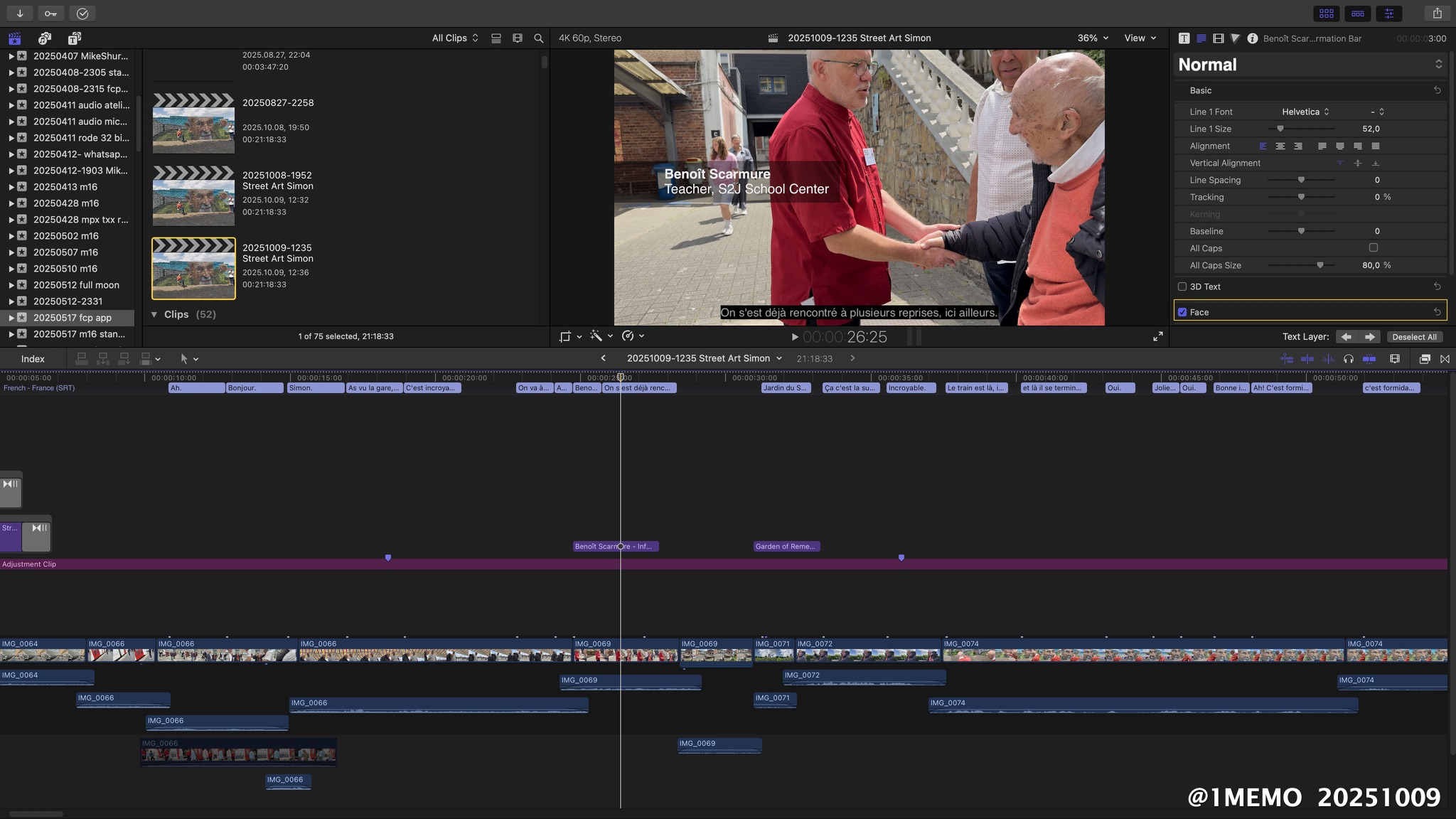
Behind the scenes (BTS) , making doc Street Art Simon. Finished today translation of the French trancript to English. Now inserting English captions (CC ; closed captions) in the upcoming Street Art Simon’s documentary – working in Final Cut Pro.
With ‘Here Simon …is Nicolas’ teacher Philippe Renette introduces the Liège street artist HYER (aka Nicolas) to Simon Gronowksi, at the inauguration of the mural HYER created together with the students in the S2J School Center in Liège, Belgium, May 17, 2025.
Citation info : Closed Captions EN|FR • Michel van der Burg • Miracles•Media • @1MEMO 20251010 • TakeNode 0b75211f-a9d2-449a-aea7-1d2b0c837cca
Finished the french audio transcript , now final phase of Street Art Simon’s documentary – captions with transcript, translation, (inter)titles , credits – in Final Cut Pro.
Citation info : Captions • Michel van der Burg • Miracles•Media • @1MEMO 20251009 • TakeNode f9448ba7-8665-4d79-8ace-dd70380e085f