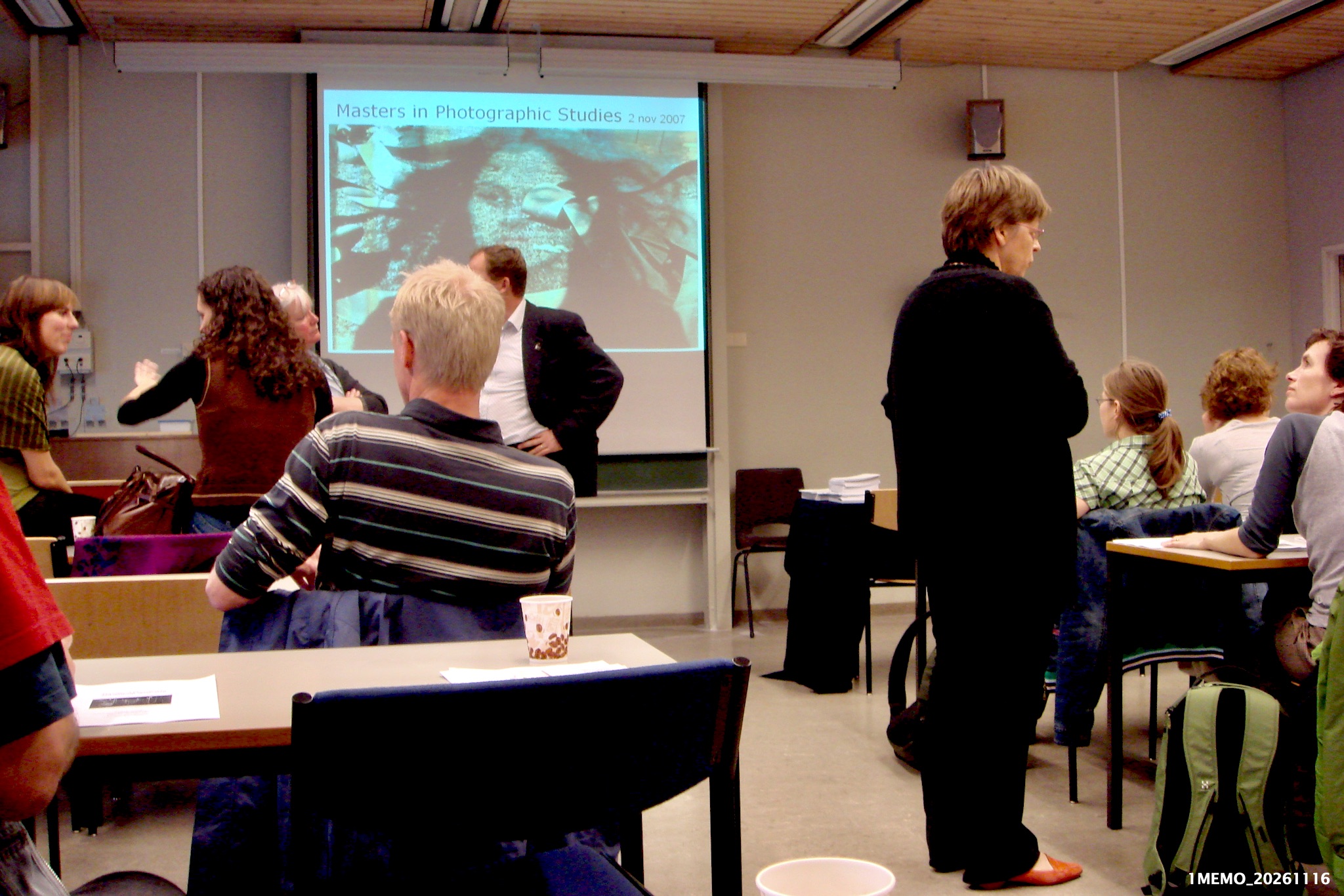
Photographic Studies • @1MEMO_20261116 • Michel van der Burg • Miracles•Media • Introduction Master Photographic Studies November 2 , 2007 , with photo historian Tineke de Ruiter , Leiden University , Holland
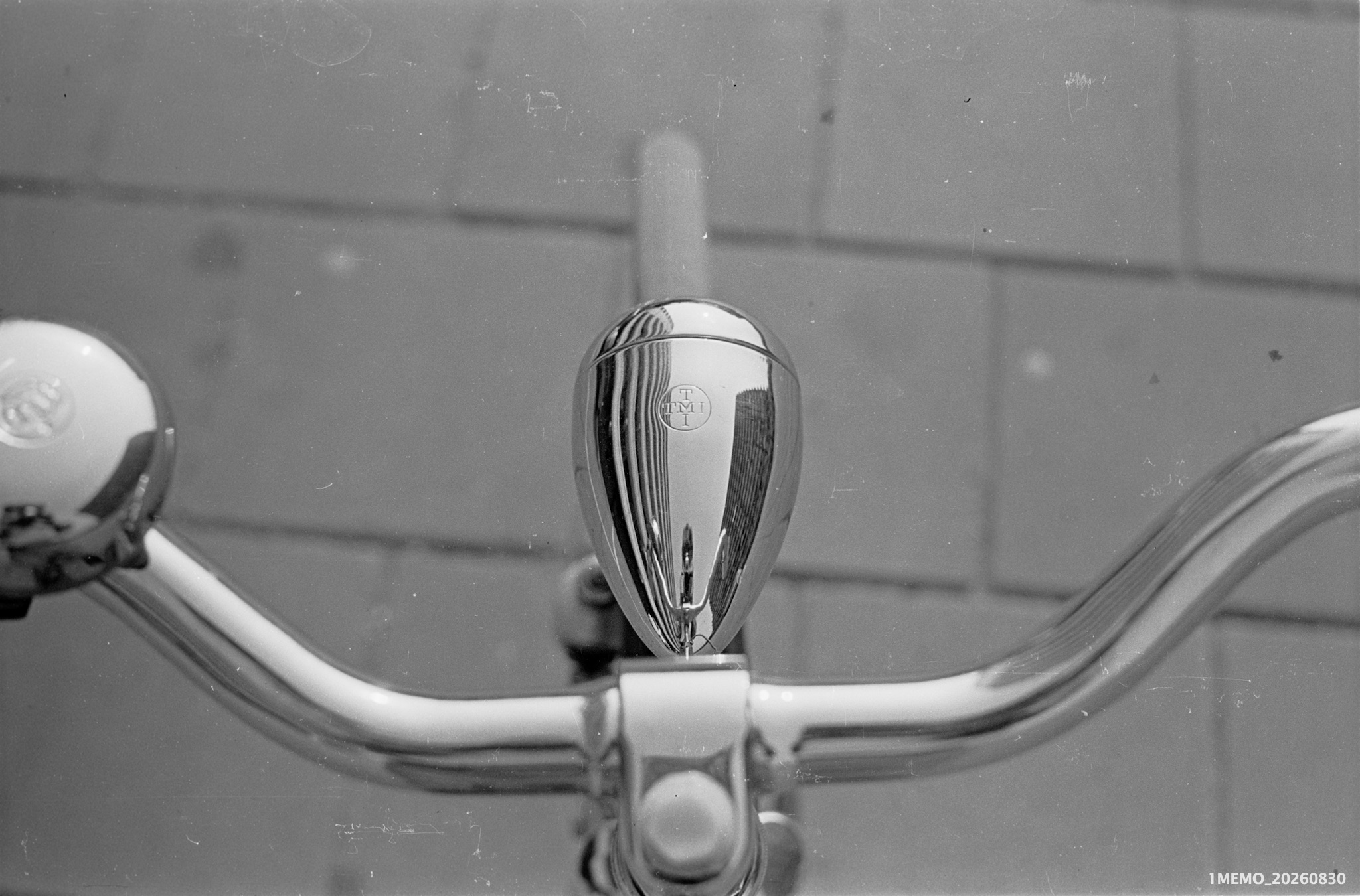
Bicycle lamp • @1MEMO_20260830 • Michel van der Burg • Miracles•Media • My first ‘surreal’ photo, I think — when I was about 14 years old — scan of negative , The Hague ca 1966 • TakeNode 86f9b843-0fc0-4e8b-b991-3c579726898b
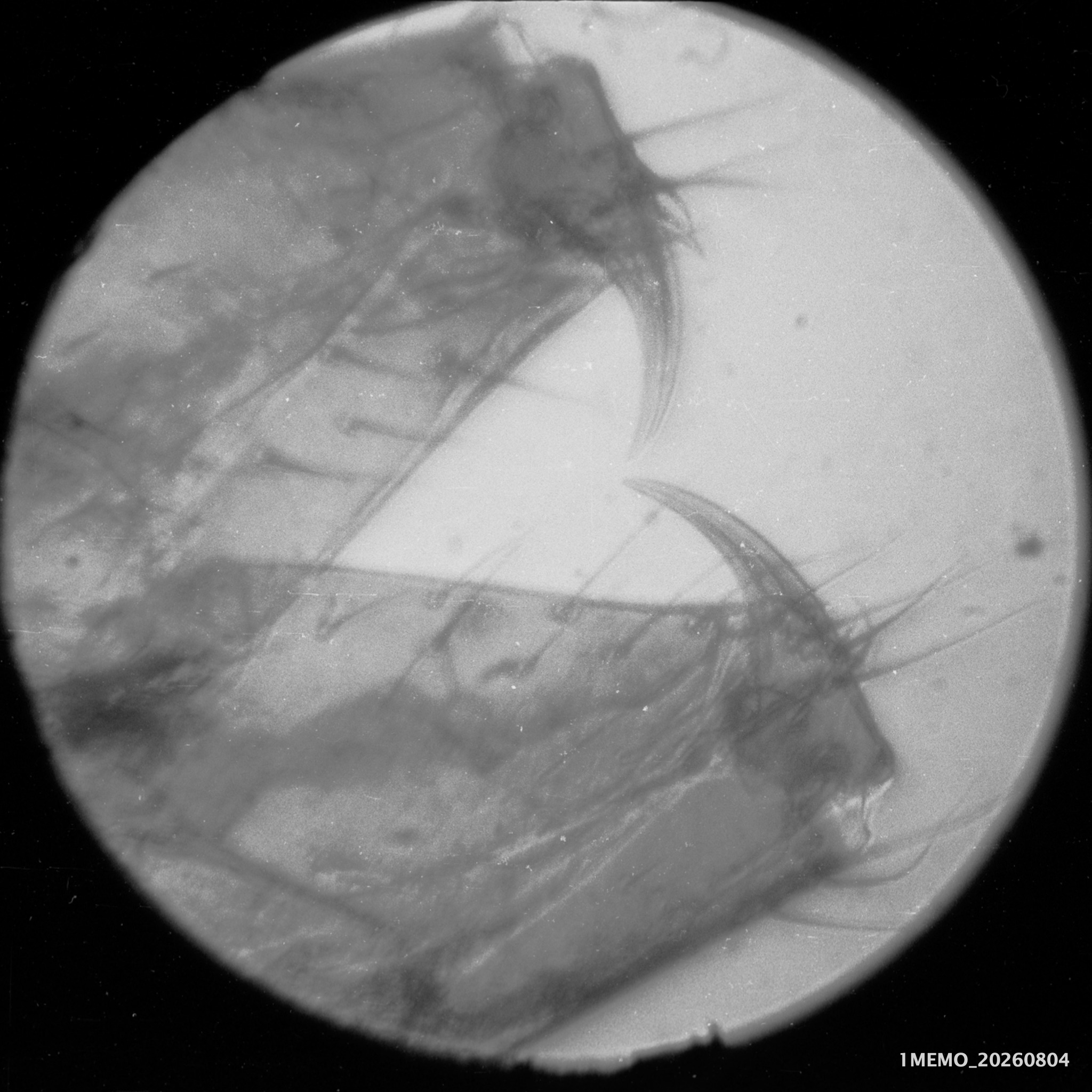
The Young Researcher • @1MEMO_20260804 • Michel van der Burg • Miracles•Media
. TakeNode e15047da-3588-47a0-aa0d-34d030b41c8c • Spider’s mouth – photo via microscope in 1967 – I was very surprised that year to discover that this spider’s ‘jaws’ moved horizontally – not ‘up and down’ like in all the other larger animals that I was familiar with – when I first saw this through the microscope , fresh – immediately after taking this from the just killed spider – taking care to keep it in the same orientation. For the naked eye however this was to small to really see (a small dutch ‘house spider’) – so preparing this was done rather blind in a way.
I was 15 at the time , and had experimented with microscopy since I was 11 or 12 years old. I also had started photography around that age. That year of 1967 I started taking photos through the microscope.
With the simple (mirror-less) camera and microscope that I had – the camera was put on a tripod above the microscope , with a dark cloth around it all in a bedroom with the curtains closed , at night.
That Voigtländer Vito camera had no light meter , no rangefinder ,a fixed lens and a viewfinder.
So , for preparing each new image with the microscope the camera had to be removed. When ready under the microscope , the camera was repositioned above , and because the alignment of camera and microscope is very critical (any deviation results in images like a portion cut from a round cake) .. the filmroll was rolled back in the cassette , the camera opened and by holding a piece of a semi-transparant plastic (from a plastic bag) inside the camera to catch the image projected from the microscope ….. the camera was realigned , the image focussed … and next the camera closed again , and the film roll was advanced …counting the number of already used film frames.
At 15 I also had started film developing, printing, black & white darkroom work ;)
Close Call for a Clear Shot • @1MEMO_20260728 • Michel van der Burg • Miracles•Media • Roadside gamble — traffic passing at my back — just to capture the Diabetes Research Institute, Miami, while working there on human islet isolation for transplantation. April/May 1998, commuting daily between my South Beach hotel and the DRI. . TakeNode a60cdfac-c3f4-46b6-8c8f-9d0cddbf2e27
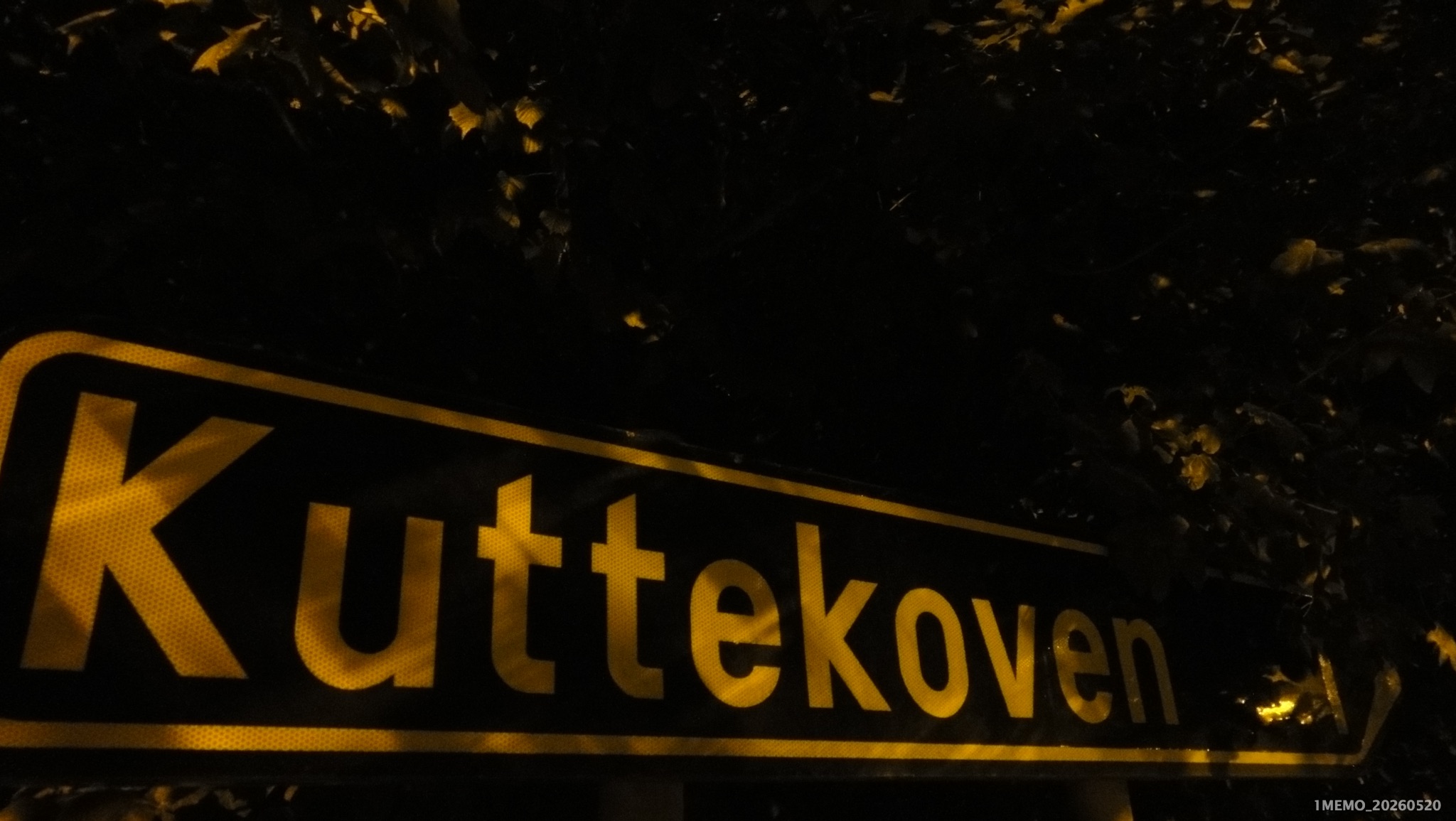
Midnight, May 20, 2011 in Kuttekoven, Belgium. Behind the scenes. Making of documentary film “Transport XX to Auschwitz” . Reconstruction of the scene where Simon Gronowski escapes from the 20th Convoy in the early morning (around 2-3 a.m.) of April 20, 1943 . https://michelvanderburg.com/2013/04/19/transport-xx-to-auschwitz/
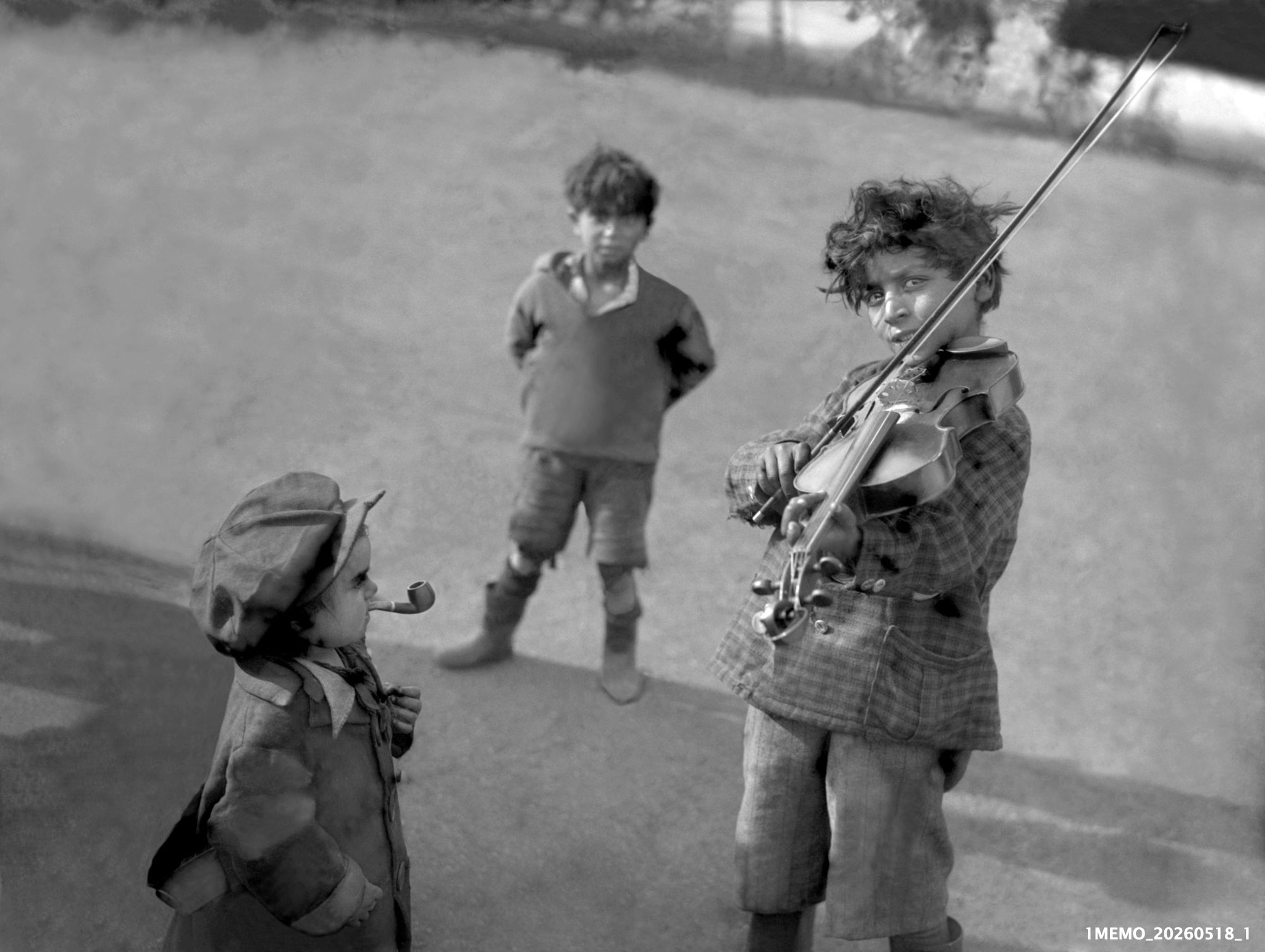
Willy Steinbach plays the violin at the Sinti caravan site Heksenberg in 1935 • Photo Jan de Jong • 1MEMO_20260518_1
In 1935 the nomadic Sinti families Steinbach — musicians — were photographed by Dutch photographer Jan de Jong at their caravan pitch on the heath around the Heksenberg hill in Brunssum, Limburg, Netherlands (1).
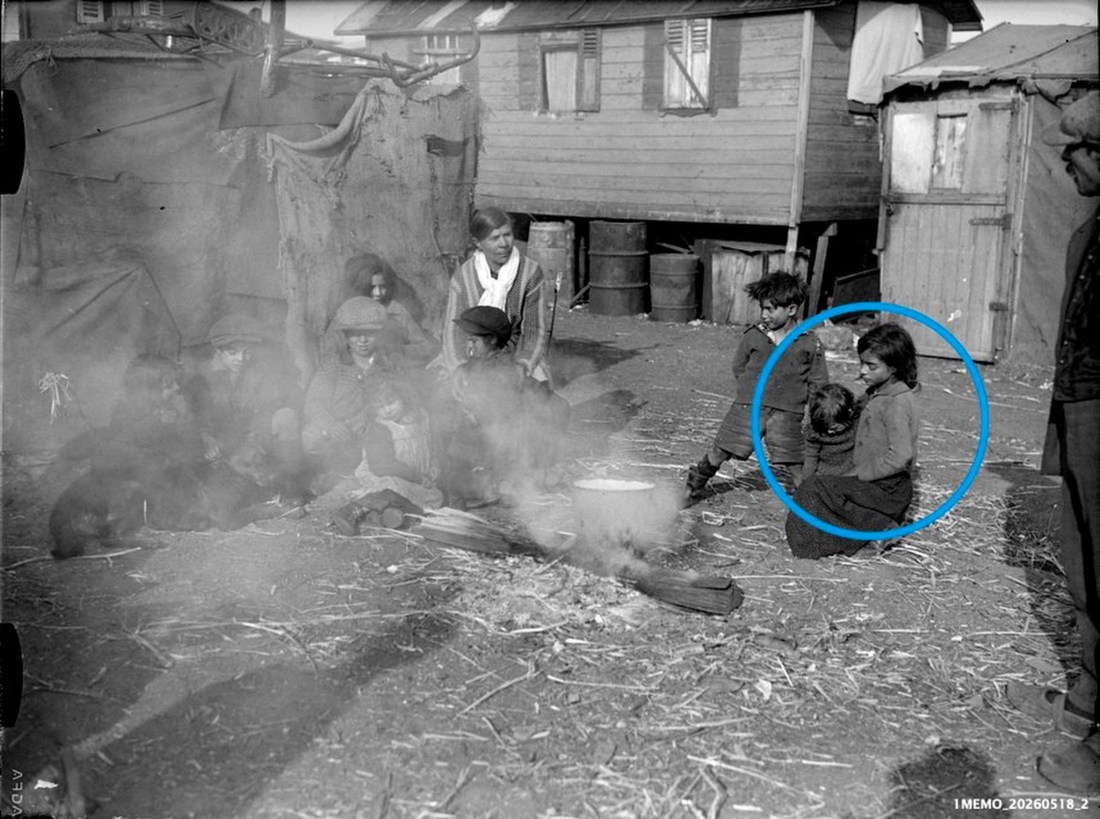
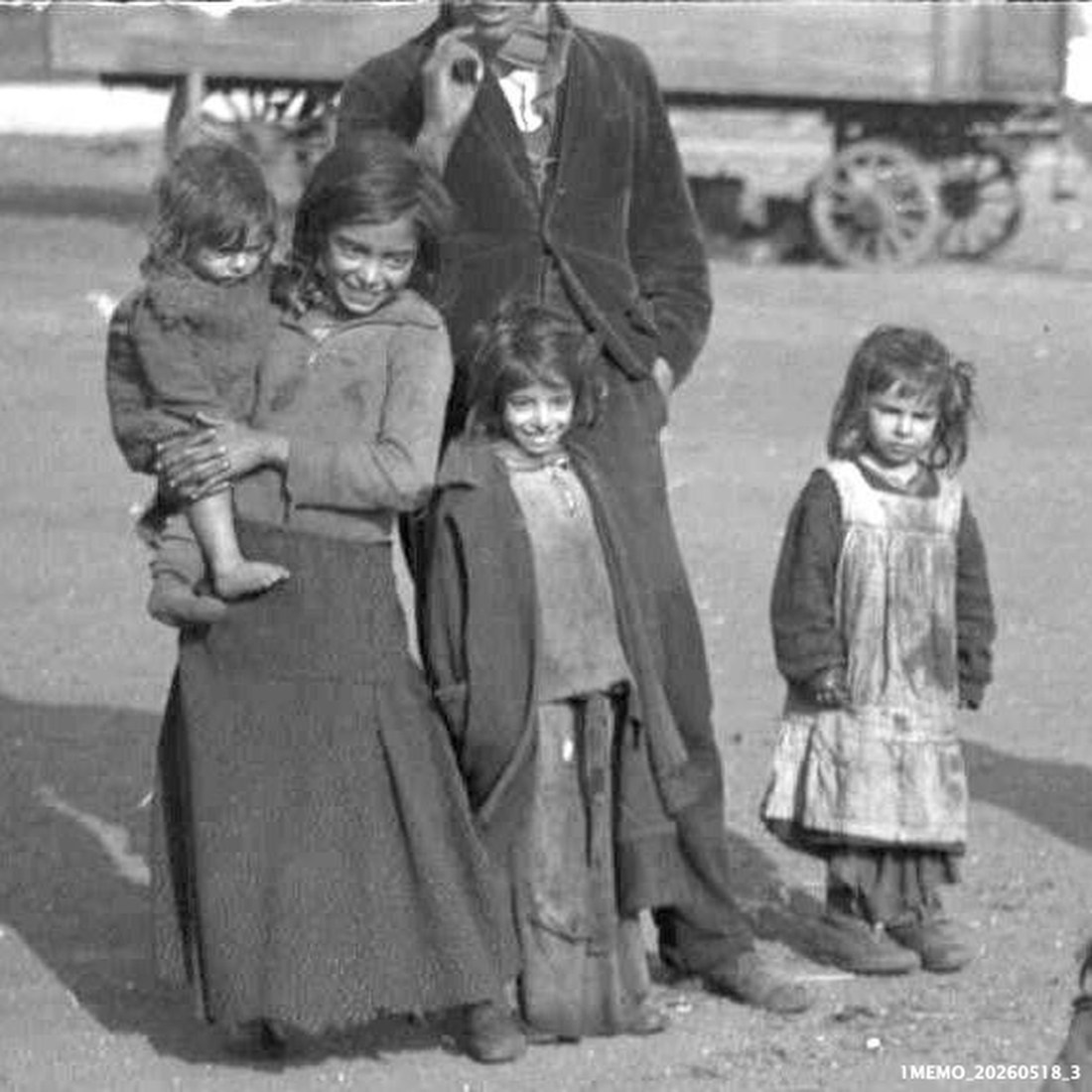
The boy with the violin is Willy Steinbach, an older brother of Settela Steinbach. The other 3 prints from the glass negatives that Jan de Jong made at the Heksenberg site in 1935 also show the Steinbach family, among others, with toddler Settela in the arms of her older sister Elisabeth Steinbach.
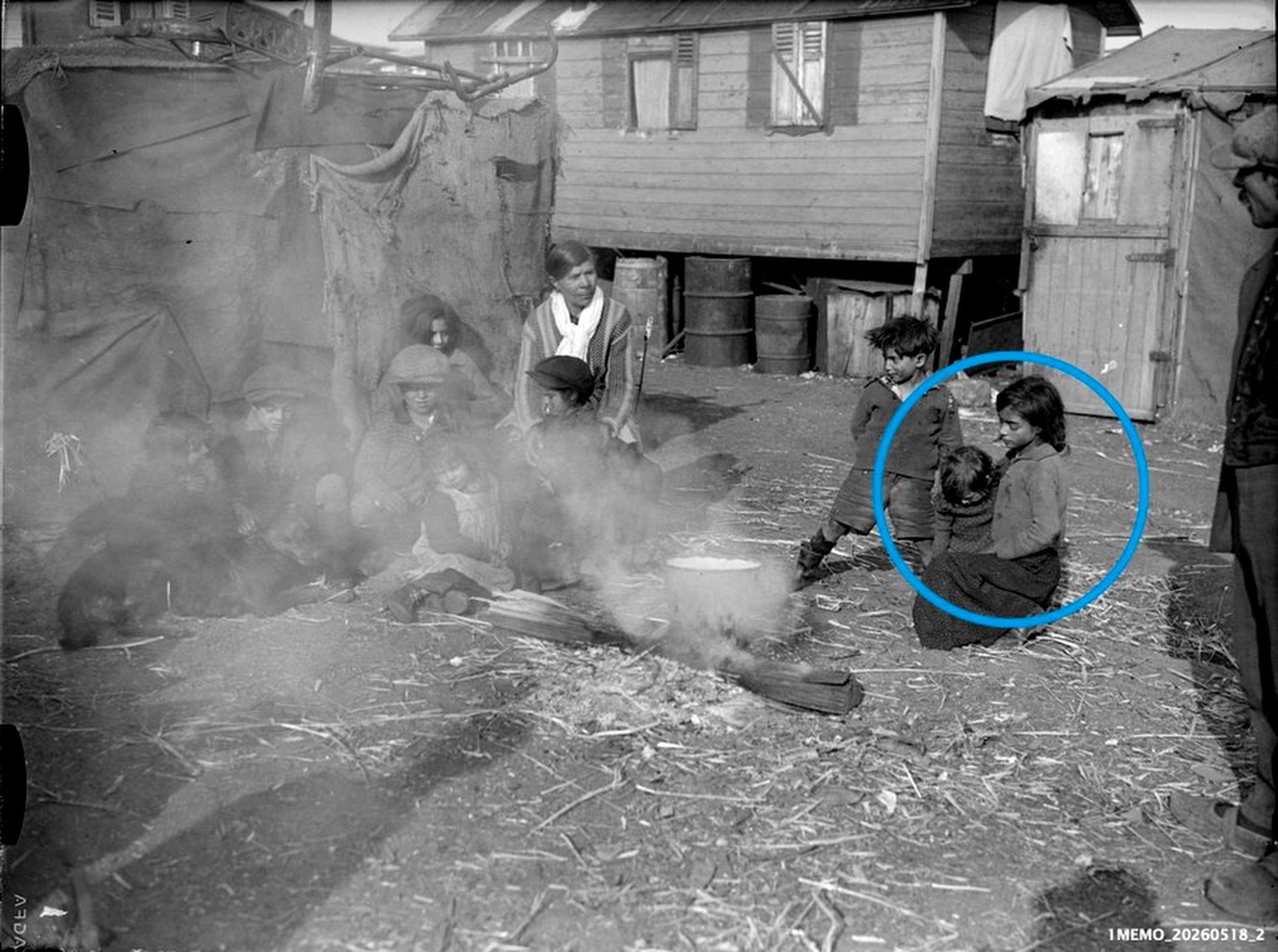
The toddler Settela in the arms of her older sister Elisabeth Steinbach (circled in blue) at the Heksenberg Sinti caravan site in 1935 • Photo Jan de Jong • 1MEMO_20260518_2
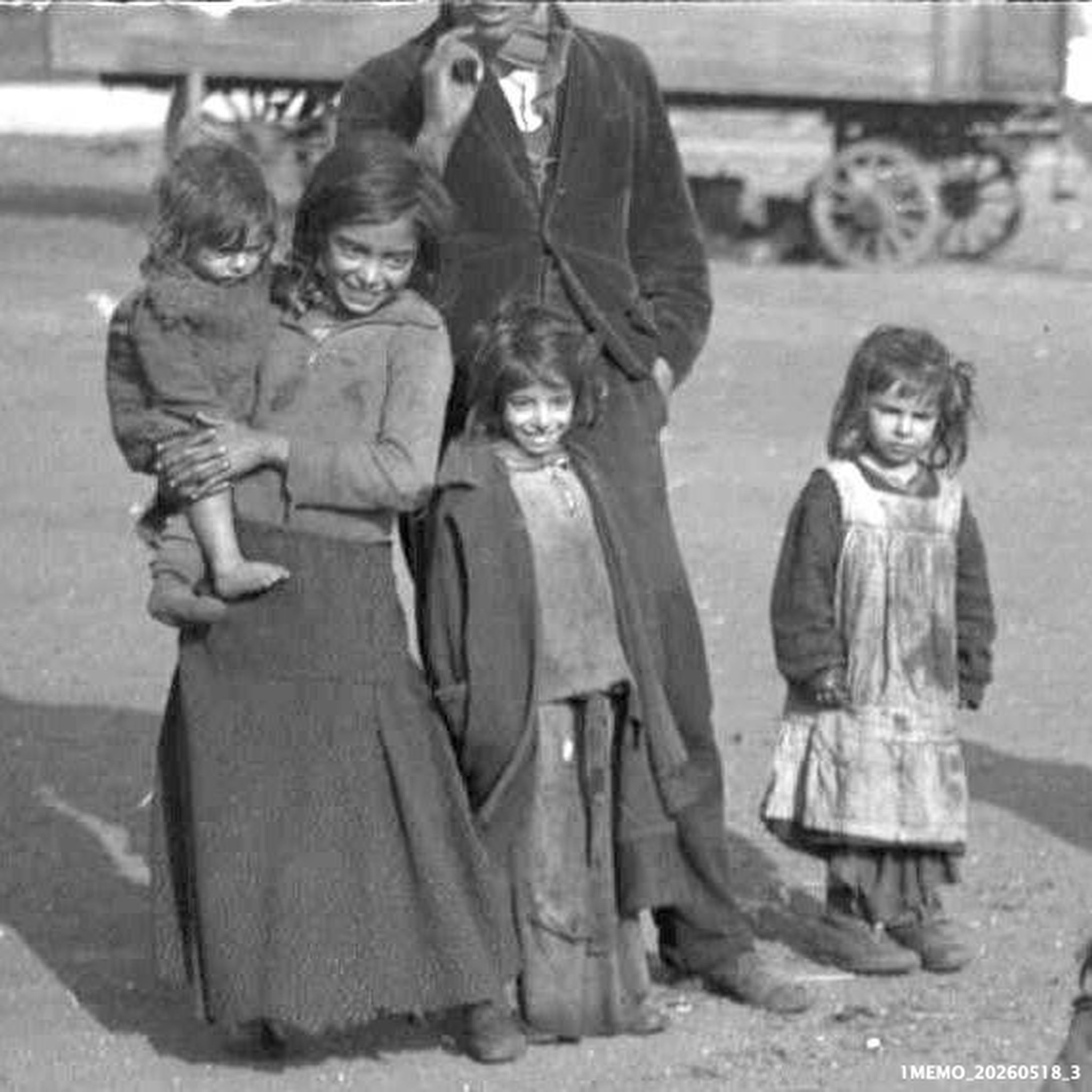
The toddler Settela in the arms of her older sister Elisabeth Steinbach at the Heksenberg Sinti caravan site in 1935 • Photo Jan de Jong • 1MEMO_20260518_3
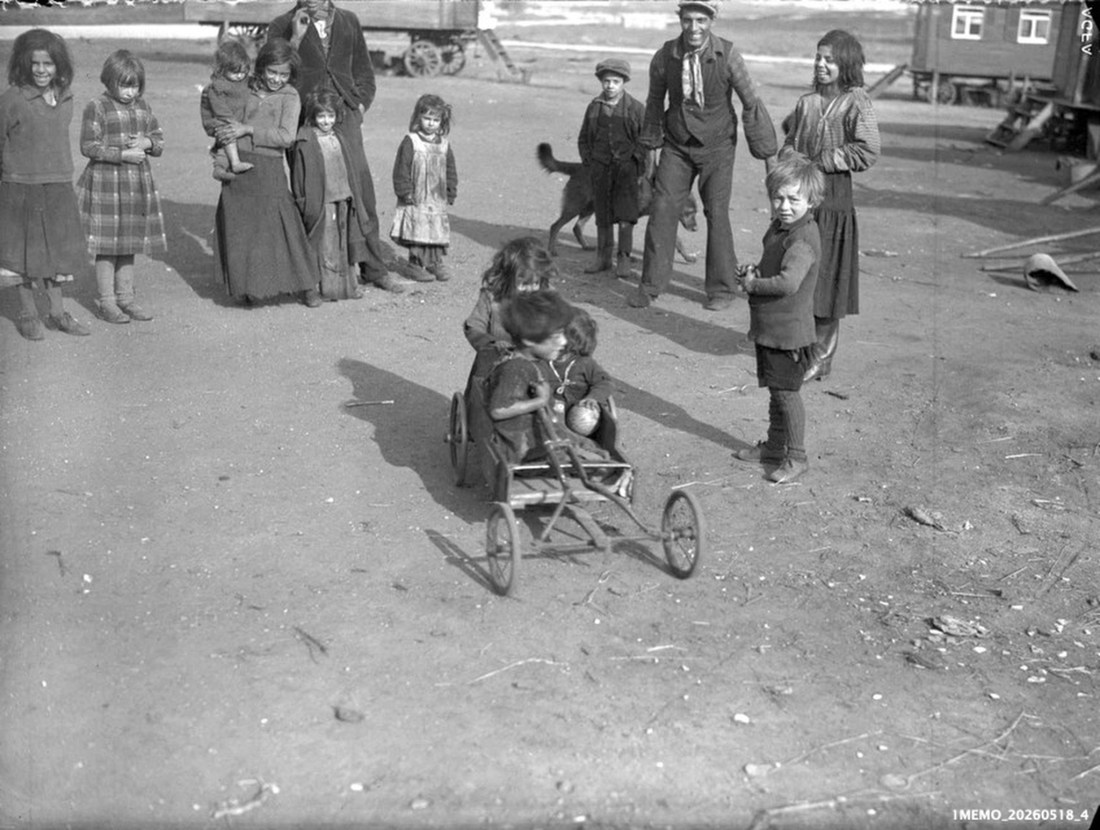
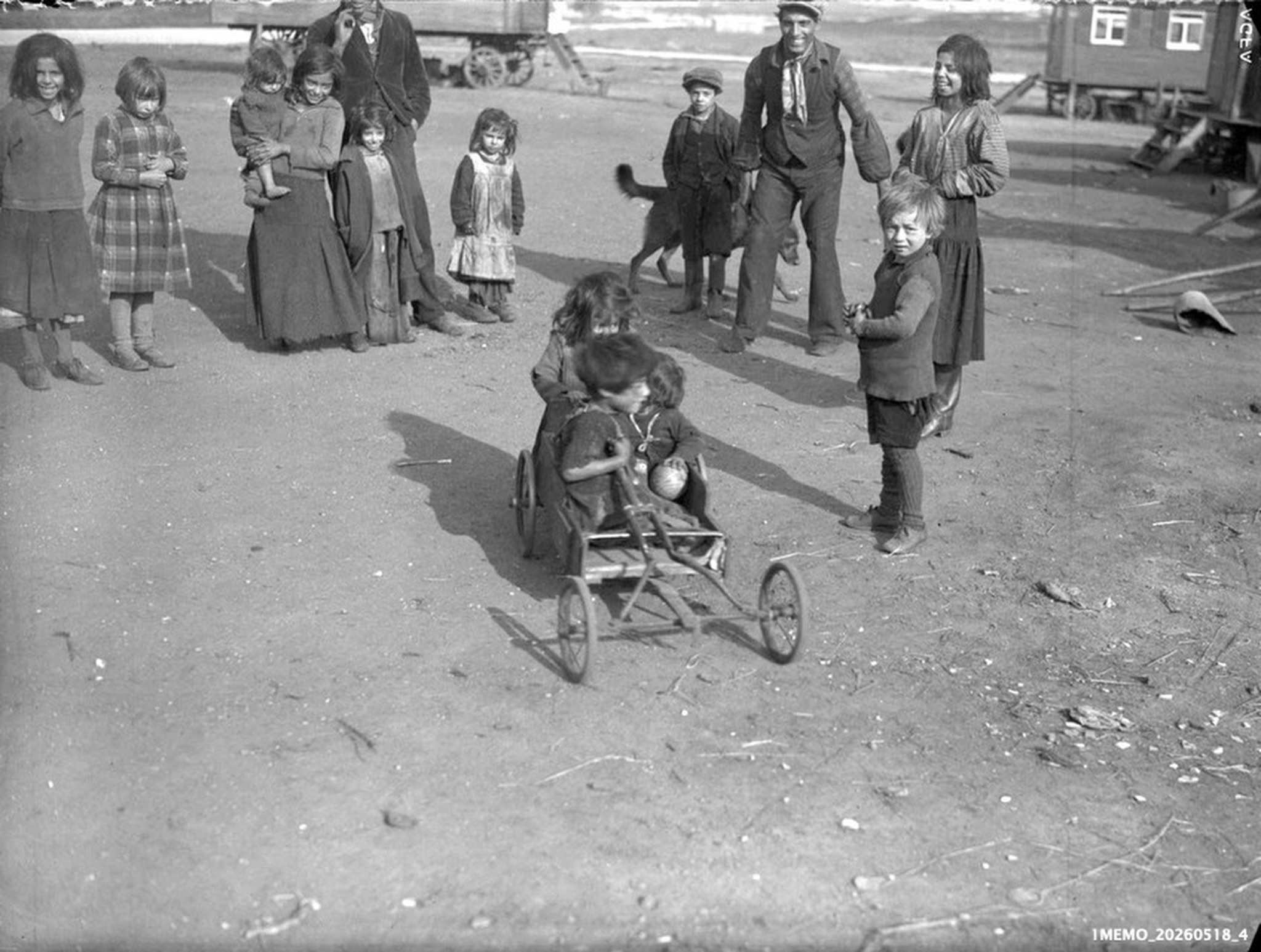
The toddler Settela in the arms of her older sister Elisabeth Steinbach at the Heksenberg Sinti caravan site in 1935 • Photo Jan de Jong • 1MEMO_20260518_4
Settela Steinbach became known as the girl with the headscarf, featured a few seconds in the Westerbork film by Werner Rudolf Breslauer showing the deportation of the Steinbachs’ and other nomad families — all together ca 245 Sinti and Roma, and ca 450 Jews — on May 19th 1944 from the dutch transit camp Westerbork to Auschwitz (1,2).