Women – Imazighen (‘free people’) – working in Morocco, filmed using the first ‘ultra-slim’ Sony DSC-T1 camera, September 2005, inside and outside Kasbah Dar Daïf, in Talmasla village (Ouarzazate), and in the palm grove and Todgha Gorge around the oasis town Tinghir south of the High Atlas Mountains, and at Kasbah Xaluca near the Sahara oasis town Erfoud. Background music in first part of the film : Debdou by Idan Balas | Artlist
Citation info : Free Women’s Day | 20240308 | @1MEMO | Miracles•Media | TakeNode 5ee79397-5d9b-4ae0-9238-cefd977f7d83 | URL 1-memo.com/2024/03/08
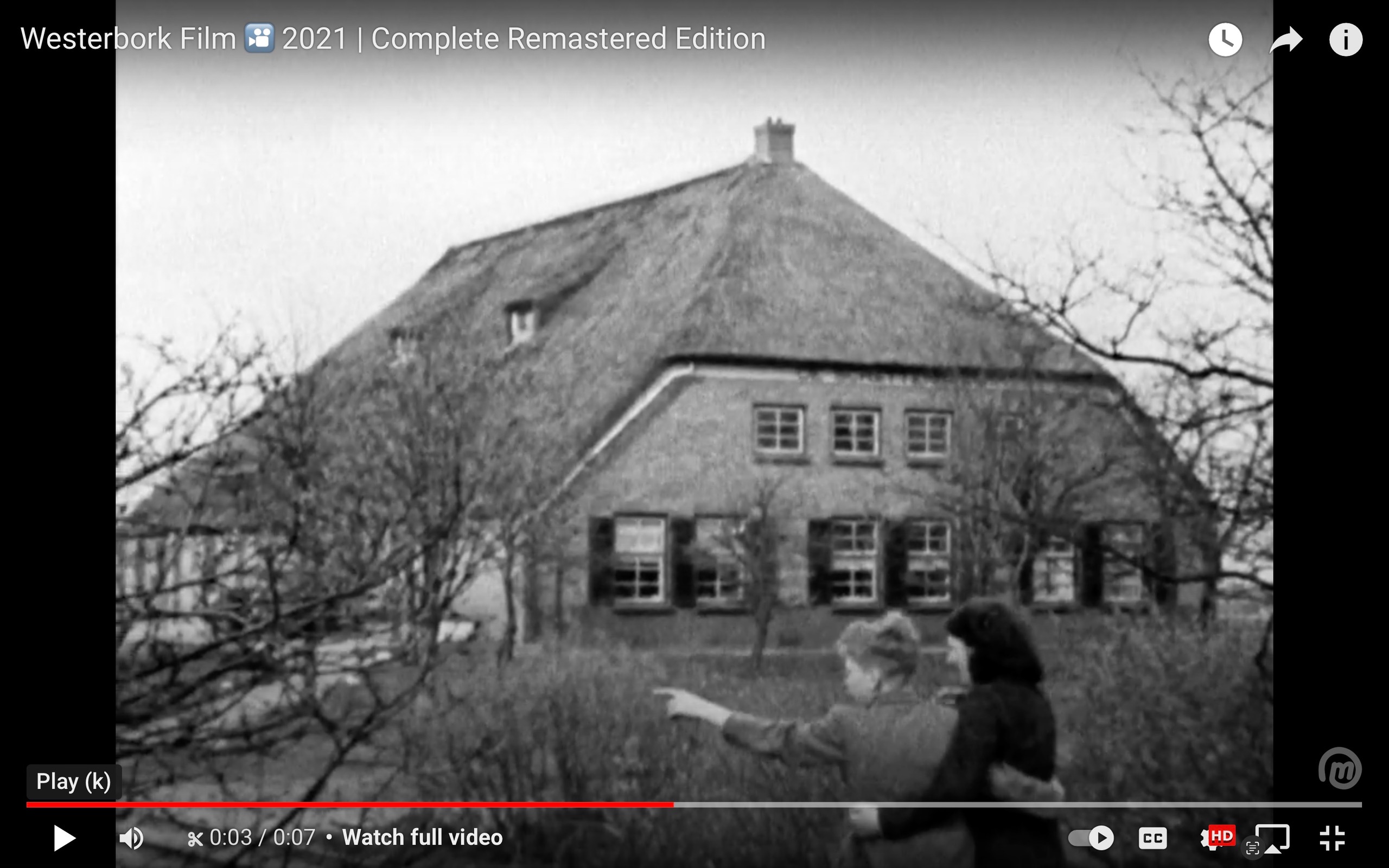
Filmmaker Rudolf Breslauer also filmed two of his children in the Westerborkfilm…
Stefan (left) & Ursula Breslauer, children of Rudolf Breslauer, the filmmaker of the Westerbork film at the farm of Camp Westerbork in 1944 – identified by the dutch photographer Sake Elzinga, who received Breslauer’s family photo albums last year when the family of Ursula – the only survivor – visited an expo on Breslauer in the Westerbork museum in the Netherlands.
Camp commander (SS-Obersturmführer) Albert Gemmeker ordered the Westerbork film , made by the German Jewish prisoner, photographer, Rudolf Breslauer in the spring of 1944.
Today 80 years ago – March 5, 1944 – the camp is an ‘Arbeitslager’ – a work camp – when Rudolf Breslauer starts filming the daily life of the Westerbork prisoners — inside : in the barracks, for example a religious service, cabaret, workshops, factories, aircraft and battery recycling, medical care, and outside the barracks : construction of a greenhouse, a football match, women working out, chopping wood, incoming transports, and eventually also the departure of a deportation train. After Breslauer films the deportation of Jews, Roma and Sinti to Bergen-Belsen and Auschwitz on May 19, 1944 the filming stops. The haunting image of the 9-year-old dutch Sinti-girl Settela, standing in the closing doors of the goods train, and the unique footage of that deportation train that leaves the Westerbork camp, became iconic after the war.
Deportation Breslauer family
Werner Rudolf Breslauer , his wife Bella Weihsmann, sons Stefan and Max Michael (Mischa), and daughter Ursula were deported autumn 1944 from Westerbork to Theresienstadt and Auschwitz. Only Ursula survived.
Stefan & Ursula Breslauer in Westerborkfilm | 20240305 | Settela•Com | Frame 127475 from Westerbork Film 🎦 2021 | 20220302 | Settela•Com | ISSN 2949 9313 | Footage filmed by Rudolf Breslauer in 1944, courtesy of NIOD | Sound and Vision
Scene with Stefan & Ursula Breslauer, starting at 56:13 in the 1986 RVD edition of the Westerborkfilm: Stefan & Ursula Breslauer in Westerbork Film RVD | 20240305 | Settela•Com | URL https://youtube.com/clip/UgkxfNzA72JeGgVoOFp_VTI4EQQr3yTwXu6_
Settela Film | 20220630 | Michel van der Burg | Settela•Com
Deportation Westerbork Film | 20210719 | Michel van der Burg | Settela•Com
Zoom in 16x at Grey heron – Ardea Cinerea – in the woods , Green Heart of Holland. Testing the April 2012 bought Sony DSC HX9V (for use by others perhaps) – never used this ‘new’ camera all those years. The heron’s partner isn’t in the frame , because I tested a combined ‘easy’ photo/video mode (intelligent Auto)…which introduces black bars top/bottom the moment video recording is started.
I am used to using the video only mode on Somny cameras…then this problem doesn’t happen.
Nice camera for the 2010s because of the progressive video recording .. a novelty those days.
Here mp4 (1440x1080p) video, which seems equivalent with the AVCHD (1920x1080p) mode that requires 2x the data , and AVCHD requires special software to convert (a video editing app) before the video is available outside the camera.
Citation info : Zoom | 20240225 @1MEMO | TakeNode d584656c-7c66-4820-aeec-1e0b23601e75 | URL 1-memo.com/2024/02/25