

Alliteration … politicians image on Holland elections ;)
#news #phoney #image #unreal #holland #politics
Image : Phoney • Michel van der Burg • Miracles•Media • @1MEMO 20251029
Alliteration … politicians image on Holland elections ;)
#news #phoney #image #unreal #holland #politics
Image : Phoney • Michel van der Burg • Miracles•Media • @1MEMO 20251029
Sunrise October 2, 2025, in the Levantine Sea ( East Mediterranean Sea ) the Israeli army (IDF) intercepts the little sailing vessel ‘All In’ sailing to Gaza in a convoy of around 40 small ships of the Global Sumud Flotilla, carrying symbolic humanitarian aid, on a civilian maritime mission to break the Gaza blockade and open a humanitarian corridor for sustained aid deliveries. Images from Global Sumud Flotilla.
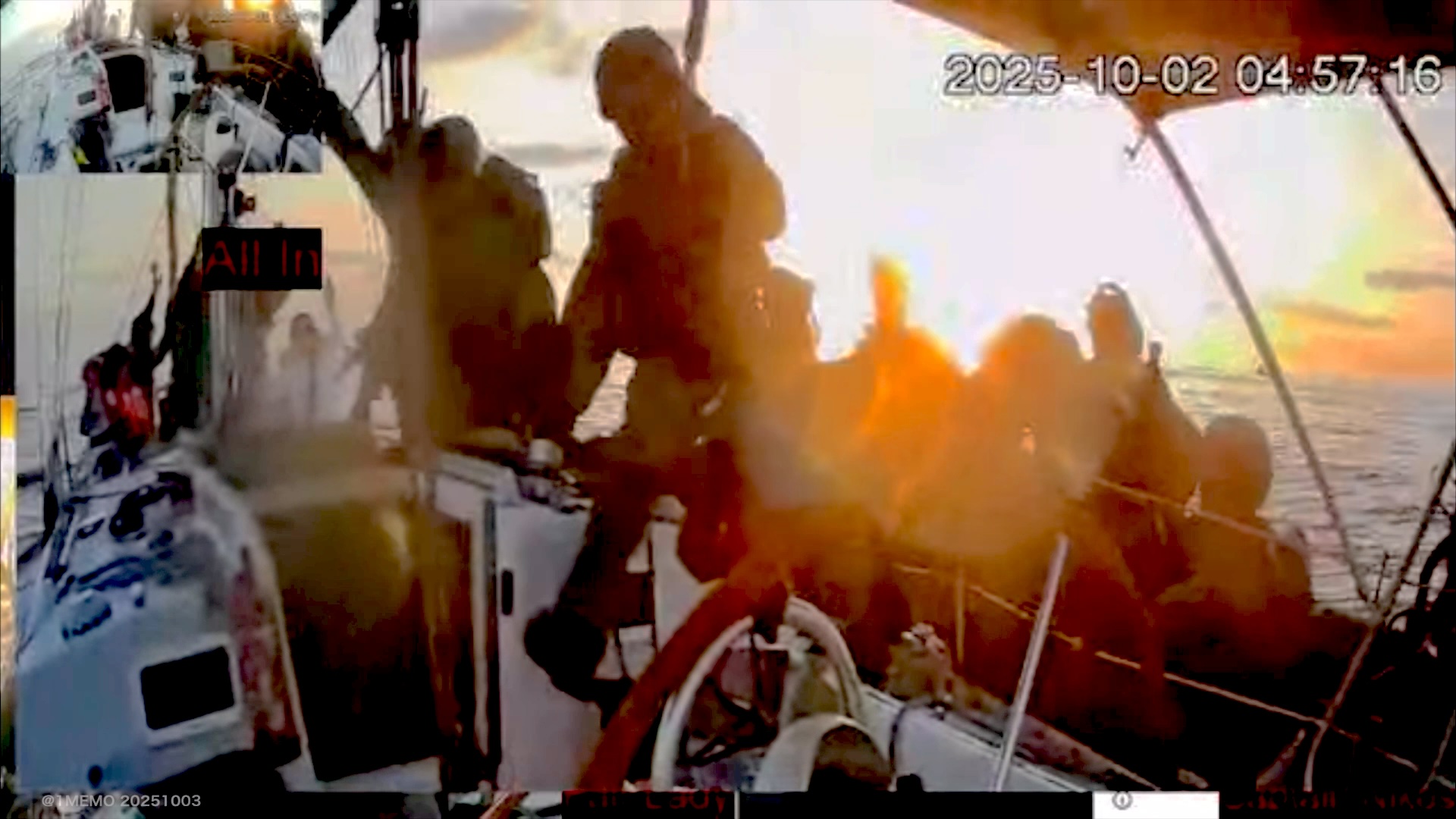
Mikeno, another small vessel in the convoy, reported “We see land” on the radio around 9 nautical miles from the coast in Gaza waters, where it stopped before being intercepted (see Map).

All In (Khan Yunis MMSI 228128870 )
Mikeno (Al Bireh MMSI 227895860 )
Video edit from live recording of the 24/7 Livestream Of Global Sumud Flotilla that started Sep 29, 2025.
#global #sumud #flotilla #Gaza #ship #sailing #sea #water #IDF #news #AllIn #Mikeno #Israel #Palestine #intercept
Citation info : Global Gaza Flotilla • @1MEMO 20251003
Live at https://www.youtube.com/live/uEN2bWFtpjU?si=63klpaccf1VkKCGa
#global #flotilla #Gaza #ship #sailing #ship #sea #change #water #sea #IDF #news
Sailing to Gaza • @1MEMO 20251002
Moments from a vibrant testimony and jazz by Simon Gronowski at the Saint-Sépulcre school in Liège, Belgium, 19 november 2013.
The Institut Saint-Sépulcre (now S2J School Center) hosted 3 sessions with Simon Gronowski that day for different age groups, including adults in the evening — and, in between, an intimate jazz moment was created in the surreal ambience of the school’s chapel.
Thanks to friends Philippe Renette (co-producer), Simon Gronowski, Koenraad Tinel (Photo Dieter Telemans featured in Die Welt , Saturday 16th Nov 2013 – Feinde wie wir, by Felix Stephan) and Patrick (assisting with sound), staff Marc Belleflamme and André Hérin, and teachers Christine Marchal, Ingrid Lothe, others, and the Saint-Sépulcre students.
Special thanks to the students Hélène, Charline, Tristan, Kimberley, Elodie, Farah, Esther, Estelle, Laetitia, Catherine, Tracy, and Pauline for making possible the unique events that month in 2013 for this Miracles film project.
Filmed by Michel van der Burg at the Station Liège-Guillemins, and Institut Saint-Sépulcre , Liège, Belgium, 19 november 2013.

French talks with English subtitles in open captions (OC).
Miracles Docs #8 :
The first French edition was published in 2022 as Simon Stompin’ at the Saint Sépulcre | Miracles•Media | 20221119 | ISAN 0000-0007-329C-0008-C-0000-0001-0 .
The here presented, second, edition is titled ‘Saint Sepulcre Moments’ and has open captions (burned in) showing English subtitles.
Citation info : Saint Sepulcre Moments | Miracles Docs #8 | Miracles•Media | 20250918 | ISAN 0000-0007-329C-0008-C-0000-0000-1 | TakeNode 3cb541dc-0806-4a0e-bafb-7cbf4387f6ca
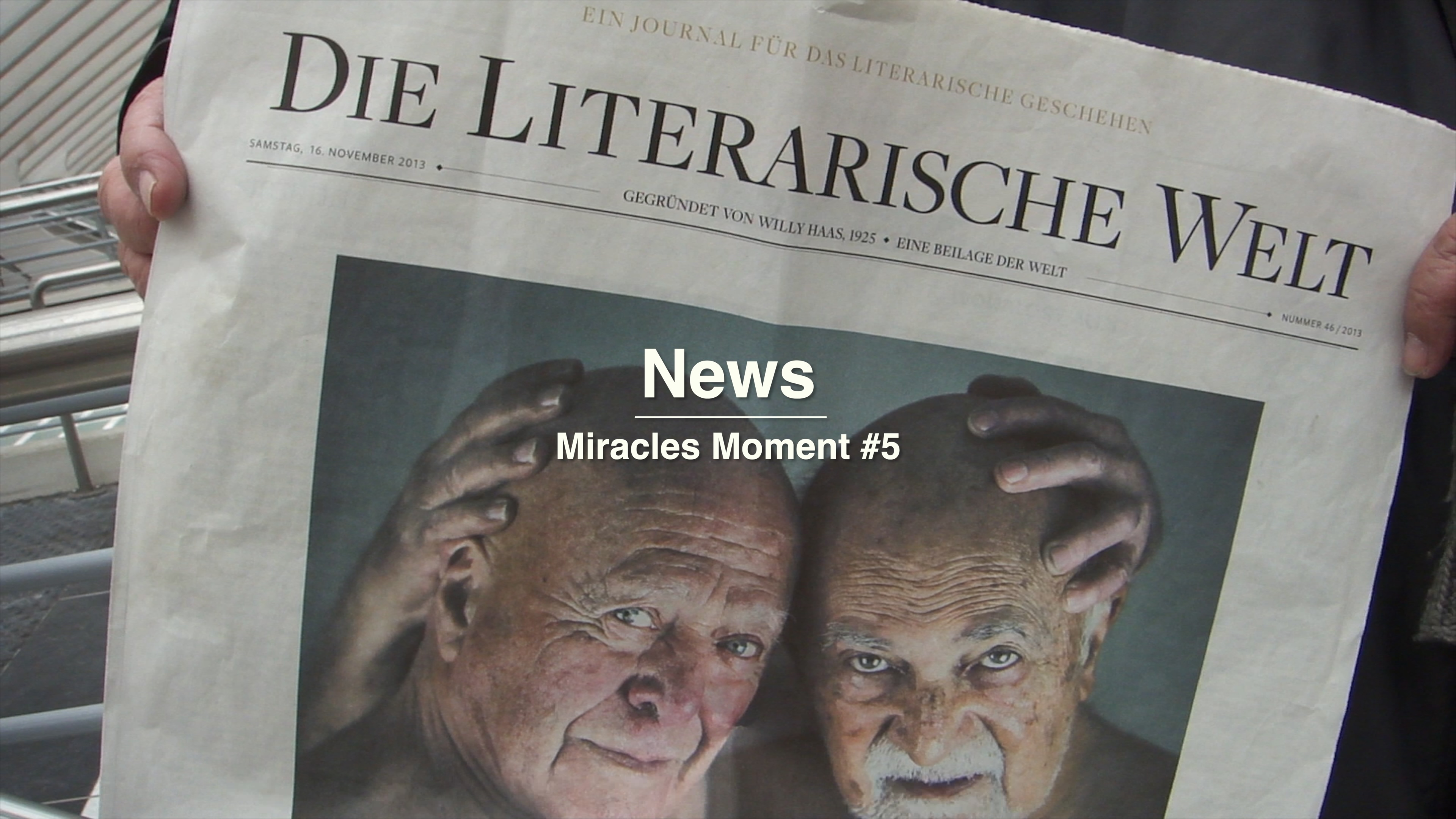
Tuesday , November 19, 2013, Simon Gronowski arrives at Station Liège-Guillemins on his way to give a series of testimonies all day at the Saint Sépulcre school in Liège, Belgium. When he gets off on the platform, and teacher Philippe Renette and I – while filming – welcome him, Simon surprises us, showing me last Saturday’s news in the German national daily newspaper Die Welt (The World) at the front page of the weekly supplement Die Literarische Welt (The Literary World).
In the article ‘Feinde wie wir’ (Enemies like us) in the German newspaper Die Welt of November 16, 2013 (1), cultural journalist Felix Stephan reports on his conversation in Berlin with Simon Gronowski and Koenraad Tinel, which took place after their presentation there at the 13th International Literature Festival Berlin (2) of their book (3,4) ‘Enfin libérés’ / ‘Eindelijk bevrijd’ (Finally liberated) — the story of their history as children of war and the special friendship since their first meeting a year earlier, in 2012 (5).
The lead of the story reads as follows (my translation):
A story of reconciliation: Belgians Simon Gronowski and Koenraad Tinel were children during World War II: one a Jew whose family was murdered, the other the son of a committed Nazi. Decades later, they discover how close their lives were and send an emphatic message to Europe.
French, German, with English subtitles.

1. Feinde wie wir. Felix Stephan | Die Welt (Germany) Nov 16, 2013. URL https://www.welt.de/print/die_welt/literatur/article121955638/Freunde-wie-Brueder-Feinde-wie-wir.html
2. Finally Free after 70 years. Simon Gronowski and Koenraad Tinel (Belgium). internationales literaturfestival berlin (13.ilb), Sep 7, 2013.
3. Ni victime, ni coupable, enfin libérés. French edition (2013) by Simon Gronowski, Koenraad Tinel, David Van Reybrouck. Renaissance du livres ISBN 978-2507051051
4. Eindelijk bevrijd – geen schuld, geen slachtoffer. Dutch edition (2013) by Simon Gronowski, Koenraad Tinel, David Van Reybrouck. Hannibal ISBN 978-9491376405 . Reissue (2021) 978-9464366204
5. Finally liberated after 70 years | 20130313 | Michel van der Burg | michelvanderburg•com | Miracles•Media | URL https://michelvanderburg.com/2013/03/13/finally-liberated-fr/
6. Enemies like us • Miracles•Media • 20250915_1 • TakeNode | Still (frame 340) Simon Gronowski shows Die Literarische Welt at Station Liège-Guillemins, Nov 19, 2013 , with a portrait photo of Simon Gronowski and Koenraad Tinel by Belgian photographer Dieter Telemans – https://www.dietertelemans.com
Citation info : News | Miracles Moment #5 | Miracles•Media | 20250915 | ISAN 0000-0007-36B4-0005-4-0000-0000-P | TakeNode 49f6c290-d00e-4969-9fec-fa1163517991
Summary — October 1948 Dutch cinema news on the departure of the first Jewish ship – the SS Negbah – in Amsterdam, bound for Haifa, Israel, with immigrants, including the circa 500 Jewish Children from Eastern Europe after their one year stay in the Children’s Village Ilaniah in Holland, where they were trained for their future task in Palestine.
Episode #1 — In the first episode the arrival of 500 Jewish Children in Holland by steam train from the Dutch National Cinema newsreel of Sep 22, 1947 was reported. Displaced children from Eastern Europe, many of whom lost their parents in the Nazi camps. Travelling from Romania to their destination in the Netherlands, the Children’s Village “ILANIAH”, where they would stay for one to two years, to be trained for a mission in Palestine. The children were then between six and fourteen years old (Note 1).
Episode #2 — The second episode of this short series on these 500 Jewish Children, documented their stay and education in this Children’s Village Ilaniah in Apeldoorn (Netherlands), from their arrival Sep 1947 untill the closing of Ilaniah , October 6, 1948, the day the children started their journey to Israel (Note 2).
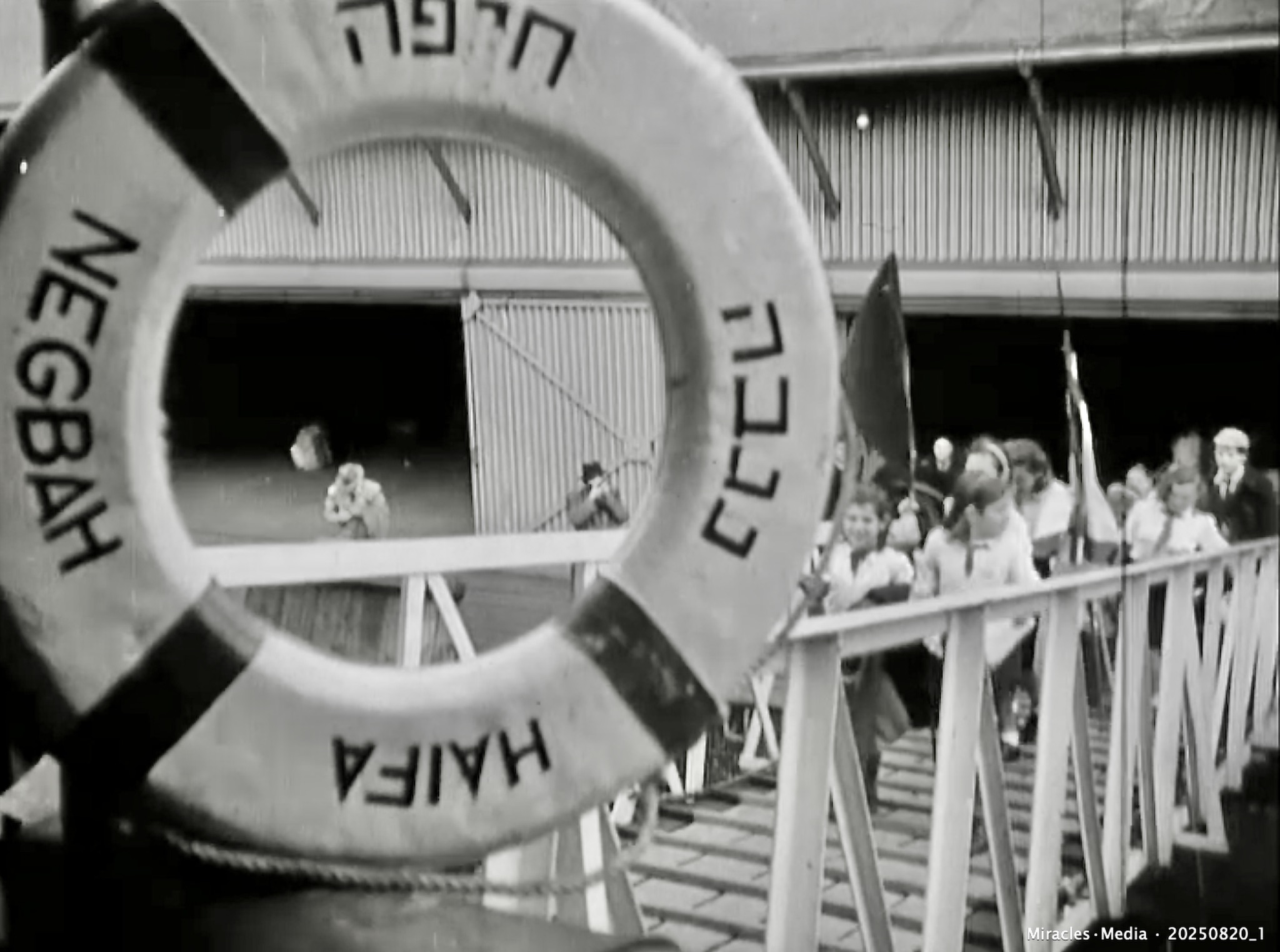
Episode #3 — Here the third , and final, episode , with the Dutch National Cinema Newsreel of October 1948, documenting the departure of the children of Ilaniah on the first Jewish ship – the SS Negbah (Hebrew for southbound) – in Amsterdam for their journey to Haifa, Israel. This was one of the first ships to transport legal immigrants to Israel.
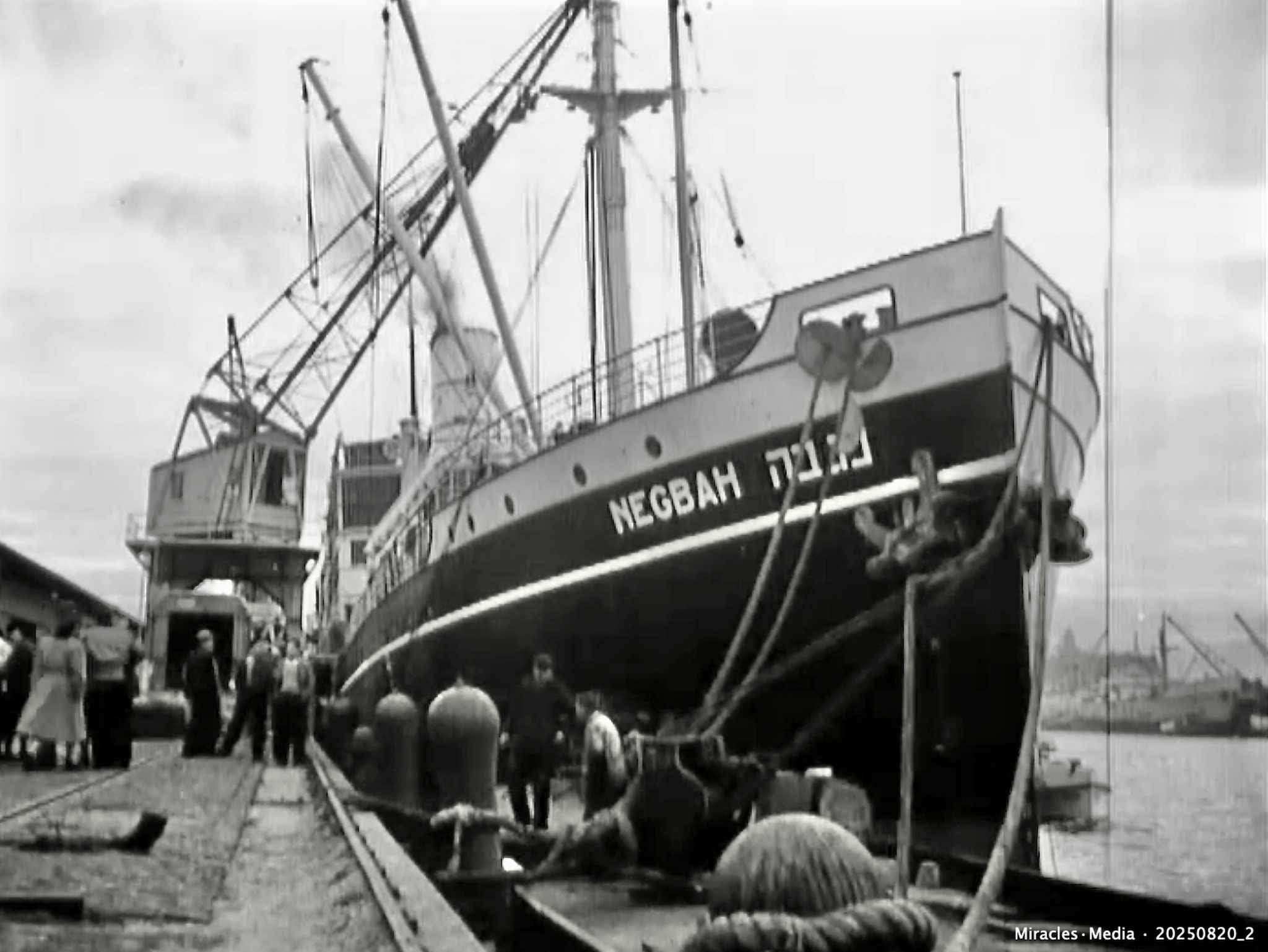
In October 1948, in the port of Amsterdam, the Netherlands, the ship Negbah is ceremonially handed over to the Israeli Shipping Company of Haifa. The Israeli national anthem is sung, the flag is raised, and the chairman of the Dutch Zionist League, Professor S. Kleerekoper, delivers a speech. A Torah scroll is carried on board on behalf of the board of the Netherlands – Israelite Main Synagogue and received by the captain.
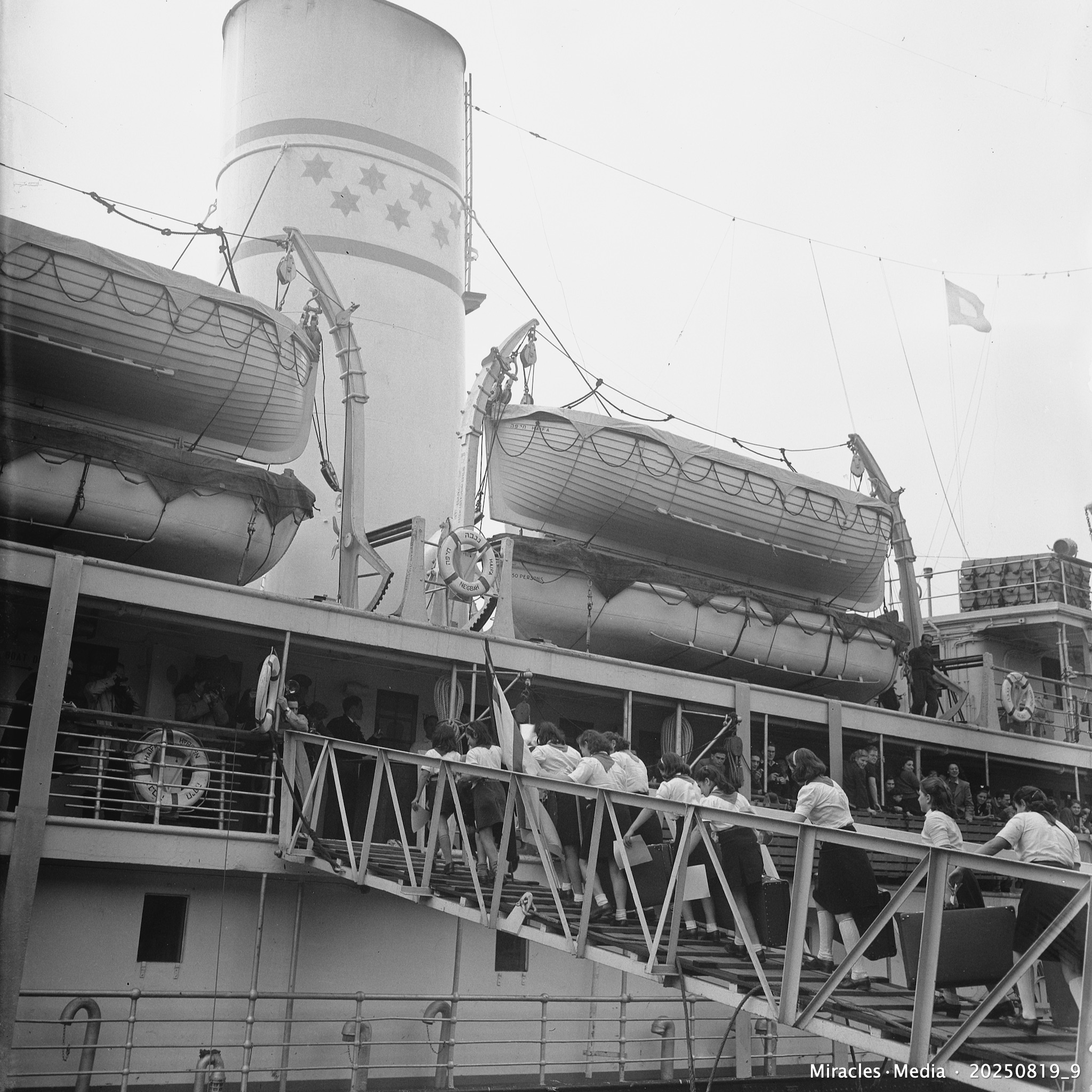
The SS NEGBAH starts its first voyage October 6, 1948 with about 600 passengers from Amsterdam to Haifa, including over 400 of the mainly Romanian Jewish children,
after their one year stay in the Children’s Village Ilaniah in Holland, where they had been trained for their future task in Palestine.
1. 500 Jewish Children • Arrival in Holland • 20250811 | Michel van der Burg | Miracles•Media | Settela•Com | ISSN 2949-9313 | TakeNode 5c6e966b-5b45-47ef-ba01-17650007ae20 | URL https://settela.com/2025/08/11/
2. 500 Jewish Children • Ilaniah • 20250819 | Michel van der Burg | Miracles•Media | Settela•Com | ISSN 2949-9313 | URL https://settela.com/2025/08/19/500-jewish-children-ilaniah-20250819/
This ship was built here years ago.
It sailed under various flags.
Now it has been purchased by the Israeli shipping company, and symbolically transferred in Amsterdam.
Professor Kleerekoper outlines the importance of this Jewish ship for immigration in Israel. And ends his speech with the assurance that he
‘wants to wish a safe journey.
Not only the crew, also the passengers, but also the entire Jewish people, a safe journey in its path, through a difficult economy, in a threatened world , and a great struggle for independence of its own culture.
The board of the Netherlands – Israelite Main Synagogue donates a Torah, which will remain on board as long as the Negbah will transport Jewish emigrants.
The ship’s name is also a slogan: ‘Na Negev’ – To the Negev – a desert area in southern Palestine that Israel claims.
More than a million immigrants can settle here , once this area has been made fertile.
The NEGBAH takes about 600 emigrants on its first voyage, including a number of stateless people, and almost 500 mainly Romanian children, who were temporarily housed in Apeldoorn.
May the passengers find a happy home in their new fatherland. Shalom.
Dit schip werd hier jaren geleden gebouwd. Het voer onder verschillende vlaggen.
Nu werd het aangekocht door de Israëlische scheepvaartmaatschappij en in Amsterdam symbolisch overgedragen.
Professor Kleerekoper schetst het belang van dit Joodse schip voor de immigratie in Israël. En eindigt zijn rede met de verzekering dat hij :
‘een behouden vaart wil wensen…niet alleen de bemanning, ook de passagiers, maar ook het gehele joodse volk, een behouden vaart in zijn weg de moeilijke economie in een bedreigde wereld en een grote strijd om zelfstandigheid van de eigen cultuur.’
Het bestuur van de Nederlands-Israelitische Hoofd Synagoge schenkt een wetsrol, die zo lang aan boord zal blijven als de Negbah joodse emigranten zal vervoeren.
De naam van het schip is tevens een leuze, ‘Na Negev’ – Naar de Negev – een woestijnstreek in het zuiden van Palestina, waarop Israël aanspraak maakt.
Meer dan 1 miljoen immigranten zal dit gebied kunnen opnemen, wanneer het eenmaal vruchtbaar zal zijn gemaakt.
De Negbah neemt op zijn eerste reis ongeveer 600 landverhuizers mee, onder wie een aantal statenlozen en bijna 500 in hoofdzaak Roemeense kinderen, die voorlopig in Apeldoorn waren ondergebracht.
Mogen de opvarenden in hun nieuwe vaderland een gelukkig tehuis vinden. Shalom.
Tags #Negbah #children #Jewish #ship #Palestine #Aliyah #Holland #Ilaniah #Romania #Amsterdam #zionism #education #emigration #holocaust #news #history #ww2 #Polygoon #NIHS #torah
Film source: Dutch cinema news Polygoon Hollands Nieuws (Producer | Oct 1948) courtesy of Netherlands Institute for Sound and Vision (Open Images).
Citation info : 500 Jewish Children • SS Negbah to Israel • 20250820 | Michel van der Burg | Miracles•Media | Settela•Com | ISSN 2949-9313 | TakeNode 2b1da26e-a39c-4d9d-960a-c1ef669d1509 | URL https://settela.com/2025/08/20/
Dutch cinema news reports the arrival of a steam train carrying approximately 500 Jewish children in Holland, Monday, September 22, 1947 — filmed here during a stopover at Nijmegen station.
Displaced children from Eastern Europe, many of whom lost their parents in the Nazi camps. Through collaboration with the International Refugee Organization (IRO) and the Joint American Distribution Committee, they were selected in Romania from members of the eight Zionist youth organizations in Romania: Aguda, B’nei Akiba, Gordonja, Dror Igoed, Dror Haboniem, Hanoar Hatzioni, Hashomer Hatzair, and Betar. For orphans who lost both parents, the political preference of the deceased parents was estimated.
The children were first concentrated in Prague.
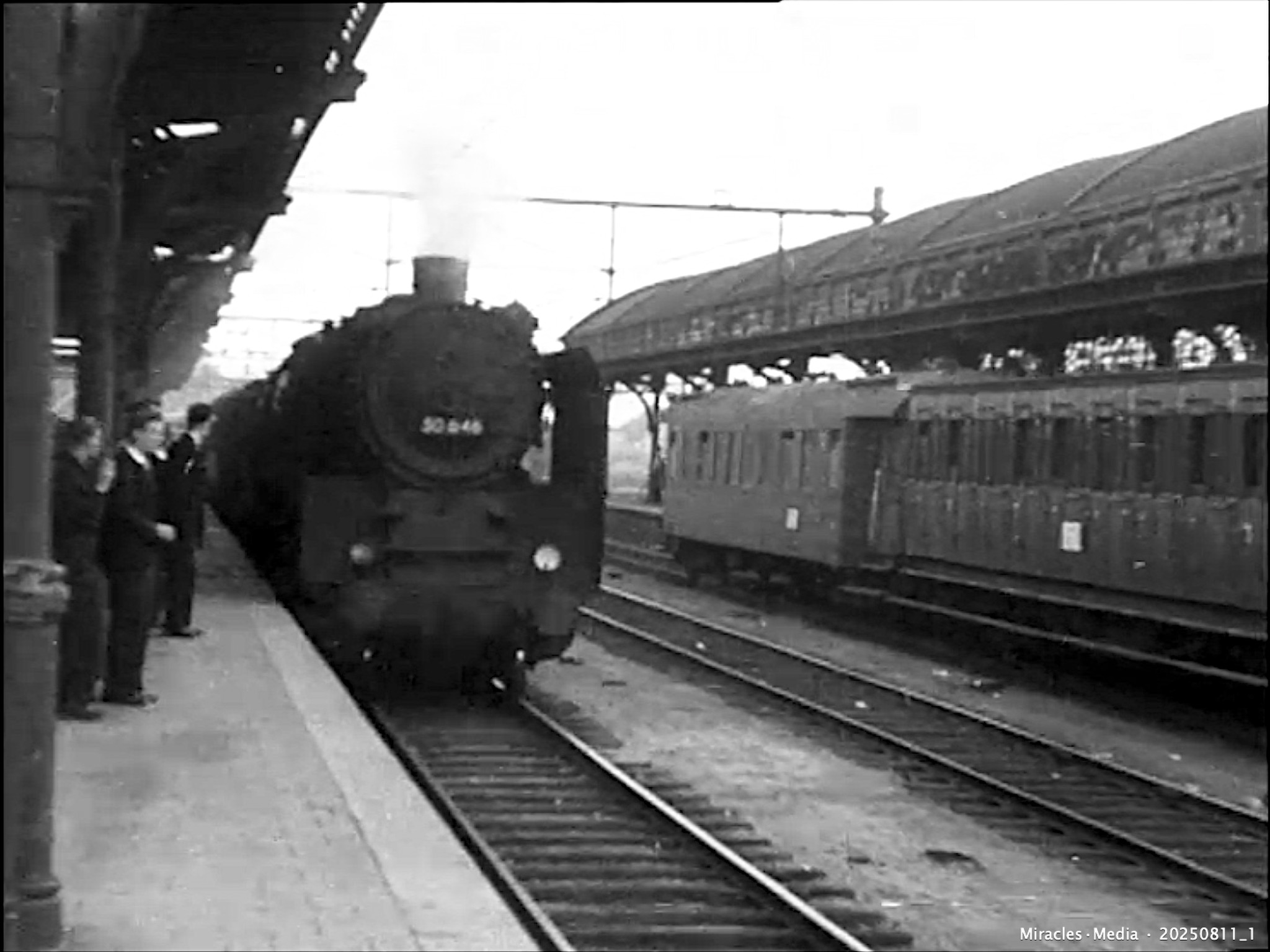
On Saturday evening, September 20, 1947, they began their train journey from Prague (Prague-Bubny), bound for the children’s village “Ilaniah” specially established for them in the “Het Apeldoornse Bos” building complex near Apeldoorn, the Netherlands. They arrived there on Monday evening, September 22, 1947.
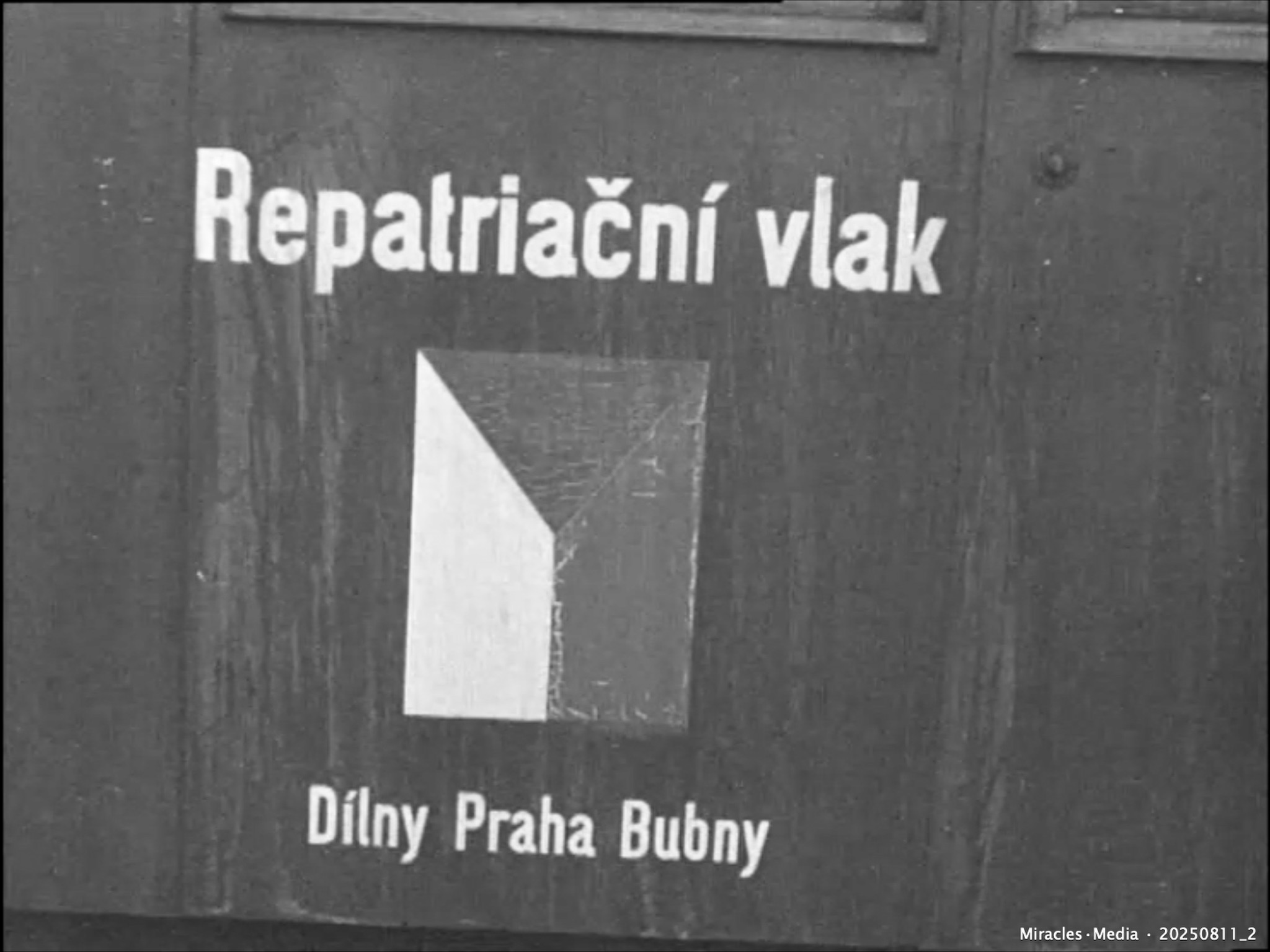
1) Sign on train :
Repatriation train • Prague Bubny Station (Repatriačni vlak • (Dílny Praha Bubny)
2) Transcript (translated from dutch)
This train arriving in Nijmegen [Netherlands], brings 450 Jewish children from Eastern Europe to our country, most of whose parents died in the gas chambers of the German concentration camps.
They also lived in camps after the war, together with thousands of others, and most of them show that.
Our government has allowed these children, all between the ages of 6 and 14, to stay in the Netherlands for 3 years, in Apeldoorn, where they will be trained for their future task in Palestine.
Jewish organizations ensure that the children get something to eat and drink after the tiring journey.
And that turns out to be well received.
3) NL – Transcript (dutch , original)
Deze trein die in Nijmegen arriveert, brengt naar ons land 450 Joodse kinderen uit Oost-Europa wier ouders voor het merendeel de dood vonden in de gaskamers der Duitse concentratiekampen.
Ze hebben ook na de oorlog tesamen met nog duizenden anderen in kampen geleefd, en de meesten van hen is dat wel aan te zien.
Onze regering heeft toegestaan dat deze kinderen, allen tussen 6 en 14 jaar, gedurende 3 jaar in Nederland verblijven, in Apeldoorn, waar ze opgeleid zullen worden voor hun toekomstige taak in Palestina.
Joodse organisaties zorgen ervoor, dat de kinderen na de vermoeiende reis wat te eten en te drinken krijgen.
En dat blijkt goed in de smaak te vallen.
Tags #children #train #Jewish #displaced #DP #orphan #Palestine #Aliyah #Holland #Ilaniah #Romania #Apeldoorn #Nijmegen #school #zionism #training #education #emigration #holocaust #news #history #ww2
20250818 Minor text edit , with addition : For orphans who lost both parents, the political preference of the deceased parents was estimated.
20250820 correction description text source date (45>47)
Source: Dutch cinema news Polygoon-Profilti (Producer | 22 September 1947) courtesy of Netherlands Institute for Sound and Vision (Open Images).
Citation info : 500 Jewish Children • Arrival in Holland • 20250811 | Michel van der Burg | Miracles•Media | Settela•Com | ISSN 2949-9313 | TakeNode 5c6e966b-5b45-47ef-ba01-17650007ae20 | URL https://settela.com/2025/08/11/

