Sarah’s Southern France Tour • Nomad #2 • @1MEMO_20260823 • Michel van der Burg • Miracles•Media • Southern France camping tour in the Provence & Beaujolais, September 1993 . TakeNode 6d308234-01d5-45e0-aa82-c0178747bd32
Sarah • Nomad #1 • @1MEMO_20260816 • Michel van der Burg • Miracles•Media • Camp site Fleurie vineyard, Beaujolais, France, September 1993 . TakeNode ef4aa325-1d6a-4093-95c9-74092af6e453
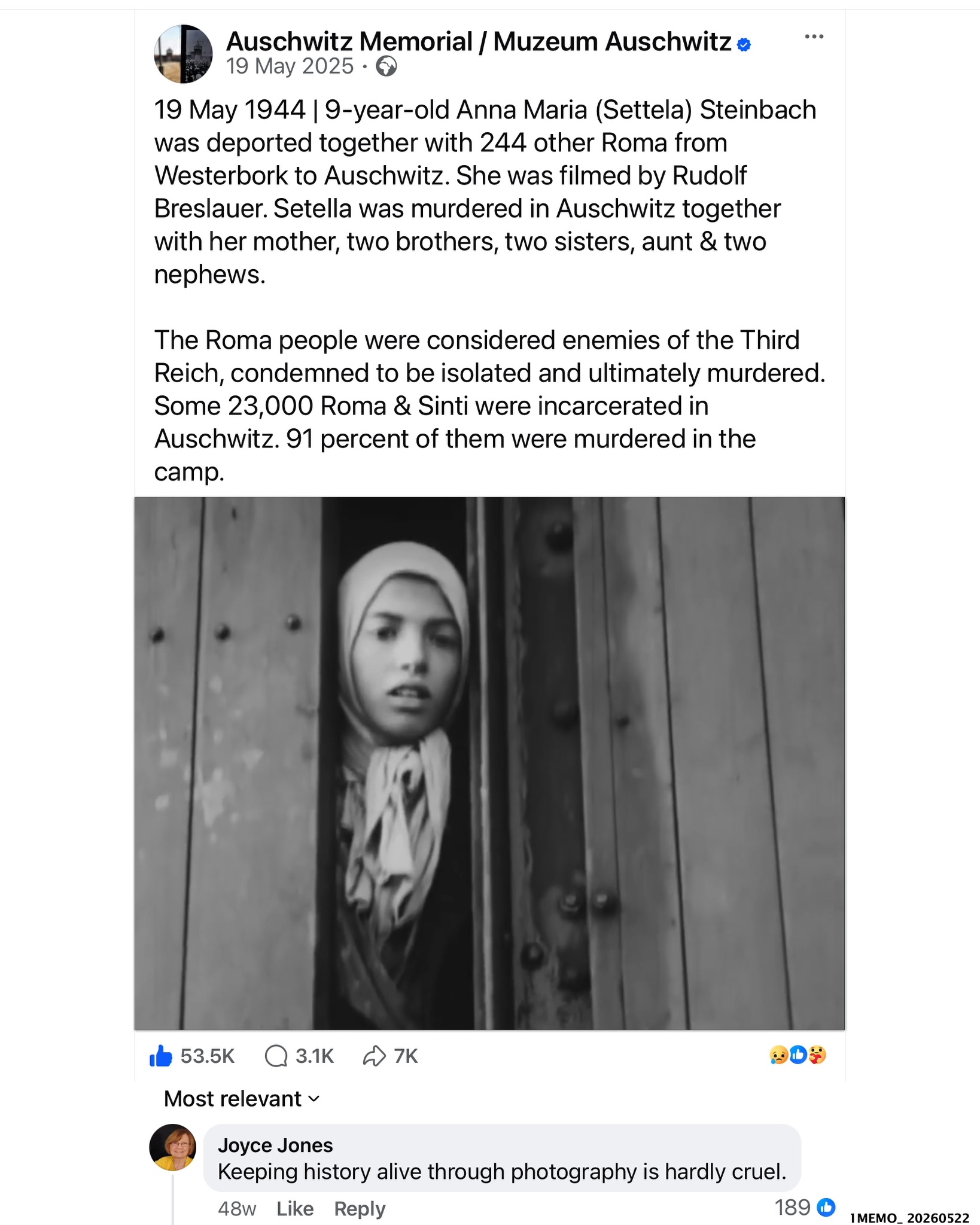
Deportation of Dutch Roma to Auschwitz – 19 May 1944 • 9-year-old Anna Maria (Settela) Steinbach was deported together with 244 other Roma from Westerbork to Auschwitz (1,2) • Source : Settela•Com • Collection Auschwitz Museum • URL https://fb.watch/Hgg5lusc-8/
The Auschwitz Museum acquired the short film ‘Settela’ from Settela•Com (1) in the Auschwitz Memorial Collection (3), and is succesfully screening the film each year since 2019 on the 19th May at the Auschwitz Memorial / Muzeum Auschwitz facebook page .
Last year’s post of the film ‘Settela’ , 19th May 2025 at the Auschwitz Memorial / Muzeum Auschwitz facebook page, accumulated by now one million views, and over 3000 comments (Image 1MEMO_20260522).
The film was created in an attempt to keep the scene on screen longer on the one hand, and to preserve the natural and historical original on the other. Thus a compilation was created, showing the same scene twice. The film ends with the original 3 seconds clip selected from the Westerbork film footage shot by Jewish prisoner Rudolf Breslauer (4), and the film starts with that same clip , digitally slowed down 10× in post-production.
This film was created and first online in 2017 (5) , and published (antedated) as the first post (1) shortly after the start May 19, 2019, of the online journal Settela•Communications — short Settela•Com (6).
More on the Roma in Auschwitz , online at the Auschwitz Museum (7).
Citation info : Settela Film Auschwitz Museum • 20260522 | Michel van der Burg | Settela•Com | ISSN 2949-9313 | CC BY 4.0 | URL https://settela.com/2026/05/22
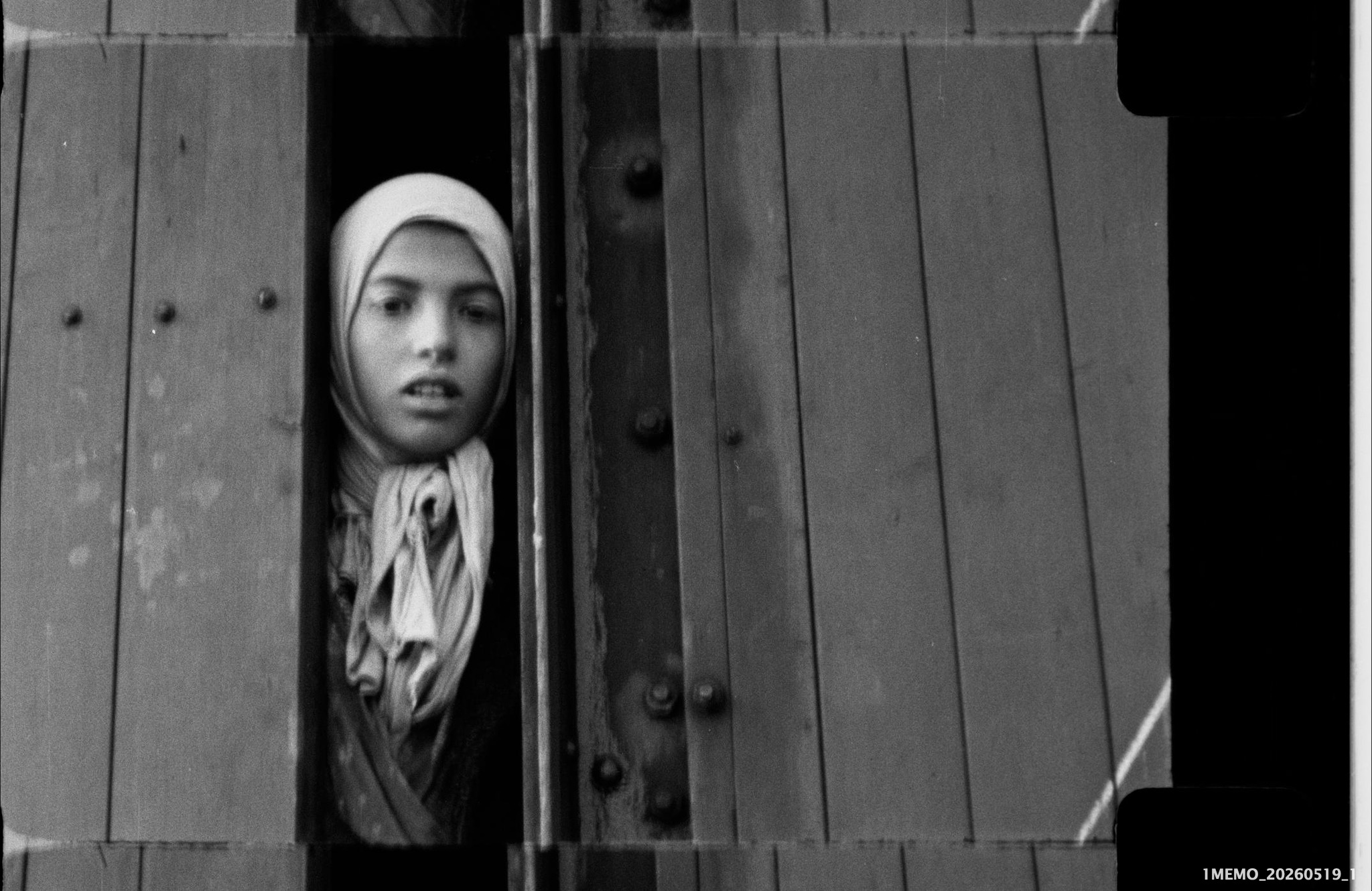
Settela Steinbach — The Girl with the Headscarf • 1MEMO_20260519_1 • Settela•Com • Frame from camera original film reel of the Westerborkfilm (1).
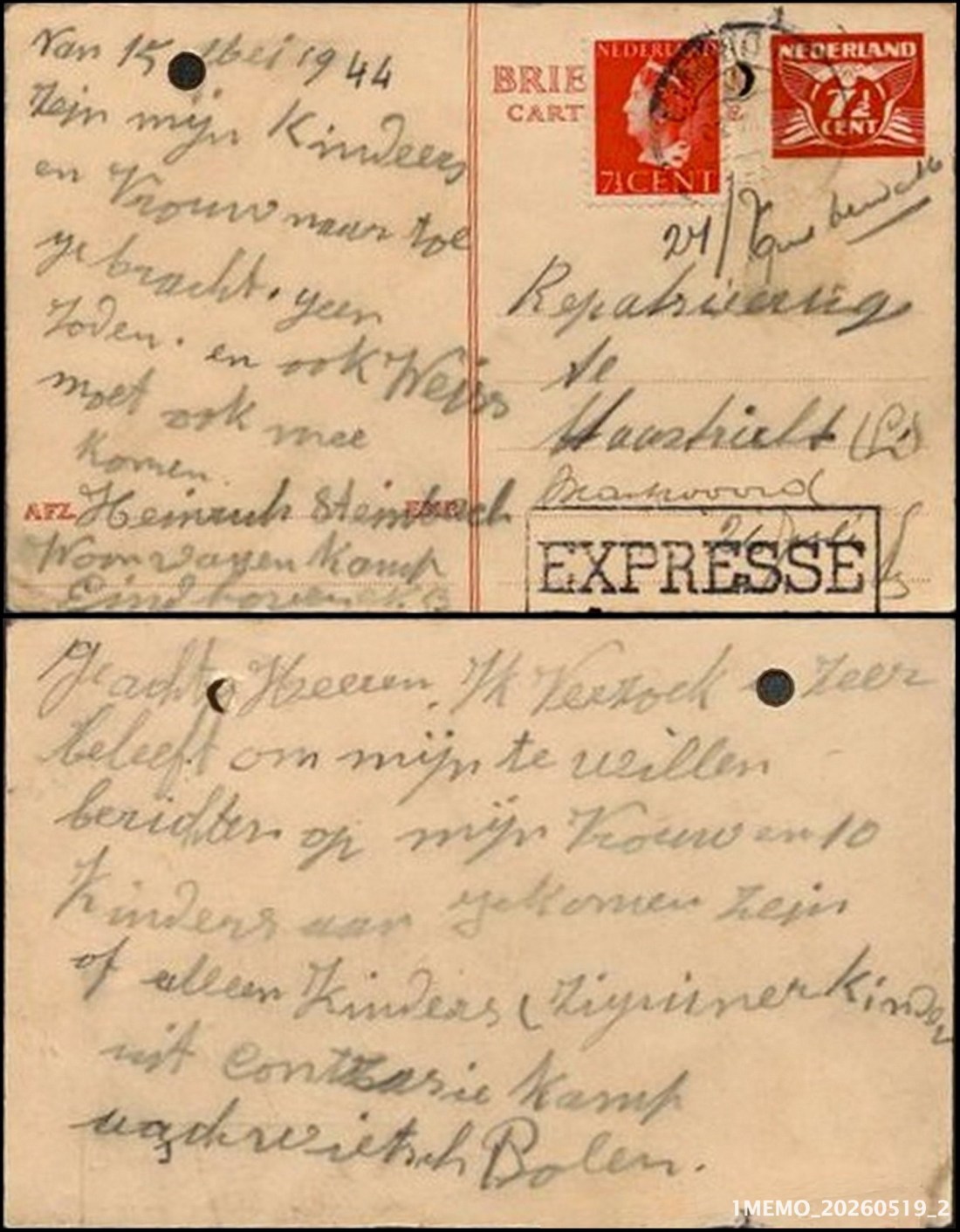
On May 19, 1944, at the Westerbork transit camp, a glimpse of Sinti girl Settela Steinbach wearing a headscarf appears between the sliding doors of a cattle car awaiting deportation to Auschwitz (1,2,3). In May 1945, her father, Moeselman Steinbach, wrote to “Repatriation” in the Netherlands: “…I very politely request you to inform me whether my wife and 10 children have arrived, or only children (Gypsy children) from the Auschwitz concentration camp in Poland.” (4).
The 9-year-old dutch Sinti-girl Anna Maria ‘Settela’ Steinbach peeks outside , at the last moment just before the sliding door is closed , standing inside a cattle car with 74 people on May 19 , 1944 in the Westerbork transit camp in Holland , when this deportation train leaves for Auschwitz-Birkenau – where Settela is murdered a few months later in one of the gas chambers (5).
While Settela peeks outside , her mother cries behind her in that cattle car : “Get out of there, or soon your head gets in between!”
She is wearing a headscarf made from a torn sheet because the Nazis shaved her head upon arrival at Westerbork transit camp on May 16, 1944, following the “Gypsy raid” carried out that same day at the Zwaaikom caravan site in Eindhoven, the Netherlands (6).
Settela Film • 20220630
Settela was filmed only a few seconds by the Jewish prisoner filmmaker Rudolf Breslauer as part of a documentary film being made in 1944 on the Westerbork camp .
Those seconds , also in slow-motion are shown in the 2022 Settela Film • 20220630 (7)
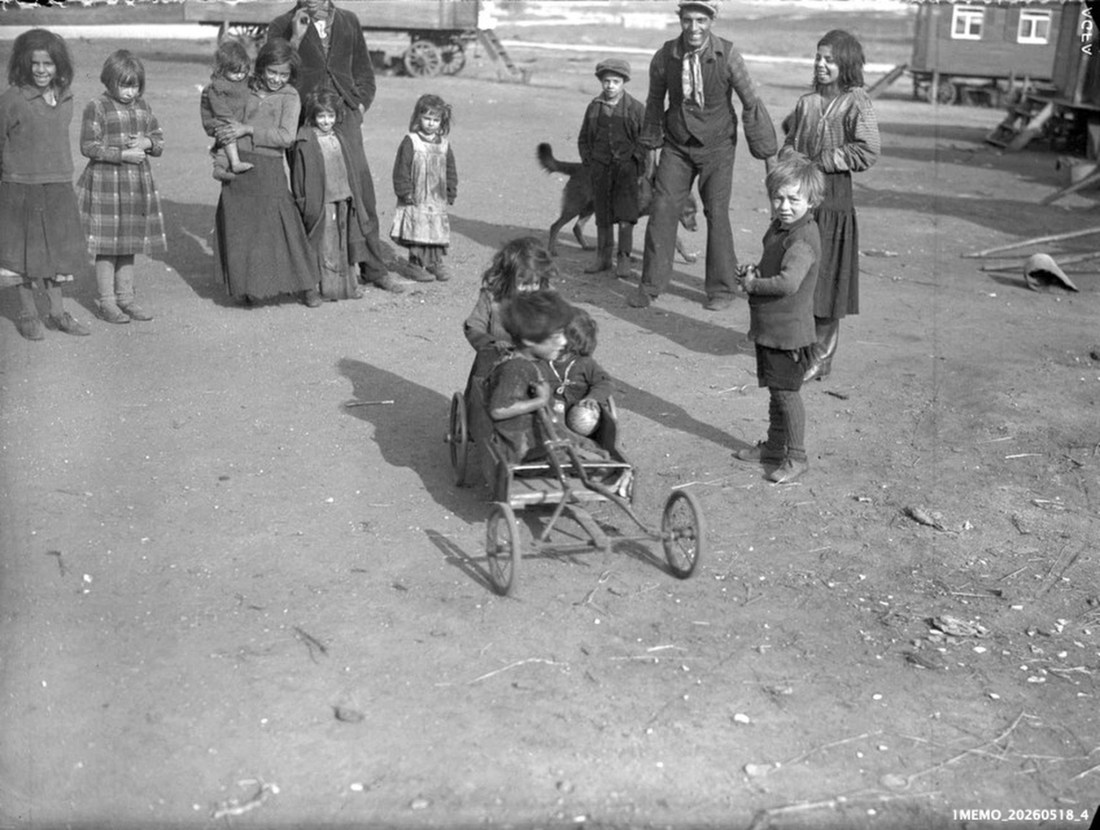
The toddler Settela in the arms of her older sister Elisabeth Steinbach at the Heksenberg Sinti caravan site in 1935 • Photo Jan de Jong • 1MEMO_20260518_4
Anna Maria (‘Settela’) Steinbach was born 23 December 1934 in Buchten, Netherlands, and photographed at age ~1 , in the arms of her older sister Elisabeth Steinbach, with others of the Steinbach family, and other families, at the nearby Sinti caravan site ‘Heksenberg’, October 1935, by photographer Jan de Jong (8) • 1MEMO_20260518_4
Settela was deported together with her brothers and sisters (Willy “Celestinus”, Willem, Elisabeth, Johanna, Philibert, Florentina, Willem, Anna), and mother Toetela (Emilia) Steinbach (born 23 March 1902 in Antwerp, Belgium), with other Steinbach and other nomad families – all together ca 245 Sinti and Roma and ca 450 Jews – on May 19th 1944 from the dutch Camp Westerbork to the Auschwitz and Bergen-Belsen camps (5,6).
Toetela’s eldest child Moekela (Magdalena; born 14 Sep 1922) had gone to Belgium and had been deported earlier – 15 Jan 1944 – with her 6 months old baby Jeanette – Toetela’s granddaughter – on the Z-Transport from transit camp Kazerne Dossin in Mechelen to Auschwitz, were they were murdered on arrival.
Settela’s father Heinrich (‘Moeselman’) Steinbach (born Nov 11, 1901 in Gründorf in Germany) died alone of grief June 6, 1946 in Maastricht in the Netherlands – his wife and 10 children had not survived the camps.
To : “Repatriation” in Maastricht (Netherlands) — “Dear Sirs, I very politely request you to inform me whether my wife and 10 children have arrived, or only children (Gypsy children) from the Auschwitz concentration camp in Poland. From May 15, 1944, my children and wife were taken there; no Jews. And Weiss had to come along too. — Heinrich Steinbach. Caravan site Eindhoven , North Brabant” • 1MEMO_20260519_2 • Settela•Com
One year earlier , May 22, 1945, two weeks after the liberation of Holland, Heinrich Steinbach — living at the caravan site in Eindhoven (North Brabant, Netherlands) — inquires about the fate of his wife and ten children on a postcard written to the “Repatriation” in Maastricht (Netherlands). The text on the postcard reads — translated from dutch (4) :
“Dear Sirs, I very politely request you to inform me whether my wife and 10 children have arrived, or only children (Gypsy children) from the Auschwitz concentration camp in Poland.
From May 15, 1944, my children and wife were taken there; no Jews. And Weiss had to come along too.
Heinrich Steinbach. Caravan site Eindhoven, North Brabant”
4 – May 1945 Postcard Heinrich Steinbach • 1MEMO_20260519_2 • Settela•Com | ISSN 2949-9313 | Source : Collectie HCL, archief Militair Gezag, Maastricht.
‘Moeselman’ Heinrich Steinbach — living at the caravan site in Eindhoven (North Brabant, Netherlands) — inquires about the fate of his wife and ten children on a postcard written to the “Repatriation” in Maastricht (Netherlands). The dutch text on the postcard reads :
“Geachte Heeren, Ik verzoek u zeer beleeft om mijn te willen berichten op mijn vrouw en 10 kinders aan gekomen zein of alleen kinders (zigeunerkinders) uit contrasie kamp uaschwietsch Polen.
Van 15 mei 1944 zein mijn kindeers en vrouw naar toe gebracht, geen joden. En ook Weiss moet ook mee komen. Heinrich Steinbach. Woonwagenkamp Eindhoven N.B.”
In 1935 the nomadic Sinti families Steinbach were photographed by Dutch photographer Jan de Jong in their caravan camp on the heath around the Heksenberg hill in the southern Netherlands. Jan de Jong was working for De Spaarnestad publishing house of the dutch weekly, catholic, illustrated magazine “Katholieke Illustratie” , that used his high quality pictures in this May 1936 spread (REF 1), with a somewhat simple romanticized short story on their origin and culture – entitled ‘Zwervers van geboorte’ or ‘Born nomad’ (my translation).
Members of other Steinbach families, I recognized in this magazine spread in the caravan window image with caption ‘Buurpraatje’ (my tr. ‘Neighbor chat’), are Anna Steinbach in the window (born 24 March 1916 – killed 31 July 1944 in Auschwitz) talking with Maria Steinbach (born 6 Nov 1912 – killed 31 July 1944 in Auschwitz) .
The 15 year old Willy (Celestinus) Steinbach (born 13 Feb 1929 in Heerlen) was deported together with his 9-year old sister Settela ((Anna Maria) Steinbach (born 23 Dec 1934 in Buchten), their brothers, sisters (Willem, Elisabeth, Johanna, Philibert, Florentina, Willem, Anna), and mother Toetela (Emilia) Steinbach (born 23 March 1902 in Antwerp, Belgium), with other Steinbach and other nomad families – all together ca 245 Sinti and Roma and ca 450 Jews – on May 19th 1944 from the dutch Camp Westerbork to Auschwitz — and some, like Willy, later to other camps.
Toetela’s eldest child Moekela (Magdalena; born 14 Sep 1922) had gone to Belgium and had been deported earlier – 15 Jan 1944 – with her 6 months old baby Jeanette – Toetela’s granddaughter – on the Z-Transport from Mechelen to Auschwitz, were they were murdered on arrival.
Note : I found Jeanette on the Transport lists in the image bank of Kazerne Dossin, Mechelen – but not yet her mother Magdalena.
Settela’s father Moeselman (Heinrich) Steinbach (born Nov 11, 1901 in Gründorf in Germany) died alone of grief June 6, 1946 in Maastricht in the Netherlands – his wife and 10 children had not survived the camps.
Their deporatation was filmed for the Westerbork Film by Rudolf Breslauer (REF 2).
This post is based on the story of the Steinbach families as researched in detail and published in book (REF 3) and film (REF 4) by Rob Hendrikx and Marouska Steinbach.
Update May 20, 2021 – Minor corrections in text , plus more detailed family information added. Poster image film replaced with clearer portrait image of Willy.
Below – because of space and linking constraints on social media – the references, source and full credits on websites only – eg. of Settela•Com
CREDITS & REFERENCES
1 – Source – photography Jan de Jong – in ‘Zwervers van Geboorte’ | Katholieke Illustratie 7 mei 1936 No 32 (Haarlem, Spaarnestad) via Delpher archive URL https://bit.ly/3f1jv90
2 – Westerbork Film | Full version RVD 1986 | 20190605 | Michel van der Burg | Settela•Com (accessed 2021 May 19) URL: https://wp.me/p91enH-1x
3 – Story based on book : Settela en Willy en Het geheim van de Heksenberg (2e druk) by Rob Hendrikx and Marouska Steinbach (Heerlen : Historisch Goud – Rijckheyt, centrum voor regionale geschiedenis en Stichting Historische Kring “Het Land van Herle”, April 2017) ISBN 9789082241686. URL https://www.landvanherle.nl/product/settela-en-willy-en-het-geheim-van-de-heksenberg-2e-druk/
4 – Story based on Films : ‘Settela en Willy’ by Rob Hendrikx & Marouska Steinbach | lifepowervideo YouTube user | (accessed 2021 May 19) Deel 1 Historische Gebeurtenissen link https://youtu.be/1wI9_vt9RlY | Deel 4 Holocaust Slachtoffers https://youtu.be/wVta6g6Mo1o
Willy & Settela | Born Nomad | 20210519 | Michel van der Burg | Settela•Com
Updates
20220604 – Format changes credit line , references
The Handcarters , the ‘Karnner’ , Tyrolean people living a nomadic life because of poverty, and sometimes political or religious persecution or curiosity, would pile their belongings and kids onto handcarts to hit the road to places were they supplied the population with goods and services, or worked for example as a knife sharpener, tinker, basket maker or broom binder.
This liberterian (?) Tyrolean minority is not forgotten during the fifth season on ‘Foolish Thursday’ (“Unsinniger Donnerstag”) in Tirol , were the colorful “Igler Karrner” dressed up as old men and women pulling a cart – go out on the town in a cabaret-like show with characteristic masks, music and dancing in the small village of Igls, near Innsbruck in Tyrol (Austria). ~ Video : January 31, 2008 | Film : February 4, 2016 by Michel van der Burg | 1-memo.com