Westerbork Girls – From left to right: Catharina Frank, Hannelore Cahn, Beatrice Lissauer, Ulla Gross, Lotte Heider-Lehmann and Ruth Pagener. (Source : Westerbork Memorial)
The documentary ‘Westerbork Girl’ (2007), directed by Steffie van den Oord, tells the story of Hannelore Cahn (later Eisinger-Cahn), a Jewish woman imprisoned in Camp Westerbork for more than two years during World War II. She performed as a dancer in the camp revue, attracting the attention of many, including camp commander Gemmeker and Jewish camp policeman Hans Eisinger, member of the Jewish Order Service—also known as “the Jewish SS”.
Westerbork Girl (VPRO 2007)
Hannelore had earlier met actor and resistance fighter Rob de Vries, with whom she was close. Rob smuggled her out of Westerbork by disguising himself as a train stoker and taking her to Amsterdam, where she briefly went into hiding. Hans Eisinger manages to track her down and one week after her escape Hannelore voluntarily accompanies him back to the camp…possibly due to loneliness, Rob’s existing relationship, or pressure from the Order Service to prevent others being deported to Auschwitz. Shortly thereafter, Hannelore and Hans get married in Westerbork.
Hannelore survived the war and avoided punishment after her return. The film reconstructs her story through interviews, archival footage, and music, presenting it as one of survival, love, and the difficult choices faced under Nazi persecution.
Hannelore sings and is still intensely sung about by Louis de Wijze, who witnessed her escape and remembered the revue songs from Westerbork: Ich hab es bei Nacht den Sternen erzählt, Ich liebe Dich.
Powerful documentary—this story, with close-ups of this Westerbork Girl, that resonate with me. Beautiful surprise while researching the use of the Westerborkfilm. Review by Michel van der Burg , editor Settela.Com
Citation info : Westerbork Girl • 20250916 | Michel van der Burg | Settela•Com | ISSN 2949-9313 | URL https://settela.com/2025/09/16
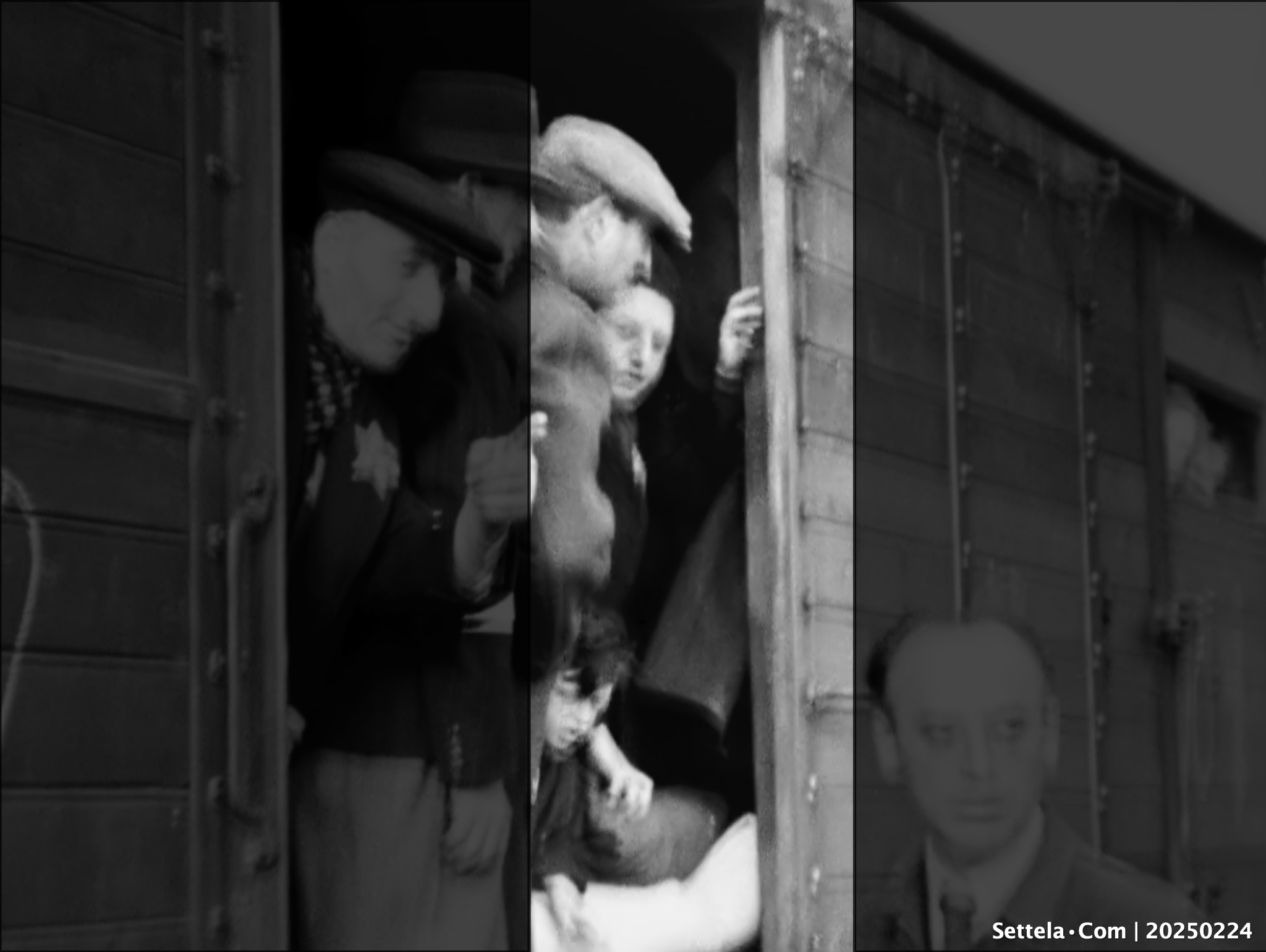
Almost certainly, three Jewish people have been recognized in the unique Westerbork film from 1944 (1). This time it concerns the 9-year-old boy Israël Wijnschenk, his father Max Wijnschenk, and his grandmother Betje Kokernoot-van Furth, who all lived in Utrecht (Holland).
Last week, the Dutch public broadcaster NOS (2) reported the news from the Utrecht (Dutch) news site Nieuws030 (3) that it is very likely that three people were recognized again in this film made by the Jewish prisoner and filmmaker Rudolf Breslauer showing the deportation of Jews, Roma and Sinti by train in Camp Westerbork on May 19, 1944.
Image researcher Koen Hulsbos — who previously identified an Amsterdam couple in this deportation train (4) — thought he recognized the young Israël Wijnschenk, a pupil at the time of the Joodse (Jewish) School Utrecht, and presented this to Victor Frederik, researcher of the Joodse School (5,6). The boy, the man, and the woman seem to belong together, and were recognized from family photos, also by family members.
It is certain that Max and his wife Chel (not in the images) returned to Utrecht after the war, their children Israël and his sister Kitty were murdered. Grandma Betje was also gassed in Auschwitz.
A portrait of Israël Wijnschenk is shown at the site of Joods Monument (7).
According to the transport list, there were two other children in that wagon, Joseph Beugeltas (11 years old) and Manfred Studzinsky (7 years old). Joseph Beugeltas appeared to have blond hair, and could not have been it (6). To be completely sure, the researchers are still looking for a photo of Manfred Studzinsky, for comparison…
The Dutch national broadcaster NOS (1) and the local RTV Drenthe (2) reported this morning (23 Dec 2024) that 2 more people have been recognized in the Westerbork film.
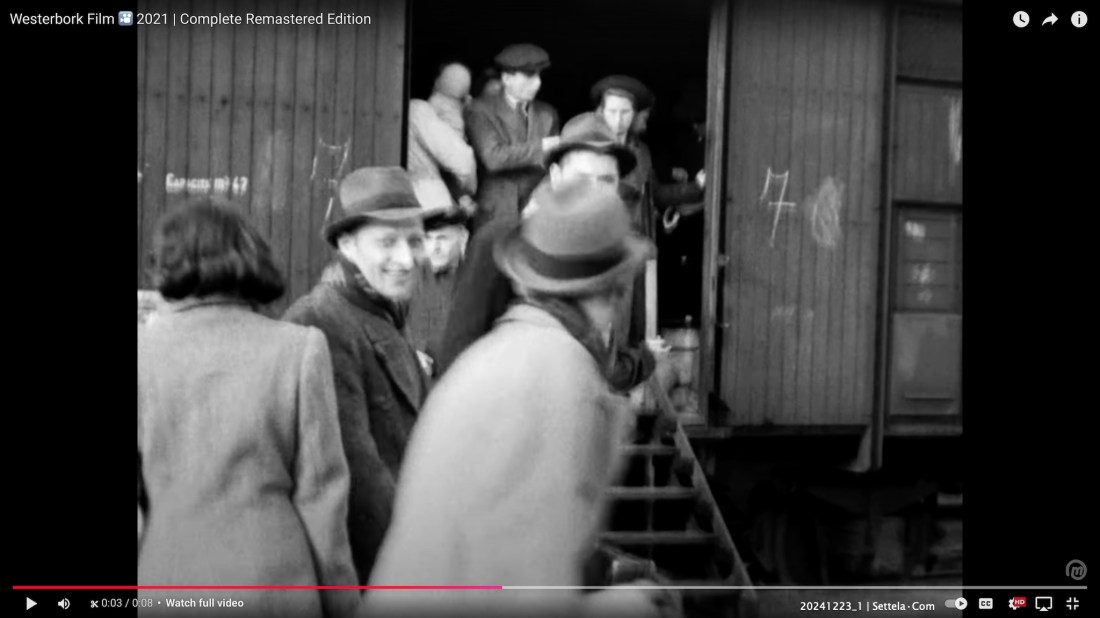
It is the Amsterdam couple Marcus Pels and Hendrika Brandon. They were identified by the image researcher Koen Hulsbos – volunteer working at the Behind the Star project of the NIOD Institute for War, Holocaust and Genocide Studies .
The Jewish photographer and filmmaker Rudolf Breslauer, while a prisoner in the Westerbork transit camp in the Netherlands, was commissioned by camp commander Albert Gemmeker to make film recordings for the Westerbork film in the spring of 1944, featuring images of a deportation train.
The NOS broadcast referred to images in the first published Westerbork film (3)The film can be viewed in its entirety on YouTube. After just under 5 minutes 🔗 a man with a hat can be seen looking into the camera with a smile, and next to him a woman with black, slightly wavy hair can be seen from behind. The same couple appears again at 6 minutes 🔗 . It turned out to be the Amsterdam couple Marcus Pels and Hendrika Brandon.
Pels & Brandon Clip 1 & 2
Also available on YouTube is the more recent second Westerborkfilm (4). This 2021 edition has the recently found original camera rolls of the deportation transport (Reel E198), with higher quality images of the couple.
Hulsbos had already had photos of Marcus Pels and Hendrika Brandon in his collection of images of prisoners who were transported on that day – May 19, 1944 – when Breslauer films the deportation of Jews, Roma and Sinti to Bergen-Belsen and Auschwitz.
“I’ve seen the film many times, but at one point I thought, ‘Hey, this couple is on screen twice.’ I had never really noticed that before,” says Hulsbos.
Hulsbos then compared the film footage with his photos. “And then I thought: that’s it,” says the amateur film historian.
Marcus Pels was murdered immediately after arriving in Auschwitz. Hendrika Brandon survived the war, as did their daughter and son, who were in hiding with a foster family. Katy (Keetje, 86 years old) and Philip (83) are still alive and live in Canada. They were shown the film footage and confirmed that they were their parents.
“They don’t remember their father. So to actually see images of him, to see him just walking around alive, there are no words to describe it,” granddaughter Lisa Kaufman said as a family spokesperson. “It was very special to see my grandmother, who I grew up with.”
Anonym | Girl with the headscarf …
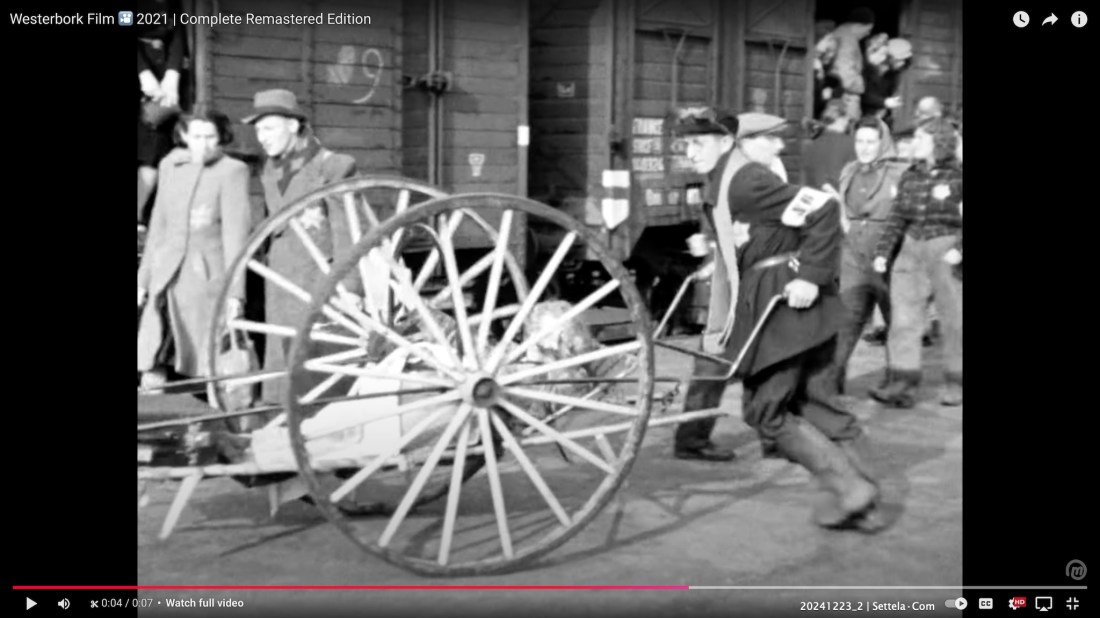
In the Westerbork film, Hendrika looks at the woman on the stretcher, who was recognized in the 1990s through her suitcase as Frouwke Kroon, and thus was the key to identifying this transport and thus also to the name of the anonymous girl with the headscarf between the wagon doors – Settela (5,6).
Deportation Breslauer family
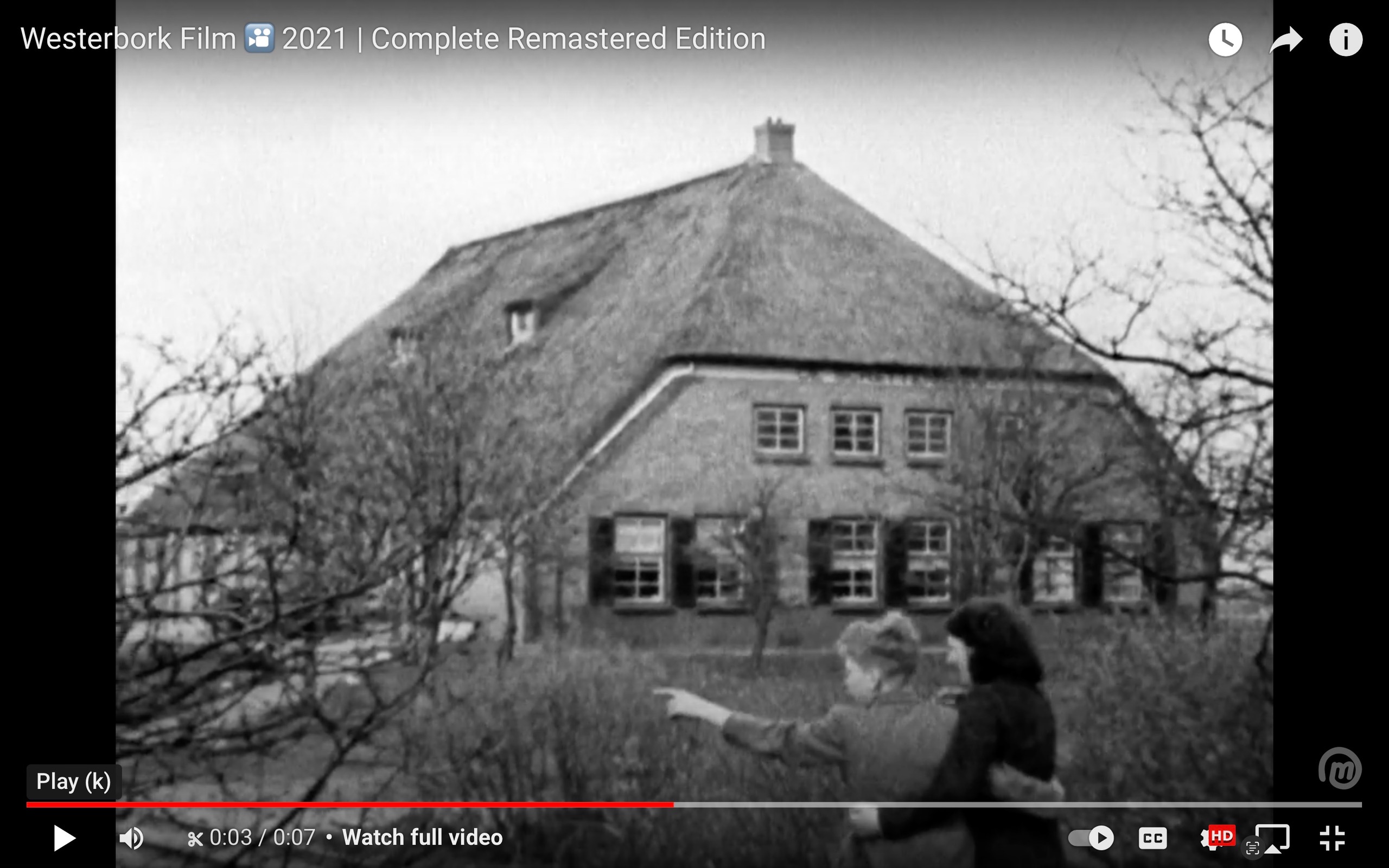
Earlier this year it was reported that filmmaker Rudolf Breslauer had also filmed two of his children , Stefan , and Ursula Breslauer in the Westerborkfilm at the farm (7).
Werner Rudolf Breslauer , his wife Bella Weihsmann, sons Stefan and Max Michael (Mischa), and daughter Ursula were deported later in 1944 from Westerbork to Theresienstadt and Auschwitz. Only Ursula survived.
RESCUE RUN : Capt. Jake Rogers’ Daring Return to Occupied Europe • John Winn Miller
After escaping the treacherous waters of WWII, Captain Jake Rogers leads his crew on a daring mission across Nazi-occupied Europe to rescue the father of his beloved, entangled in a web of espionage, betrayal, and relentless pursuit.
Review of John Winn Miller’s novel ‘Rescue Run’
John Winn Miller, a veteran of investigative journalism for decades, masterfully weaves historical detail into his World War II novel Rescue Run. The story follows American ship’s captain Jake Rogers, who, after his U.S. Liberty ship carrying war supplies is wrecked in the North Atlantic, first lands in Ireland. He then sets out with a few of his loyal men on a perilous mission to rescue the father of Miriam Maduro, the love of his life, from the Westerbork transit camp in Nazi-occupied Holland.
A gruelling journey follows from Amsterdam across Nazi-occupied Europe to Spain – on foot, by train, and by boat – via a long series of hiding places, historical locations and events, aided by well-known and lesser-known resistance organisations and historical figures, besieged by con men, double agents, gangsters and pursued by a ruthless Dutch bounty hunter.
As a non-native English speaker, I initially struggled a bit with the first few chapters, particularly the maritime terms and rich language used in the sea adventure with the Liberty ship, besides the introduction of the many characters. However, once past those pages, the novel became a true page-turner. The gripping, almost cinematic narrative had me finishing the book in just two or three days, despite also spending some time online searching for even more historical context, for example when Rogers is helped by the Dutch resistance group ‘Groep 2000’ led by Jacoba van Tongeren, and when characters like Etty Hillesum and Audrey Hepburn appear in the story.
Blending Fiction and Nonfiction
I rarely read fiction these days — almost exclusively occupied with non-fiction — but John Miller’s work intrigued me. I was curious to see how he managed to incorporate the reality of Nazi-occupied Europe, and in particular the Westerbork transit camp, into fiction. The result is exceptional. The blend of fiction and nonfiction strengthens the narrative, bringing the past vividly to life. Miller also provides an extensive set of notes at the end of the book, offering in-depth background information on the events and historical figures featured in the story, detailing also what happened to them after the events of the novel.
I especially appreciate how John Winn Miller brings the wartime past to life in Rescue Run, with accuracy and rich detail, from multiple perspectives. His cinematic storytelling draws readers into a narrative that inspires further exploration of this history.
Michel van der Burg, filmmaker, editor of Settela•Com
Notes
Additional Information:
Title: Rescue Run: Capt. Jake Rogers’ Daring Return to Occupied Europe
John Winn Miller is an award-winning investigative reporter, foreign correspondent, editor, publisher, screenwriter, indie movie producer and novelist. | Photo Bancroft Press. | More info at Miller’s website URL https://www.johnwinnmiller.com
John Winn Miller
Though Rescue Run is a sequel to Miller’s first novel, The Hunt for the Peggy C, no prior knowledge of the first book is required. A summary of the prequel is included for new readers or those needing a refresher.
Westerbork Film Frame
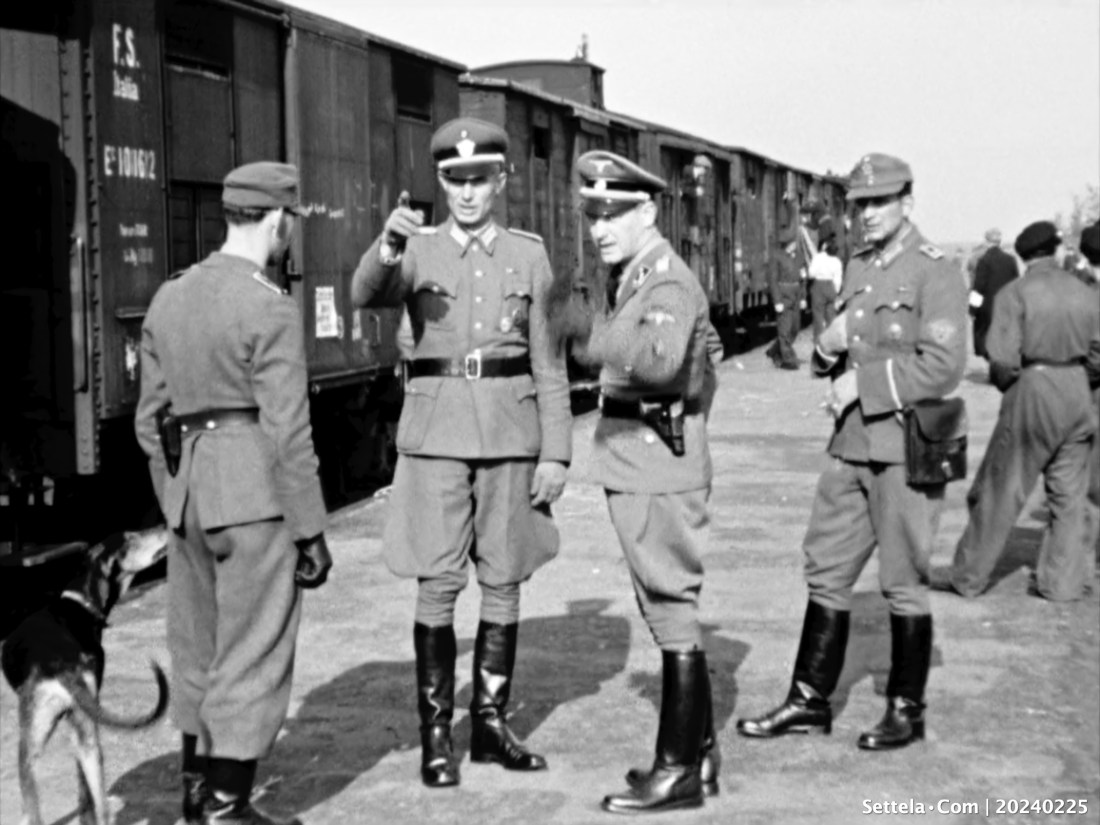
This review was prompted by my contribution of a still (image below) from the Westerbork film for the book jacket/cover, in collaboration with designer Christine Van Bree , and author John Winn Miller. John kindly provided me with a link for a free download of the Advance Reader Copy on the BookSirens’ platform. Since I’m documenting the Westerbork film through the online magazine Settela•Com, I happily accepted BookSiren’s invitation to join the review team.
Deportation | 20240225 | Settela•Com | Commander Albert Gemmeker oversees the deportation of Jews, Sinti, and Roma from the Westerbork transit camp May 19, 1944 | Frame 7426 from Deportation Westerbork Film | 20210719 | Settela•Com | ISSN 2949 9313
Citation info : Review RESCUE RUN • 20240927 • Michel van der Burg • Settela•Com • ISSN 2949-9313
Filmmaker Rudolf Breslauer also filmed two of his children in the Westerborkfilm…
Stefan (left) & Ursula Breslauer, children of Rudolf Breslauer, the filmmaker of the Westerbork film at the farm of Camp Westerbork in 1944 – identified by the dutch photographer Sake Elzinga, who received Breslauer’s family photo albums last year when the family of Ursula – the only survivor – visited an expo on Breslauer in the Westerbork museum in the Netherlands.
Camp commander (SS-Obersturmführer) Albert Gemmeker ordered the Westerbork film , made by the German Jewish prisoner, photographer, Rudolf Breslauer in the spring of 1944.
Today 80 years ago – March 5, 1944 – the camp is an ‘Arbeitslager’ – a work camp – when Rudolf Breslauer starts filming the daily life of the Westerbork prisoners — inside : in the barracks, for example a religious service, cabaret, workshops, factories, aircraft and battery recycling, medical care, and outside the barracks : construction of a greenhouse, a football match, women working out, chopping wood, incoming transports, and eventually also the departure of a deportation train. After Breslauer films the deportation of Jews, Roma and Sinti to Bergen-Belsen and Auschwitz on May 19, 1944 the filming stops. The haunting image of the 9-year-old dutch Sinti-girl Settela, standing in the closing doors of the goods train, and the unique footage of that deportation train that leaves the Westerbork camp, became iconic after the war.
Deportation Breslauer family
Werner Rudolf Breslauer , his wife Bella Weihsmann, sons Stefan and Max Michael (Mischa), and daughter Ursula were deported autumn 1944 from Westerbork to Theresienstadt and Auschwitz. Only Ursula survived.
Stefan & Ursula Breslauer in Westerborkfilm | 20240305 | Settela•Com | Frame 127475 from Westerbork Film 🎦 2021 | 20220302 | Settela•Com | ISSN 2949 9313 | Footage filmed by Rudolf Breslauer in 1944, courtesy of NIOD | Sound and Vision
Scene with Stefan & Ursula Breslauer, starting at 56:13 in the 1986 RVD edition of the Westerborkfilm: Stefan & Ursula Breslauer in Westerbork Film RVD | 20240305 | Settela•Com | URL https://youtube.com/clip/UgkxfNzA72JeGgVoOFp_VTI4EQQr3yTwXu6_
Settela Film | 20220630 | Michel van der Burg | Settela•Com
Deportation Westerbork Film | 20210719 | Michel van der Burg | Settela•Com
Images from the Westerborkfilm have been used countless times in documentaries and films about the Second World War. Here images screening in the virtual opera PUSH – based on the story of Simon Gronowski – an 11 year old Jewish boy who was pushed from the train – Transport XX – by his mother on the way to Auschwitz — Video clip https://youtube.com/clip/UgkxsM6Rj_HB0xEh4TksbjhIm4EzY81dc4H0
A virtual performance, during the April 2020 Corona virus lockdown, of the epilogue of the community opera PUSH , entitled : Ma Vie N’est Que Miracles | My life is only miracles – hosted by composer Howard Moody. It premiered on the night of the 19th April 2020, exactly 77 years after three Brussels resistance heroes stopped the Nazi train Transport XX, transporting 1600 Jewish deportees to Auschwitz, and more than 200 prisoners escaped from the train before the German border. Info : michelvanderburg.com/2020/04/19 .