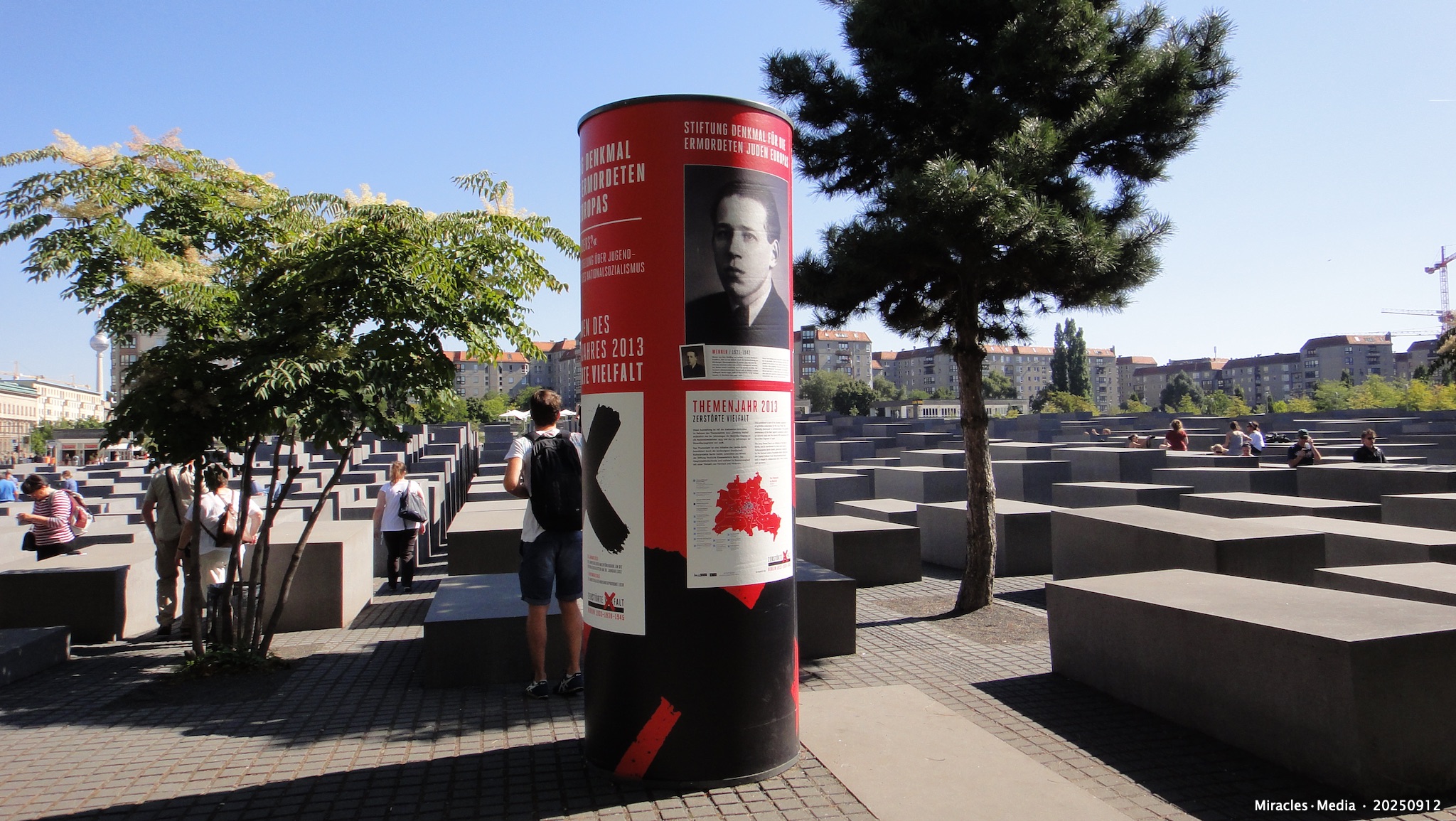
Portrait pillars of the Monument Foundation (Stiftung Denkmal) participation in the Berlin 2013 theme year ‘Destroyed Diversity’ (Zerstörte Vielfalt) at the Berlin Holocaust Memorial, 7 Sep 2013, Berlin, Germany.
Here the portrait of Werner (1921-1942). Werner from Wedding (Berlin) was in love with his neighbor Dorothea. But he was Jewish. After the passage of the Nuremberg “Racial Laws” in the fall of 1935, relationships between Jews and “Aryans” were strictly forbidden. The two were cautious, but they were betrayed. The accusation: “racial defilement” (Rassenschande)! Werner spent 18 months in the Berlin-Tegel prison, then in “protective custody” in the Sachsenhausen concentration camp. He did not survive the camp (https://www.stiftung-denkmal.de/) .
Poster one of the recent exhibitions (Autograph) of project Somnyama Ngonyama, Hail the Dark Lioness. Self-portraits by Zanele Muholi .
Update
Update 20250224 : While studying Zanele Muholi online , I got the impression the MOMA had to delete Zanele Muholi’s artist info at their web site over the weekend.
Citation info : Zanele Muholi • Michel van der Burg • Miracles•Media • @1MEMO 20250222
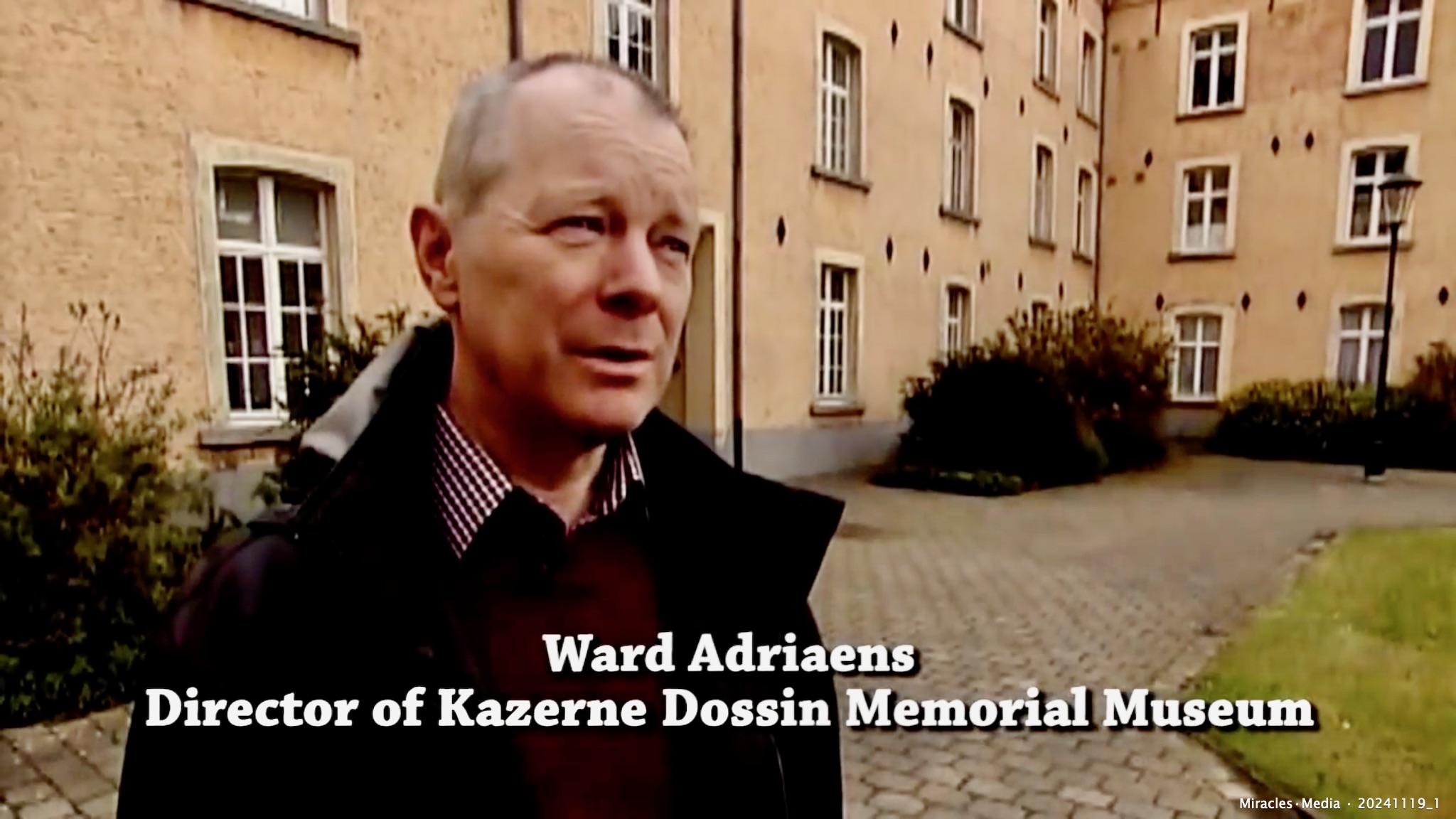
Ward Adriaens (Mechelen, Belgium) passed away suddenly on the evening of November 15th, 2024. A wonderful man, a freethinker, author, with a passion for living history, especially the resistance, partisans, in World War II, and the founding director in 1995 of the Jewish Museum of Deportation and Resistance (JMDR) that opened its doors in 1996. In 2012 the JMDR became the Kazerne Dossin museum, with Ward Adriaens as honorary curator. In 2005 Ward Adriaens launched the Give Them a Face archival project. The portraits of all Jewish, Roma and Sinti deportees which passed through the SS-Sammellager Mecheln (Dossin barracks, transit camp, Mechelen) in 1942-1944, were scanned to create the “Give Them a Face” portrait collection. All around 20,000 photos in the Give Them a Face portrait collection are now part of the commemoration wall – a permanent exhibition – at the Kazerne Dossin museum.
In 2009 , I first encountered the Transport XX installation in Brussels, and met Ward Adriaens’ team of the Give Them a Face project in the Jewish Museum of Deportation and Resistance in Mechelen, Belgium (1,2).
Next , Ward Adriaens participated in our 2012 documentary Transport XX to Auschwitz (3).
Recently, May 2024, Ward Adriaens’ opening speech at the TRANSPORT XX installation in Mechelen in 2007, was posted in the ‘Miracles’ project at Miracles•Media (4).
Quote
“…Let us clearly understand that this is the fundamental basis of racism: persecuted because we have a mother. We all have parents and many amongst us have children. In order to protect them it is essential that we do not give an inch to racism. Everyone of us will come under threat should the policy makers be influenced by racism…”
3. Ward Adriaens’ interview by the dutch reporters Piet de Blaauw & Aart Zeeman (Dutch NCRV-Netwerk broadcast, 13 April 2005, NL1) from the documentary ‘Transport XX to Auschwitz’ – a film by Karen Lynne & Richard Bloom and Michel van der Burg • In : Documentary film “Transport XX to Auschwitz” • Miracles•Media • 20130419 • URL (retrieved 20241119) https://michelvanderburg.com/2013/04/19/transport-xx-to-auschwitz/
Women – Imazighen (‘free people’) – working in Morocco, filmed using the first ‘ultra-slim’ Sony DSC-T1 camera, September 2005, inside and outside Kasbah Dar Daïf, in Talmasla village (Ouarzazate), and in the palm grove and Todgha Gorge around the oasis town Tinghir south of the High Atlas Mountains, and at Kasbah Xaluca near the Sahara oasis town Erfoud. Background music in first part of the film : Debdou by Idan Balas | Artlist
Citation info : Free Women’s Day | 20240308 | @1MEMO | Miracles•Media | TakeNode 5ee79397-5d9b-4ae0-9238-cefd977f7d83 | URL 1-memo.com/2024/03/08
In 1940, the dutch teen idols Johnny and Jones, even though they were Jews, were able to continue performing under the Nazi occupation without too many problems.
The Amsterdam duo sang jazzy Dutch songs with a mock American accent and a parody of current events.
Blackout means black!
July 1940 Johnny and Jones sang a parody on the Blackout , the dutch song ‘Maak het donker in het donker’ (make it dark in the dark).
Later during World War 2, in 1943, they were deported to the Nazi death camps. They died of exhaustion in the last days of the war in 1945 (see Notes).
Still image in film : Poster for the single ‘Maak het donker in het donker’.
Lyrics ‘Maak het donker in het donker’ | Johnny and Jones (1940)
De overheid heeft het publiek bevolen
Als het donker is dan moet het donker zijn !
Er mag geen enkel licht naar buiten schijnen
Doe verduisteringspapier voor je gordijn
Anders staan ze ’s avonds aan je bel te bellen
En dan komt de luchtbescherming je vertellen :
Refrein:
Maak het donker, maak het donker in het donker
Ook al gaan de sterren door met hun geflonker
Ik loop langs de huizenkant
Met mijn luchtbeschermingsband
Een lantaren in mijn hand
Om te kijken waar iets brandt
Houdt dus rekening met de verduisteringswensen
Maak het donker, reuze donker beste mensen !
Refrein
Het blokhoofd van blok zeven uit wijk negen
Zag de dochter van het wijkhoofd uit blok tien
Met een rood hoofd kwam hij blokhoofd negen tegen,
Hij zei hoofd, heb jij het wijkhoofd ook gezien ?
Ik heb in het hoofd gezet het wijkhoofd te gaan vragen ,
Of die wijkhoofd-(griet/strike?) mijn blokhoofdnaam wil dragen : Refrein
Van Zanten zag een meisje in het duister,
Zij was slank gevormd en toch niet dik van lijn.
Hij dacht, dit is de jonkvrouw mijner dromen,
Binnenkort zal zij mevrouw Van Zanten zijn.
In de duisternis vroeg hij haar om een kusje,
Flip van Zanten zei zij toen, ik ben toch je zusje !
Refrein
Music : Maak het donker in het donker | Text & Music by Johnny and Jones (1940). Recorded in Vara-studio, Hilversum, 19 july 1940. DH2051. (Varagram 7175). | Wikimedia Commons
Film (image) : edited from Polygoon-Profilti cinema news reel week 36, September 1940 (under nazi rule) | Sound & Vision (Open Images).
Citation info : Blackout…Johnny and Jones 1940 | 20240118 | Miracles•Media | @michelvanderburg | TakeNode 17a685fd-9944-471b-992f-47be88ead857
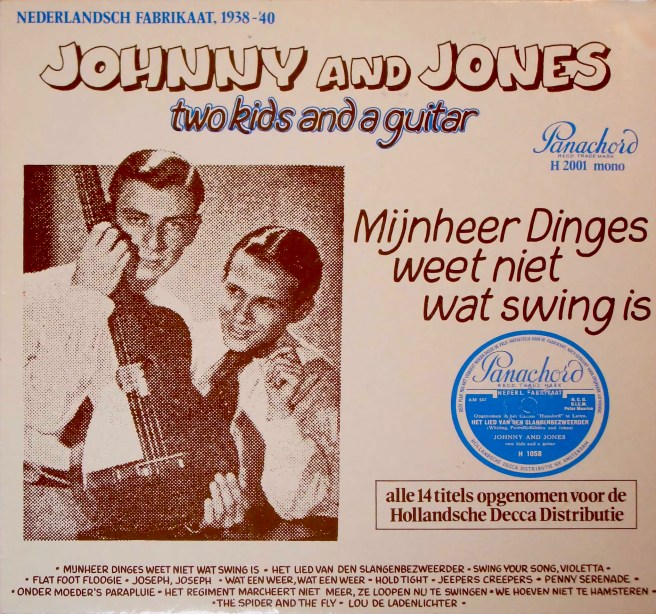
‘Swing’ by jazz duo Johnny and Jones in 1938 with their biggest hit , the dutch song “Mijnheer Dinges weet niet wat Swing is” …Mister Dingus doesn’t know what Swing and Hot (jazz) is…he’s a composer and teacher with a problem : his students skip class, he thinks jazz is banal.
“Two Kids and a Guitar”
The Amsterdam duo sang jazzy Dutch songs with a mock American accent and a parody of current events. They were the first teen idols in Holland and often on the dutch radio in the 1930s …before World War 2.
Nazi victims
Because of their Jewish origins, both ‘Johnny’ (Salomon Meijer Kannewasser, born 1916 and called Max) and his second cousin, partner, ‘Jones’ (Arnold Siméon van Wesel, born Amsterdam 1918 and called Nol) were arrested together with their wives in 1943, taken to the Westerbork transit camp, and deported Sep 4, 1944 first to the Theresienstadt camp, next the Auschwitz, Sachsenhausen, Ohrdruf and Bergen-Belsen camps. They died of exhaustion in the last days of the war in 1945.
Notes
Mijnheer Dinges weet niet wat Swing is | Two Kids and a Guitar | Johnny and Jones (1938). Lyrics from Joop de Leur. Recorded in Casino Hamdorf, Laren, Holland, November 1938. Label: Panachord (78 rpm). # H 1058 (Am 546-1). URL https://youtube.com/clip/UgkxMQtbdZ26fS4zcluq6fT7NlTbbpfuxpcx
Dinges, oh Dinges Dinges, oh Dinges Meneer Dinges die is dol op componeren Hij zit eeuwig met zijn neus in de muziek Jongelieden die bij hem piano leren Houden zich na de eerste les een tijdje ziek Want hun leraar heeft een kwaal Hij vindt jazzmuziek banaal Meneer Dinges weet niet wat swing is Hij weet niet wat saxofoon voor een ding is Omdat zijn radio kapot is Wat voor de buren een genot is Weet die Dinges niet wat swing of hot is Op een dag belde aan Dinges’ deur de wasman Die zei meneer er staat muziek op uw manchet Hou hem hier of stuur hem Theo Uden Marsman Maar meneer Dinges antwoordde toen zeer ontzet Man, ga uit mijn trapportaal In mijn huis geen jazz-schandaal Meneer Dinges weet niet wat swing is Hij weet niet wat saxofoon voor een ding is Omdat zijn radio kapot is Wat voor de buren een genot is Weet die Dinges niet wat swing of hot is Meneer Dinges maakte een grote ouverture Met een slotkoor, de finale stond in mol Toen het klaar was speelde Pietje van de buren De compositie dreunde in hot style door zijn bol Toen viel hij flauw op 1 crapaud (het kunnen er ook twee geweest zijn) En Johnny and Jones zongen door de radio Meneer Dinges weet niet wat swing is Hij weet niet wat saxofoon voor een ding is Omdat zijn radio kapot is Wat voor de buren een genot is Weet die Dinges niet wat swing of hot is Domme Dinges Oh, domme Dinges Weet jij nu nog niet wat jazz voor een ding is Als jij je goed wil amuseren Moet je de hi-de-ho studeren Meneer Dinges, probeer de swing ‘s Dinges, oh Dinges Dinges, oh Dinges.
Some Shimmiers – Wild shimmy jazz and tango dancing with black musicians in an apaches cellar, images from a silent 1919 movie on a slumming party : well-off whites exploring communities of ‘the other’, such as poor working-class neighborhoods (1).
Film edited with selected clips from the comic one-act play ‘Some Shimmiers’ by Eddie Lyons and Lee Moran with Mildred Moore and John George, published 31 March 1919 in the dutch edition ‘Boevenliefde’ by H.A.P Film | Universal | source: EYE Sound & Vision (Open Images).