Women – Imazighen (‘free people’) – working in Morocco, filmed using the first ‘ultra-slim’ Sony DSC-T1 camera, September 2005, inside and outside Kasbah Dar Daïf, in Talmasla village (Ouarzazate), and in the palm grove and Todgha Gorge around the oasis town Tinghir south of the High Atlas Mountains, and at Kasbah Xaluca near the Sahara oasis town Erfoud. Background music in first part of the film : Debdou by Idan Balas | Artlist
Citation info : Free Women’s Day | 20240308 | @1MEMO | Miracles•Media | TakeNode 5ee79397-5d9b-4ae0-9238-cefd977f7d83 | URL 1-memo.com/2024/03/08
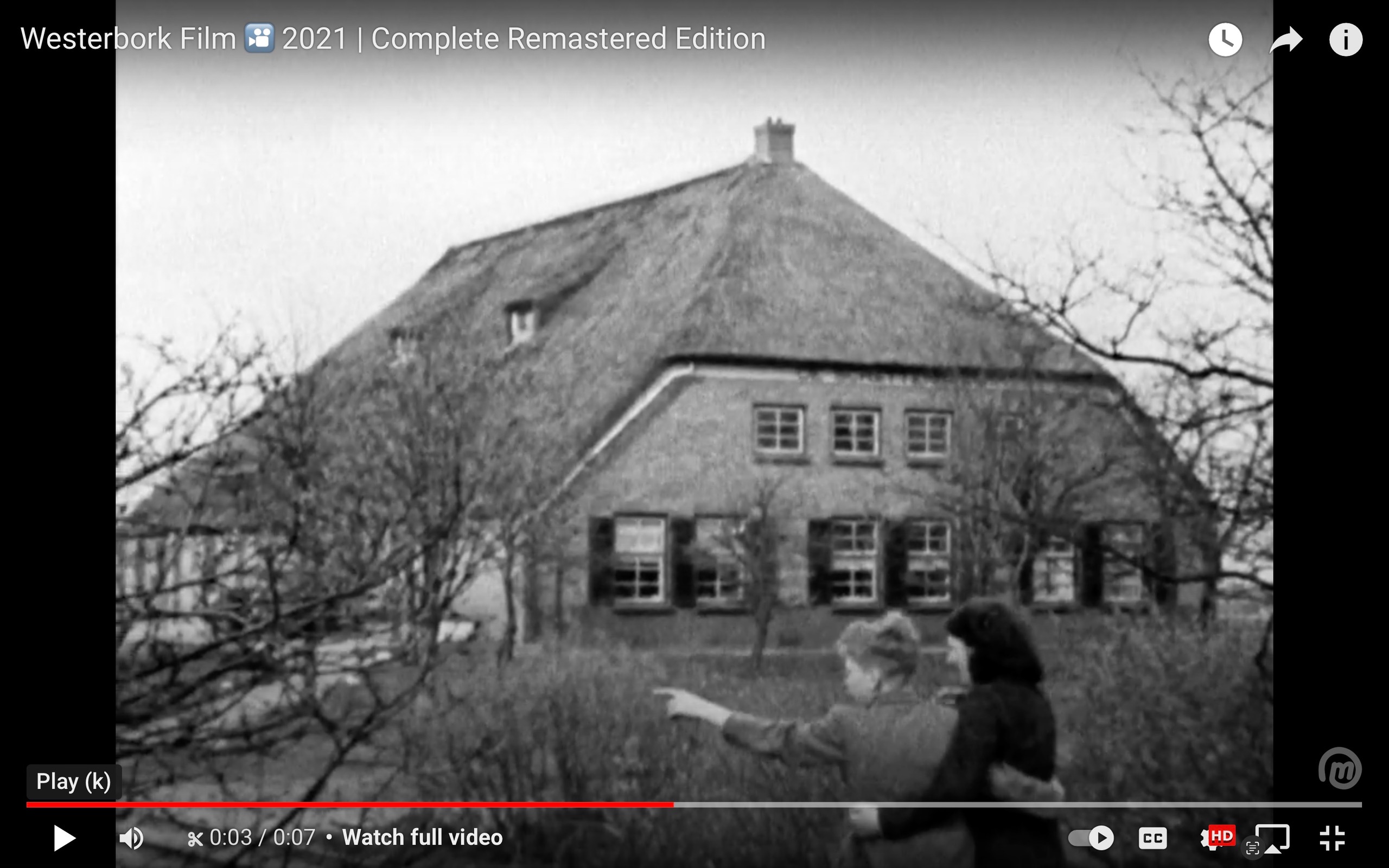
Filmmaker Rudolf Breslauer also filmed two of his children in the Westerborkfilm…
Stefan (left) & Ursula Breslauer, children of Rudolf Breslauer, the filmmaker of the Westerbork film at the farm of Camp Westerbork in 1944 – identified by the dutch photographer Sake Elzinga, who received Breslauer’s family photo albums last year when the family of Ursula – the only survivor – visited an expo on Breslauer in the Westerbork museum in the Netherlands.
Camp commander (SS-Obersturmführer) Albert Gemmeker ordered the Westerbork film , made by the German Jewish prisoner, photographer, Rudolf Breslauer in the spring of 1944.
Today 80 years ago – March 5, 1944 – the camp is an ‘Arbeitslager’ – a work camp – when Rudolf Breslauer starts filming the daily life of the Westerbork prisoners — inside : in the barracks, for example a religious service, cabaret, workshops, factories, aircraft and battery recycling, medical care, and outside the barracks : construction of a greenhouse, a football match, women working out, chopping wood, incoming transports, and eventually also the departure of a deportation train. After Breslauer films the deportation of Jews, Roma and Sinti to Bergen-Belsen and Auschwitz on May 19, 1944 the filming stops. The haunting image of the 9-year-old dutch Sinti-girl Settela, standing in the closing doors of the goods train, and the unique footage of that deportation train that leaves the Westerbork camp, became iconic after the war.
Deportation Breslauer family
Werner Rudolf Breslauer , his wife Bella Weihsmann, sons Stefan and Max Michael (Mischa), and daughter Ursula were deported autumn 1944 from Westerbork to Theresienstadt and Auschwitz. Only Ursula survived.
Stefan & Ursula Breslauer in Westerborkfilm | 20240305 | Settela•Com | Frame 127475 from Westerbork Film 🎦 2021 | 20220302 | Settela•Com | ISSN 2949 9313 | Footage filmed by Rudolf Breslauer in 1944, courtesy of NIOD | Sound and Vision
Scene with Stefan & Ursula Breslauer, starting at 56:13 in the 1986 RVD edition of the Westerborkfilm: Stefan & Ursula Breslauer in Westerbork Film RVD | 20240305 | Settela•Com | URL https://youtube.com/clip/UgkxfNzA72JeGgVoOFp_VTI4EQQr3yTwXu6_
Settela Film | 20220630 | Michel van der Burg | Settela•Com
Deportation Westerbork Film | 20210719 | Michel van der Burg | Settela•Com
Door number 123 on our junior suite in Hotel Leopold Brussels that weekend 27 February to 1 March 2009 — a major free upgrade of the standard room that was included in our voucher. I associate, in retrospect, 123 with Simon Gronowski’s Transport XX story, that he told me two years later, and his fascination for numbers and coincidence.
Citation info : Number 1234 | 20240303 @1MEMO | Miracles•Media | TakeNode 5a43c6ef-feed-4d97-95d0-03fa4620649f | URL 1-memo.com/2024/03/03
The 1st Brussels Balloon’s Day Parade and opening of the BRUSSELS 2009 BD COMICS STRIP year. The giant balloons representing Brussels folklore, Belgian comic strip (Bande dessinée) with Manneken Pis here in front in the city of Brussels , Belgium , February 28, 2009. Camera Sony DSC-T500 , Super HAD CCD 1/2.3″ .