
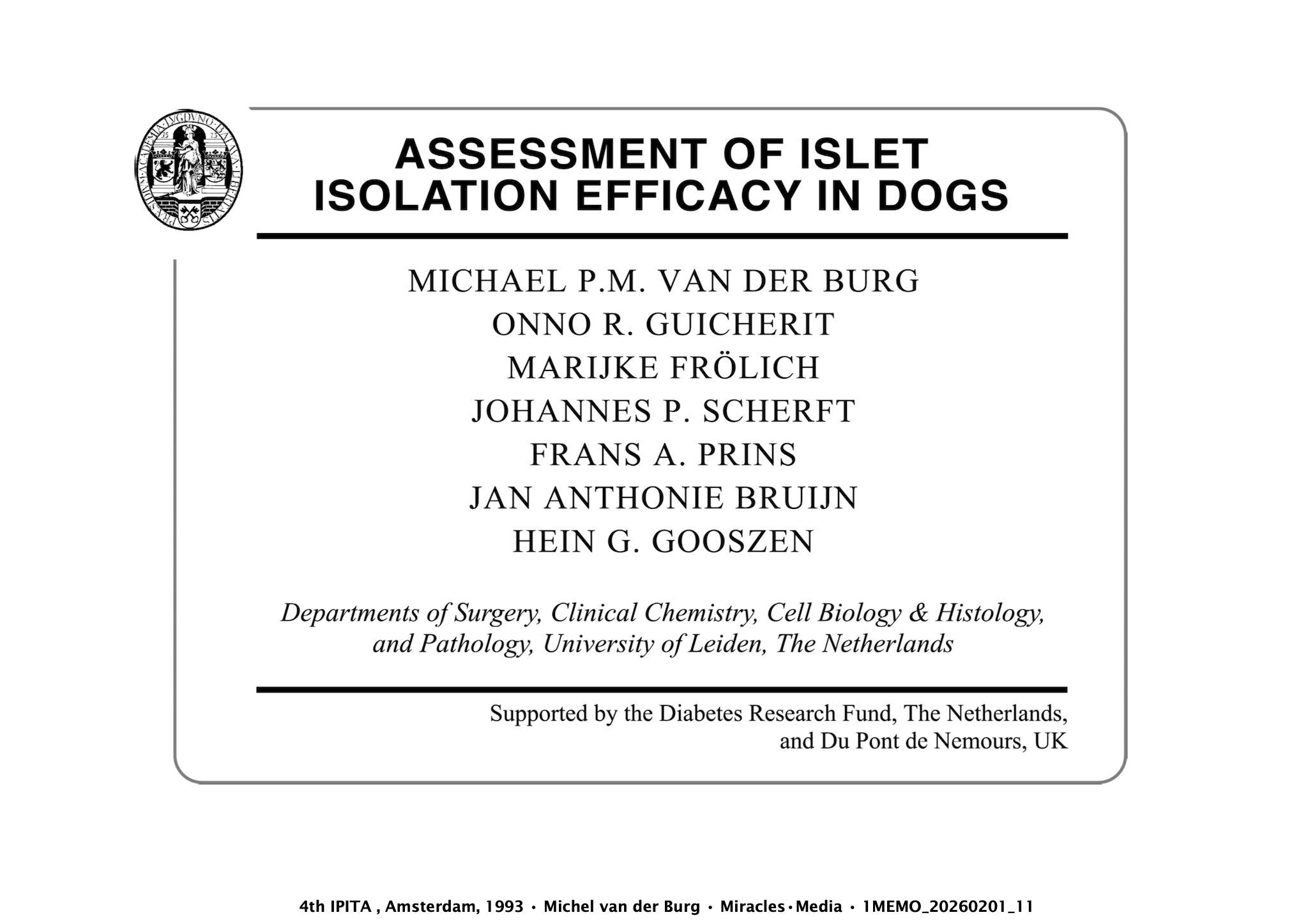
Slideshow (handout slides, partially remastered) of my talk titled ‘Assessment of islet isolation efficacy in dogs’ presented at the 4th International Congress on Pancreas and Islet Transplantation (4th IPITA), Amsterdam (The Netherlands) June 27–30, 1993 • Michel van der Burg • Miracles•Media • 1MEMO_20260201_1 • TakeNode 628b273c-b8e1-4e23-8f8b-1550c7960cb3 • PDF available below.
Text of talk ‘Assessment of islet isolation efficacy in dogs’ presented at the 4th International Congress on Pancreas and Islet Transplantation (4th IPITA), Amsterdam (The Netherlands) June 27–30, 1993 • Michel van der Burg • Miracles•Media • 1MEMO_20260201_12 • TakeNode 9bc525ba-dfdb-4d92-8af4-bdd21ee1faaf • PDF available below.
The proceedings paper delivered at the 4th IPITA is included below in the Notes , as well as references of the related full papers and related chapters of PhD thesis.
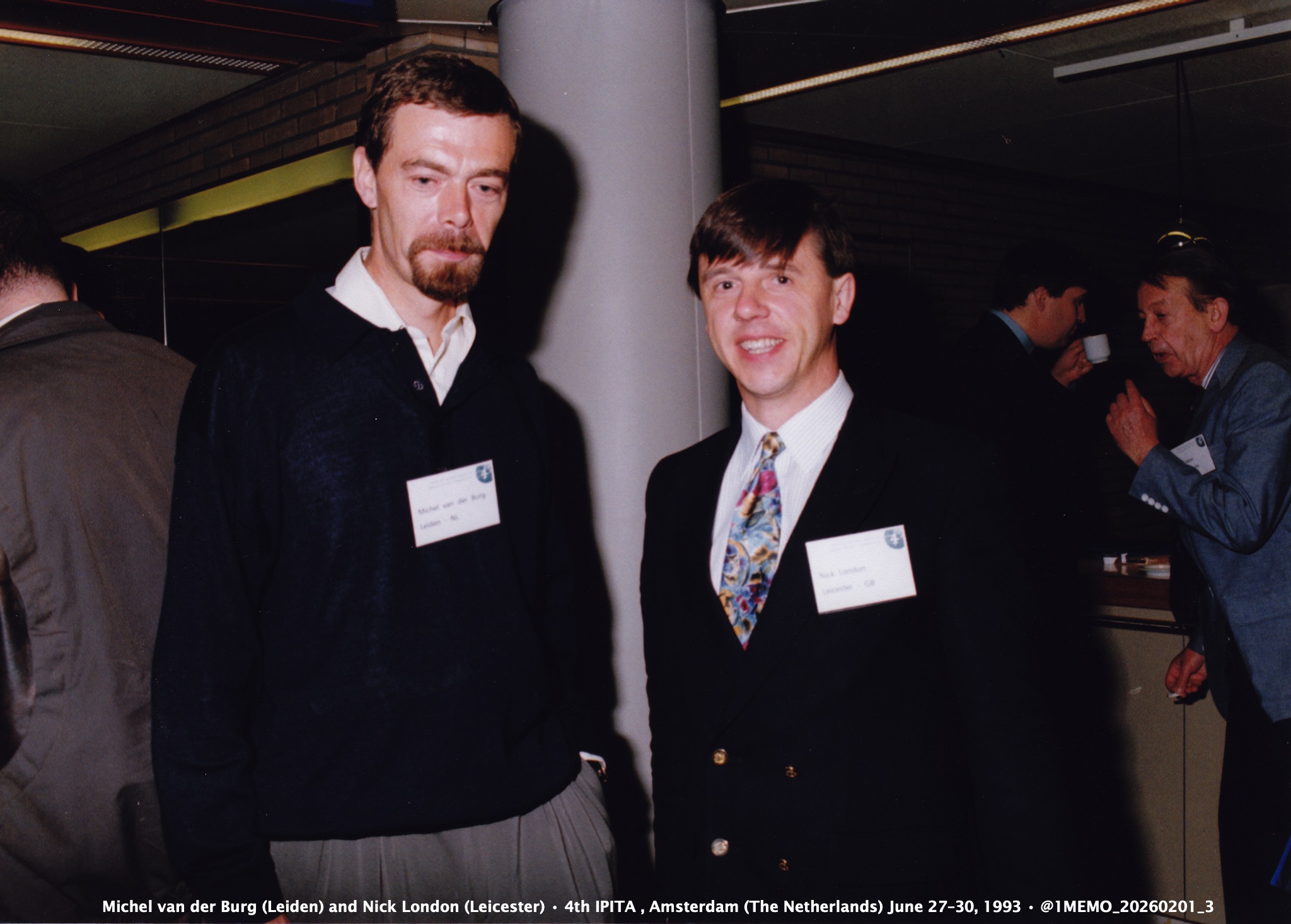
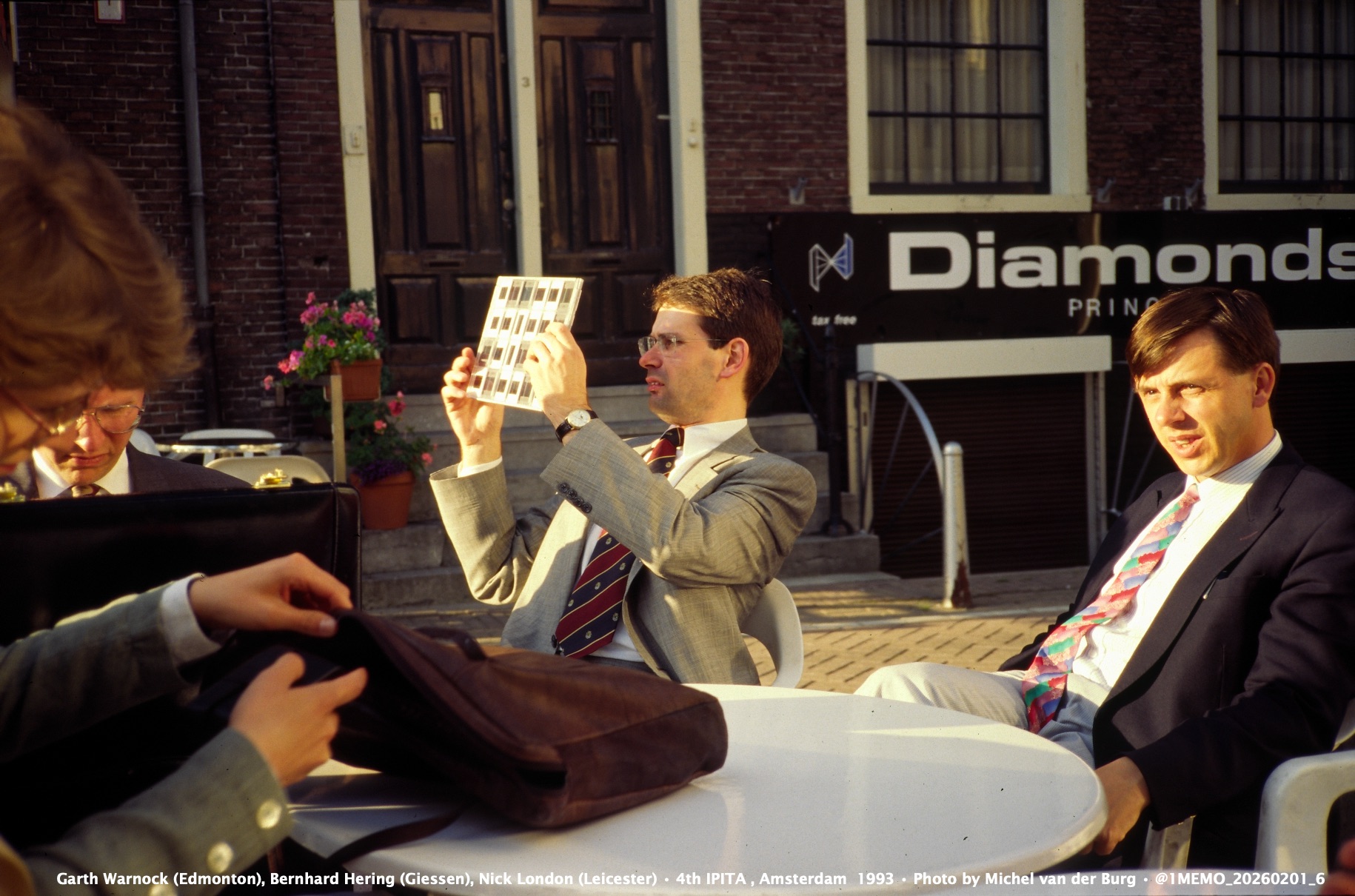
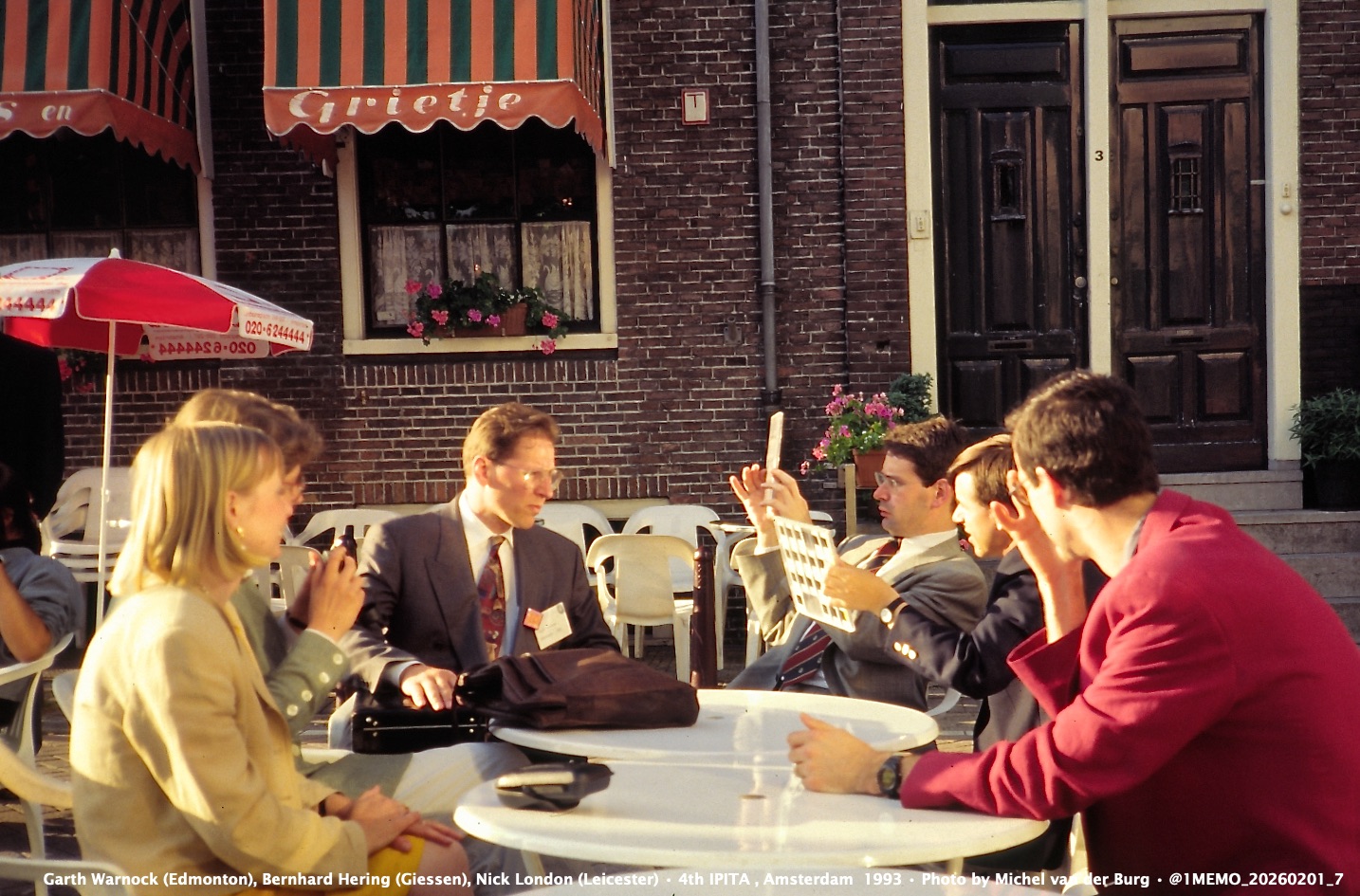
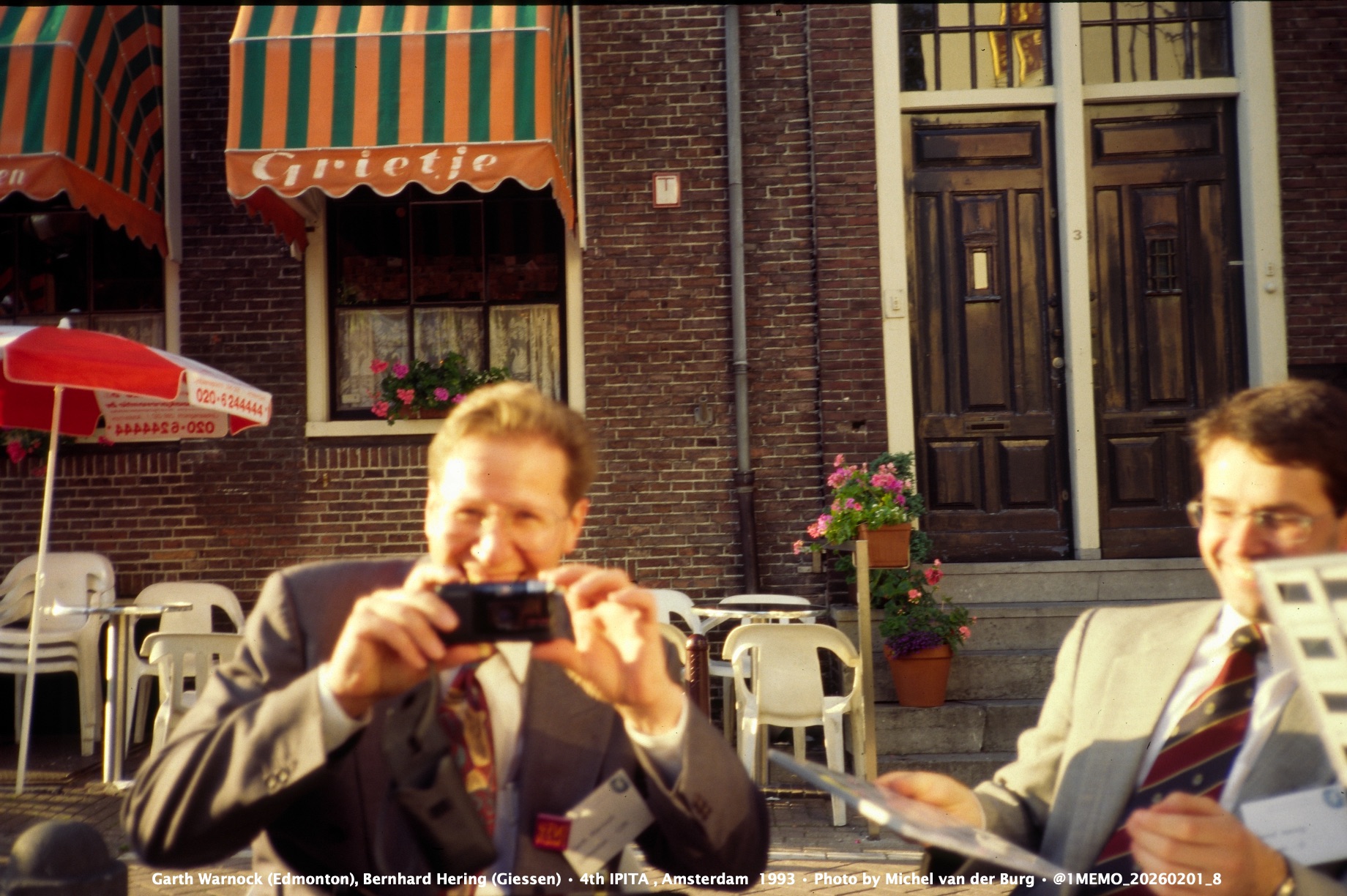
This IPITA meeting in Amsterdam was also a good opportunity to catch up with colleague Nick London (see photo) from the Leicester (UK) group discussing our Leiden and Leicester islet isolation work using the University of Wisconsin organ preservation solution (UWS). The Leicester group were one of the first groups to examine and adopt our novel method of islet isolation in UWS.
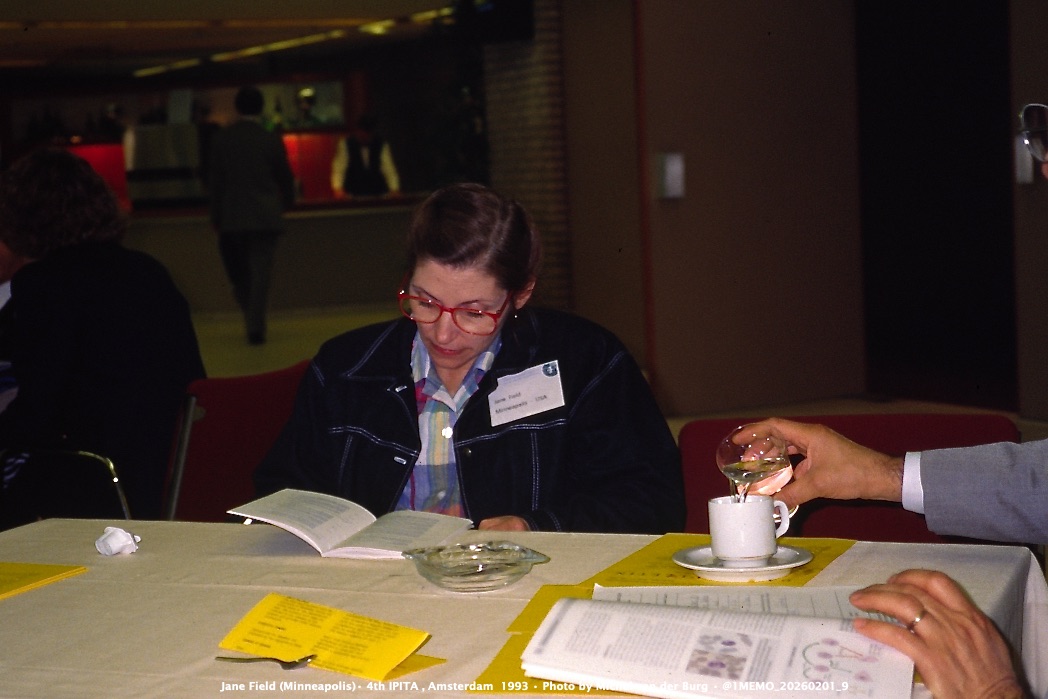
Several groups reported at this 4th IPITA symposium on the effects of using (modified) UW solution (UWS) during islet isolation : Leicester (pig, human islets), Oxford (rat, rabbit islets), Minneapolis (human islets), Paris, and Giessen (clinical human allo islet transplantation).
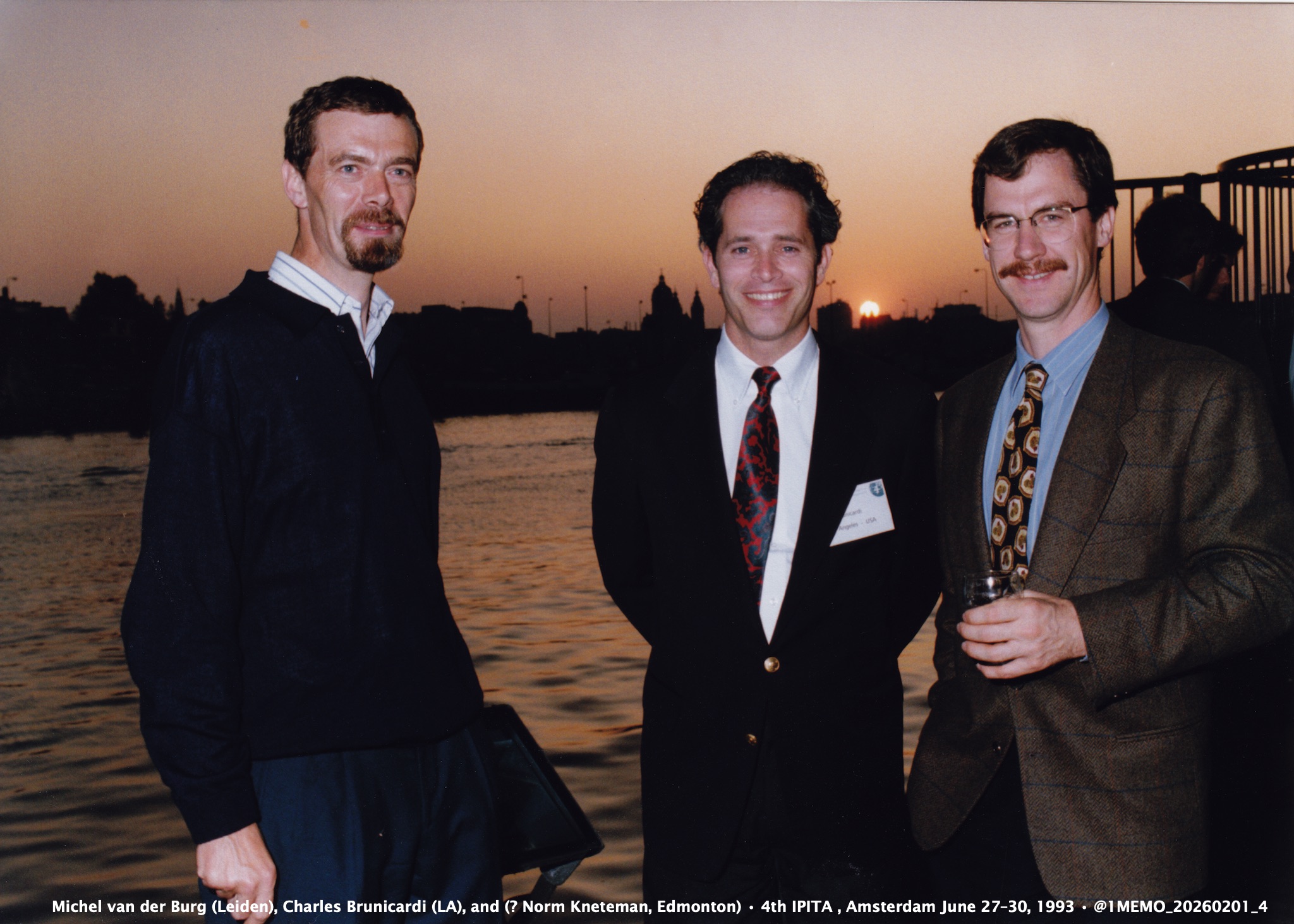
During the 4th IPITA I discussed in detail the rationale of our UWS work, the important components of UWS, and basal solution for islet purification (Percoll-UWS) with Yoko Mullen (in particular) and her co-worker Charles Brunicardi (see photo) of the UCLA Islet Transplant Team (LA, USA)…contributing to the development of Yoko’s Los Angeles preservation solution #1 (LAP-1) patented in 1997 (see Notes, US5679565A).
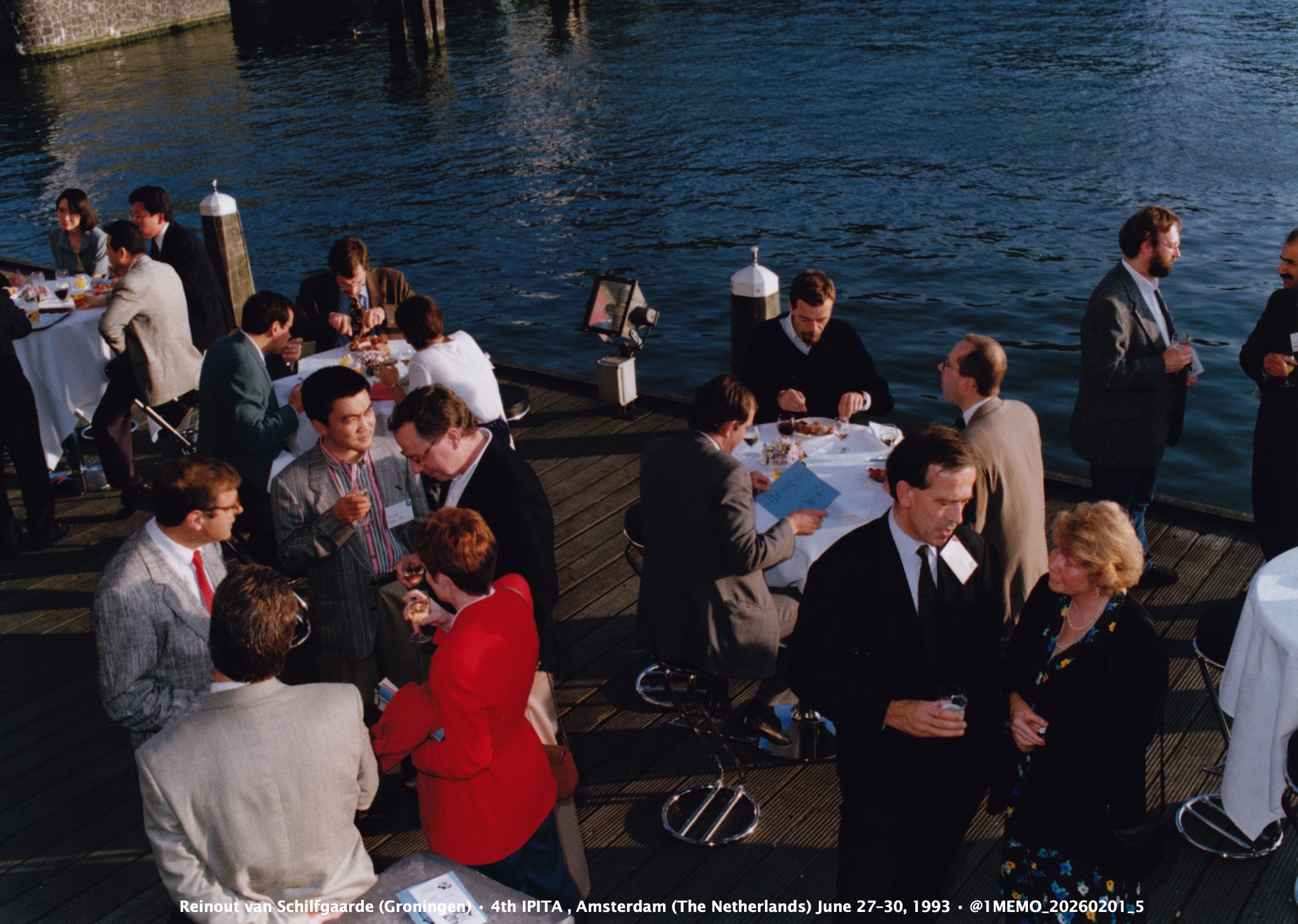
The official founding meeting of the IPITA was actually at this 4th International Congress on Pancreas and Islet Transplantation — June 27–30, 1993 in Amsterdam (The Netherlands) hosted by Dr. Reinout van Schilfgaarde (see photo).
Below some of the photos I took during a break at the 4th IPITA in Amsterdam, near the Rijksmuseum (corner Spiegelgracht / Tweede Weteringdwarsstraat) , and at the congress venue (RAI Amsterdam).
Notes
Oral presentation 4th IPITA : Van der Burg MPM, Guicherit OR, Frölich M, Scherft JP, Prins FA, Bruijn JA, Gooszen HG. Assessment of islet isolation efficacy in dogs. 4th International Congress on Pancreas and Islet Transplantation, Amsterdam (The Netherlands) June 27–30, 1993.
Oral presentation (selection of slides Assessment of islet isolation efficacy in dogs). Van der Burg MPM. Workshop: Guidelines for the standardized assessment of retrieval and transplantation of islets. 4th International Congress on Pancreas and Islet Transplantation, Amsterdam (The Netherlands) June 27–30, 1993.
Proceedings paper 4th IPITA : Van der Burg MPM, Guicherit OR, Frölich M, Scherft JP, Prins FA, Bruijn JA, Gooszen HG. Morphometry of native and isolated islets: a new approach to isolation assessment. Transplant Proc. 1994 Apr;26(2):632-3. PMID: 7513459 . PDF available below
This slideshow had been presented earlier that year with a different title at the 12th Workshop of the AIDSPIT Study Group in Igls :
Oral presentation 12th AIDSPIT : Van der Burg MPM, Guicherit OR, Frölich M, Scherft JP, Bruijn JA, Prins FA, Gooszen HG. Quantification of islet isolation efficiency in dogs. 12th Workshop of the AIDSPIT Study Group of the European Association for the Study of Diabetes, Igls (Austria) January 24–26, 1993.
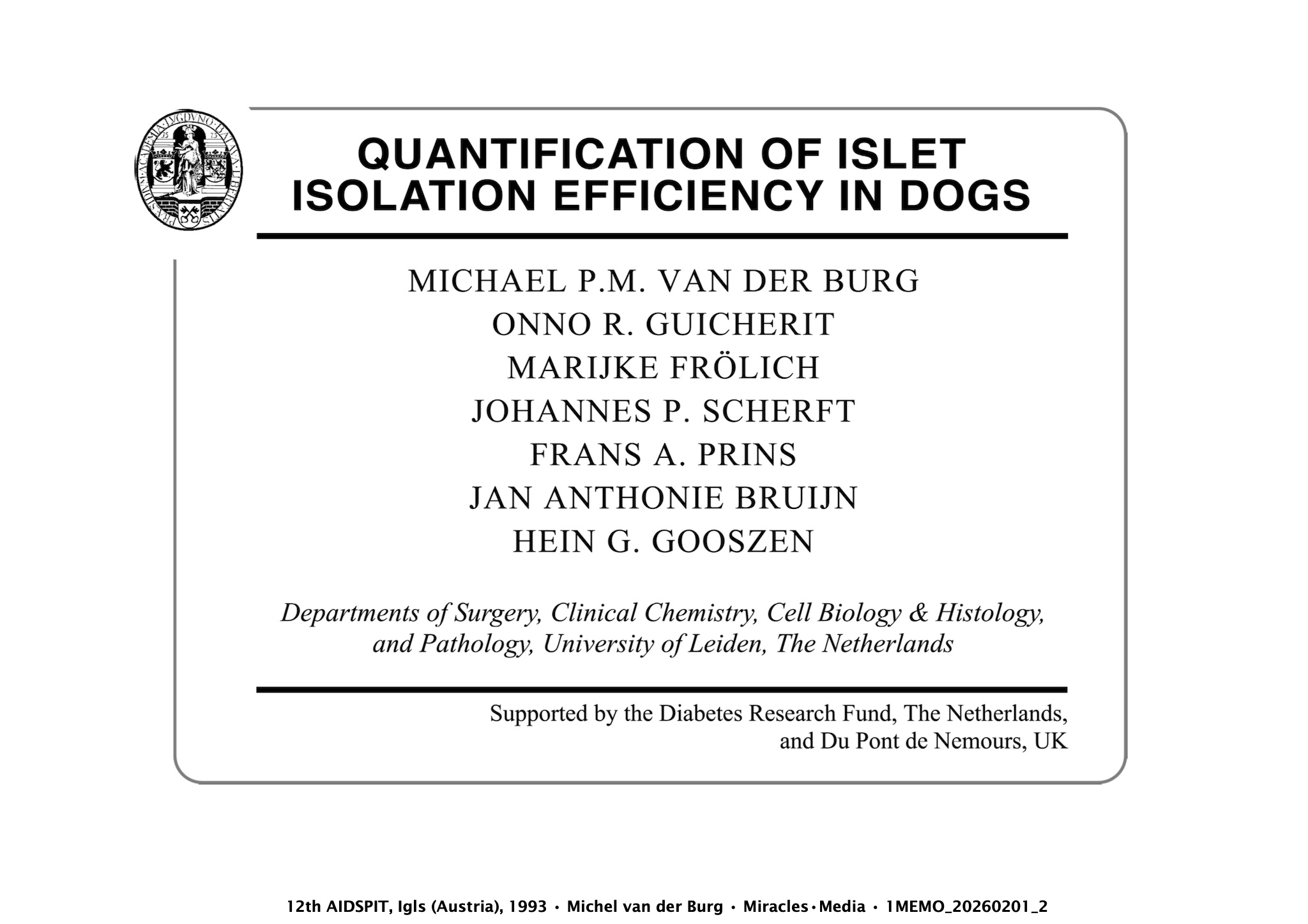
Abstract 12th AIDSPIT : Van der Burg MPM, Guicherit OR, Frölich M, Scherft JP, Bruijn JA, Prins FA, Gooszen HG. Quantification of islet isolation efficiency in dogs (Abstract). Horm Metab Res 1993; 25: 52. 1MEMO_20260201_10 PDF available below.
Corresponding Full Papers (Thesis chapters)
Van der Burg MPM, Guicherit OR, Frölich M, Scherft JP, Bruijn JA, Gooszen HG. Impact of donor-related variables on islet isolation outcome in dogs. Diabetologia. 1994 Jan;37(1):111-4. doi: 10.1007/BF00428786. PMID: 8150223 . Article PDF free download
Van der Burg MPM, Guicherit OR, Frölich M, Scherft JP, Prins FA, Bruijn JA, Gooszen HG. Assessment of islet isolation efficacy in dogs. Cell Transplant. 1994 Jan-Feb;3(1):91-101. doi: 10.1177/096368979400300113. PMID: 8162296
Chapters (2,3) Doctoral Thesis (corresponding with full papers) : Van der Burg MPM. Pancreatic islet transplantation: studies on the technique and efficacy of islet isolation and transplantation. (Doctoral Thesis, Leiden University, 1994), Paperback (1994, Nov 9) Boskoop: Van der Burg (ISBN 9080216410); E-book (2022, Oct 25) Boskoop: Michel van der Burg | Miracles•Media ( ISBN 9789080216402). Retrieved (Dec 4th, 2025) from Leiden University Scholarly Publications, Persistent URL https://hdl.handle.net/1887/3486604 . PDF available via link.
Method of Preserving Pancreatic Islets , Mullen et al. United States Patent US5679565 . Download PDF https://patentimages.storage.googleapis.com/80/60/f6/744731dd250c48/US5679565.pdf
Patent US5679565
Online history of patent :
US5679565A – Method of preserving pancreatic islets – Google Patents URL https://patents.google.com/patent/US5679565A
Portfolio
Online Portfolio – Science : https://michelvanderburg.com/category/science/
#islet #IPITA #AIDPIT #Amsterdam #Igls #Innsbruck #UWS #density #purification #history #AIDSPIT #Leiden #Leicester #Netherlands #Austria #Langerhans #isolation #transplantation #pancreas #diabetes #insulin #donor #assessment #michelvanderburg #symposium #workshop #science #EPITAsymposium #EASD #ESOT #Edmonton #Giessen #Minneapolis
Citation info : Islet Isolation Assessment • 4th IPITA Amsterdam 1993 • Michel van der Burg • Miracles•Media • @1MEMO 20260201 • URL https://michelvanderburg.com/2026/02/01
